
Travelers sometimes pull out a Climate Card at Incheon Airport and try to board AREX — and get turned away. The product for visitors is the 1-, 2-, 3-, 5-, or 7-day Short-term Pass. You cannot board at Incheon Airport Terminals 1 or 2 with this card. It is also not the same product as the resident Climate Pass or Climate Card Plus.
This guide sticks to official Seoul Metropolitan Government and Seoul Metro information: fares, what is covered, where to buy and top up, and a simple break-even check.
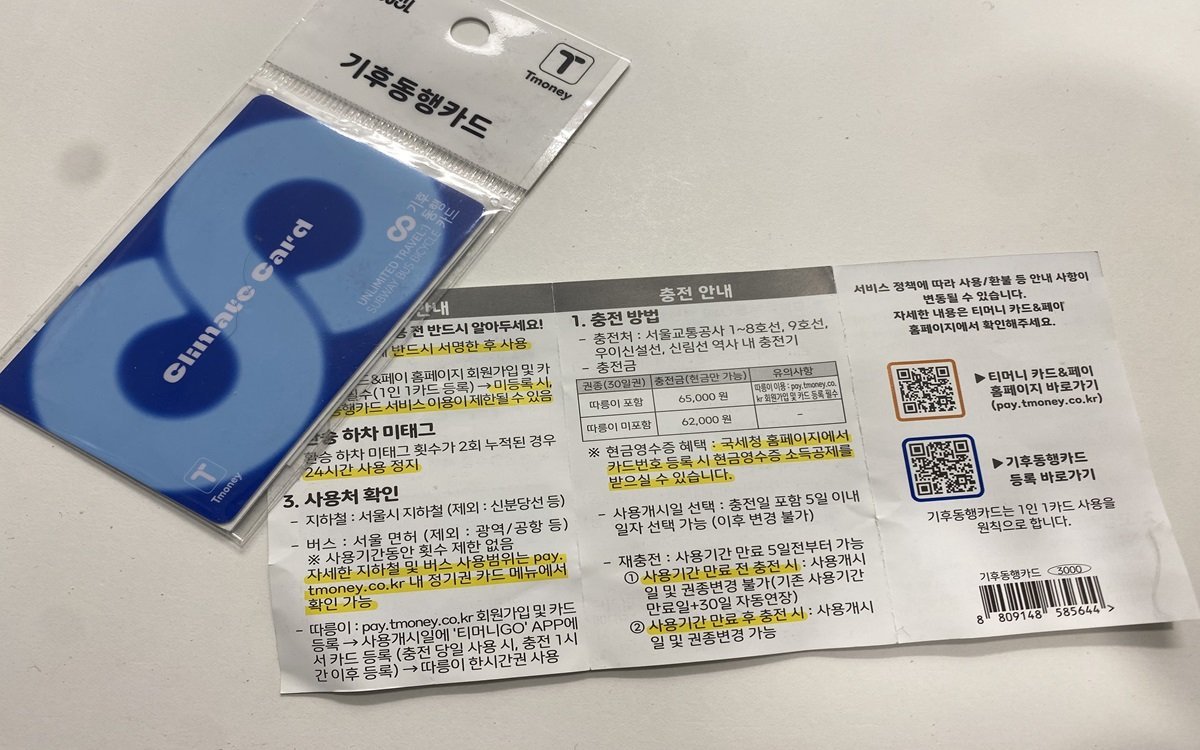
Short-term fares — only the 1·2·3·5·7-day passes
The tourist product is the Climate Card Short-term Pass. Pass prices are below. The first physical card costs an extra KRW 3,000. If you already have a Climate Card, you only pay for the pass when you recharge.
| Pass | Fare (KRW) | First purchase total (with card) |
|---|---|---|
| 1-day | 5,000 | 8,000 |
| 2-day | 8,000 | 11,000 |
| 3-day | 10,000 | 13,000 |
| 5-day | 15,000 | 18,000 |
| 7-day | 20,000 | 23,000 |
| Physical card | 3,000 | — |
Validity starts on the charging date. You cannot buy ahead and pick a later start day. Service runs from the first train on the start day (around 04:00) through the last train on the end day (usually until about 04:00 the next calendar morning). Example: charge a 1-day pass on July 1 → valid through that day’s last train.
Ttareungi (Seoul Bike) and the Hangang Bus are not included in short-term passes. Do not mix those perks with the old 30-day options.
Seoul’s English Climate Card policy page lists fares and the service map.
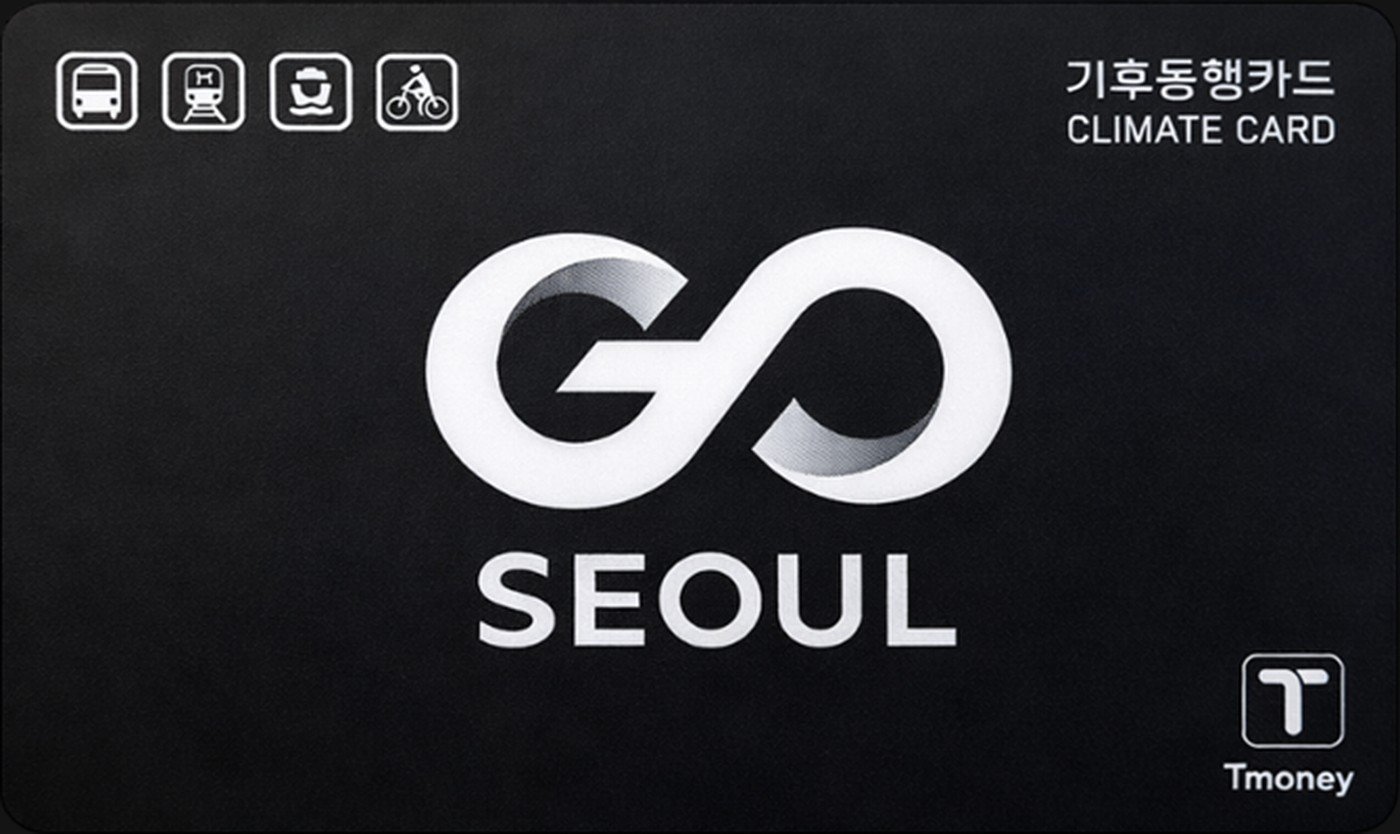
What you can ride — and what you cannot
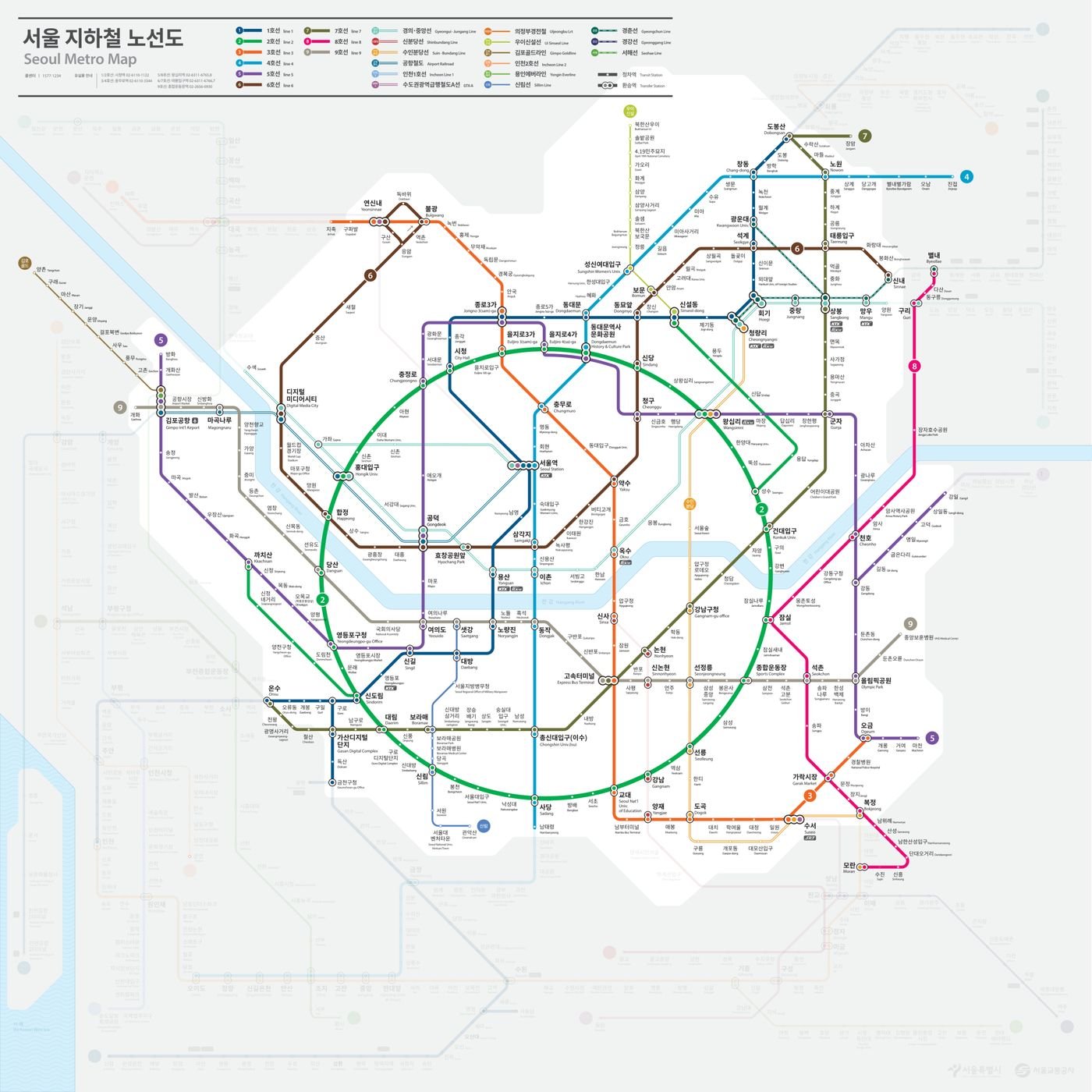
Short-term coverage includes subway in Seoul plus selected metropolitan segments, and Seoul-licensed city, village, and late-night buses. Shinbundang Line, GTX, wide-area buses, airport buses, and buses licensed by other cities/provinces are out.
| Covered | Not covered / limited |
|---|---|
| Seoul subway + selected metro segments | Shinbundang, GTX, out-of-range subway |
| Seoul-licensed city / village / late-night buses | Wide-area buses, airport buses, other cities’ buses |
| AREX Gimpo Int’l ↔ Seoul Station | No boarding at Incheon Airport T1/T2 (alighting only) |
| — | Ttareungi / Hangang Bus (not in short-term) |
| Line 7 Seongnam–Kkachiwul: alight-only exception | No boarding at those stations |
| Board inside range, exit outside | Extra fare may apply (e.g. Jongno 3-ga → Indeogwon) |
English line tables and Korean FAQ wording (“service range: Seoul”) may not match letter for letter — recheck the map right before you travel. Do not assume lines that are not on the official table. Some segments, such as Line 7 Seongnam–Kkachiwul, allow alighting only, so you may not be able to tap back in at the station where you got off.
AREX at Incheon Airport — alight yes, board no
On AREX, the Climate Card principle is Gimpo International Airport ↔ Seoul Station. Since 13 September 2024 you may alight at Incheon Airport T1/T2, but you still cannot board there with a Climate Card. Coming into the city from Incheon, use another ticket or a regular transit card.
Riding AREX from downtown toward the airport and getting off at ICN is fine. Relying on the short-term pass to leave the airport by AREX is not.
Seoul’s notice on international cards for Climate Card top-ups covers overseas Visa/Mastercard payments.
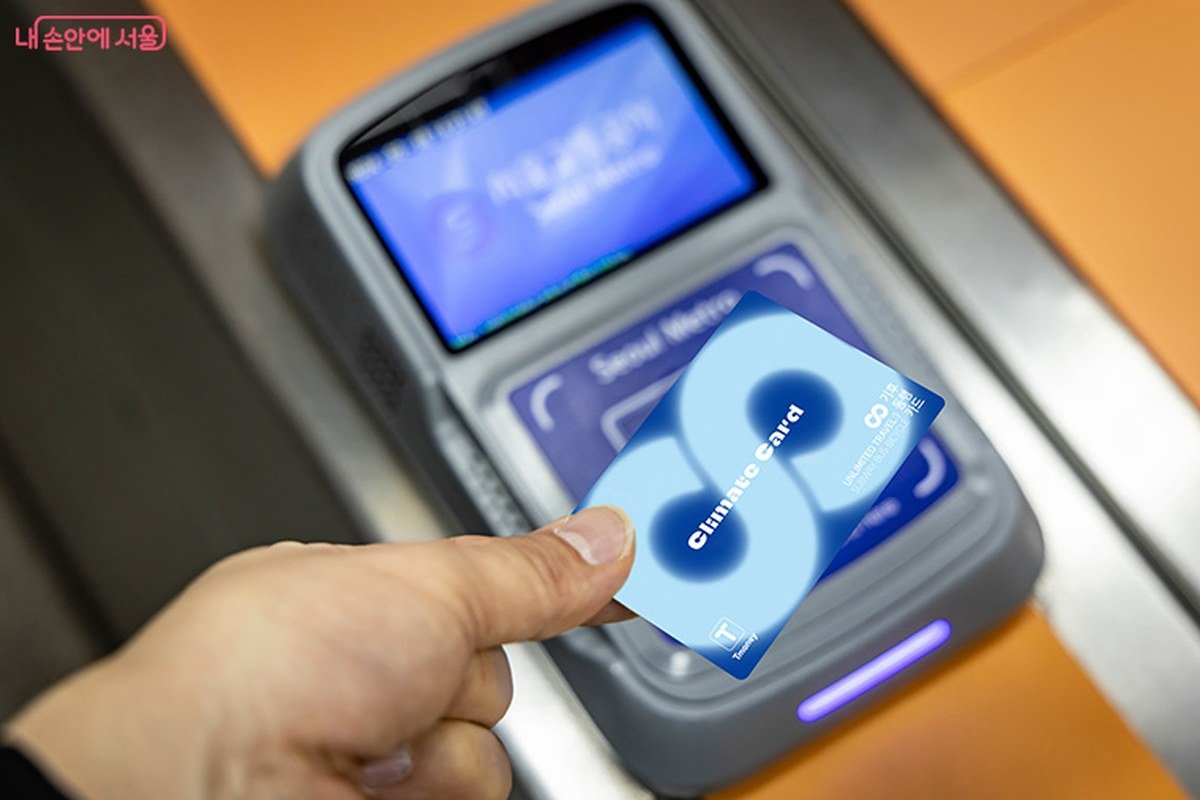
Where to buy and how to top up
For most foreign visitors, the practical first stop is a new transit-card vending machine on Seoul Metro Lines 1–8 (Line 1: Seoul Station–Cheongnyangni). Switch the UI to English if available. Buy a physical Climate Card, pick a 1/2/3/5/7-day pass, and pay with cash, a Korean card, or an international Visa/Mastercard. Overseas cards usually add about a 3.7% fee.
| Channel | What you get | Payment |
|---|---|---|
| New subway vending machines | Lines 1–8 (Line 1: Seoul Stn–Cheongnyangni). English UI. Physical card + short-term | Cash, Korean card, international (~3.7%) |
| Station unmanned chargers | Lines 1–9, Ui-Sinseol, Sillim, Gimpo Goldline, etc. | Cash/card (limits vary by line) |
| Convenience stores | Near Lines 9 / Ui-Sinseol / Sillim — GS25, CU, 7-Eleven, Emart24, etc. for the physical card | Cash/card |
| Mobile apps | Tmoney / Samsung Wallet — mainly Korean accounts & Android | Bank/Korean card — not the first choice for tourists |
Looking for a machine at Incheon Airport so you can board AREX with a Climate Card does not match how the product works. Buy and charge downtown or toward Gimpo, as VisitSeoul and Tmoney guidance emphasize Lines 1–8 machines.
Arriving from the airport
There is no Climate Card path onto AREX at Incheon. Take AREX express/all-stop with another ticket or card into the city, then buy a physical Climate Card at a Lines 1–8 new vending machine (Seoul Station, Jongno, Gangnam, and similar). Pay the KRW 3,000 card fee plus your chosen pass — validity starts that day.
If you route via Gimpo, AREX Gimpo–Seoul Station is inside short-term coverage. Do not plan to board again at Incheon T1/T2 with the same card.
Moving around downtown only
If your hotel is near a Lines 1–8 station with a new machine, use the English UI for Climate Card + short-term. If you mainly ride Line 9, Ui-Sinseol, or Sillim, pick up a physical card at a nearby convenience store, then charge the pass at an unmanned charger or vending machine. Mobile Climate Card flows center on Korean payment methods and Android (OS 12+), so do not treat the app as the primary path on a foreign account alone.
An international card adds ~3.7%. On a KRW 15,000 5-day pass that is roughly KRW 555 before the KRW 3,000 card fee. Cash avoids the surcharge.
Validity and registration
The charge day is the start day. Buy a day early and the clock starts then. For refunds, register one card per person at pay.tmoney.co.kr (Tmoney Card & Pay). Without a Korean bank account, follow Tmoney HQ cash-refund instructions. Short-term passes do not include Ttareungi, so registration and bike use are separate issues.
When the pass beats single fares
Adult transit-card base fares for a simple comparison: subway KRW 1,550 (within 10 km, Seoul Metro) and city/branch buses KRW 1,500. Ignoring transfers and distance surcharges, and assuming subway-only taps:
| Pass | Fare | ÷ 1,550 | Rough break-even |
|---|---|---|---|
| 1-day | 5,000 | 3.2 | From ~4 rides (3×1,550=4,650 < 5,000; 4×=6,200) |
| 2-day | 8,000 | 5.2 | ~6 rides |
| 3-day | 10,000 | 6.5 | ~7 rides |
| 5-day | 15,000 | 9.7 | ~10 rides |
| 7-day | 20,000 | 12.9 | ~13 rides |
Two or three short hops a day may still favor a regular Tmoney card. Palace–market–Hangang hops in one day often clear the 1-day break-even. The KRW 3,000 card fee is one-time; recharge the same card on a later trip and you skip it.
Two worked examples
Example A. One day, two palaces, a market, evening near the Hangang — about five subway rides. At KRW 1,550 × 5 = 7,750, the KRW 5,000 1-day pass wins. If it is your first card, the total is 8,000 — close to five single rides — and a 2-day recharge the next day drops the card fee.
Example B. Three days averaging about three subway rides and one bus each day pushes toward the KRW 10,000 3-day band. Transfer discounts on a regular card can still win on light days; short-term tends to fit when you move four or five times a day. Long trips or exits outside the service area add separate fares and change the math.
Resident Climate Pass, Climate Card Plus, and Everyone’s Card (K-Pass) since 1 September 2026 target Seoul residence / address verification. Prepaid 30-day Climate Card top-ups ran through 31 August 2026, with use roughly through 29 September. Short-term passes keep selling. Visitors do not need the resident rebate signup.
Seoul’s FAQ on ending the 30-day pass (Korean) states that short-term passes continue within Seoul’s scope. Registration at korea-pass.kr is for resident benefits, not tourist day passes. Even with an alien registration number, benefits follow residence rules — a short visit is not a reason to pick Plus / Climate Pass.
FAQ
Does short-term include Ttareungi or the Hangang Bus?
No. Use a separate payment or product for Seoul Bike or the Hangang Bus.
Can I board AREX at Incheon Airport?
Not with a Climate Card at T1/T2. Alighting only is allowed. Gimpo Int’l ↔ Seoul Station on AREX is usable.
Can I pay with an overseas credit or debit card?
Yes, at new vending machines for short-term purchase/top-up (Visa/Mastercard and similar). Expect about a 3.7% fee. Cash and Korean cards also work.
Is this the same as Climate Pass / Climate Card Plus?
No. Short-term is for tourists and short stays. Climate Pass / Climate Card Plus / Everyone’s Card (K-Pass) are resident products. Resident products shifted from 1 September 2026; short-term continues separately.
Can I top up early and start later?
No. The charging date is the start date. There is no deferred start for short-term. Buy on the day you will use it. Except for special cases such as defects, the physical card fee is generally non-refundable per official FAQ.
Can I use mobile only, without a physical card?
Official guidance centers mobile Tmoney / Samsung Wallet on Korean accounts and Android. For overseas visitors, buying a physical card at a new vending machine and paying with an international card or cash is the main path. If the app opens but payment or identity checks fail, you lose time on site.
What if I exit outside the service area?
Boarding inside the range and exiting outside can trigger an extra fare. Official examples such as Jongno 3-ga to Indeogwon are treated as not covered or as requiring additional fare. Shinbundang and GTX are not short-term rides.
Fares, coverage, and international-card rules follow Seoul’s official pages. Before you travel, recheck the line map, machine locations, and AREX boarding limits. Short-term passes remain on sale; they are not the same track as the resident 30-day wind-down or Climate Pass conversion.
Leave a Reply