
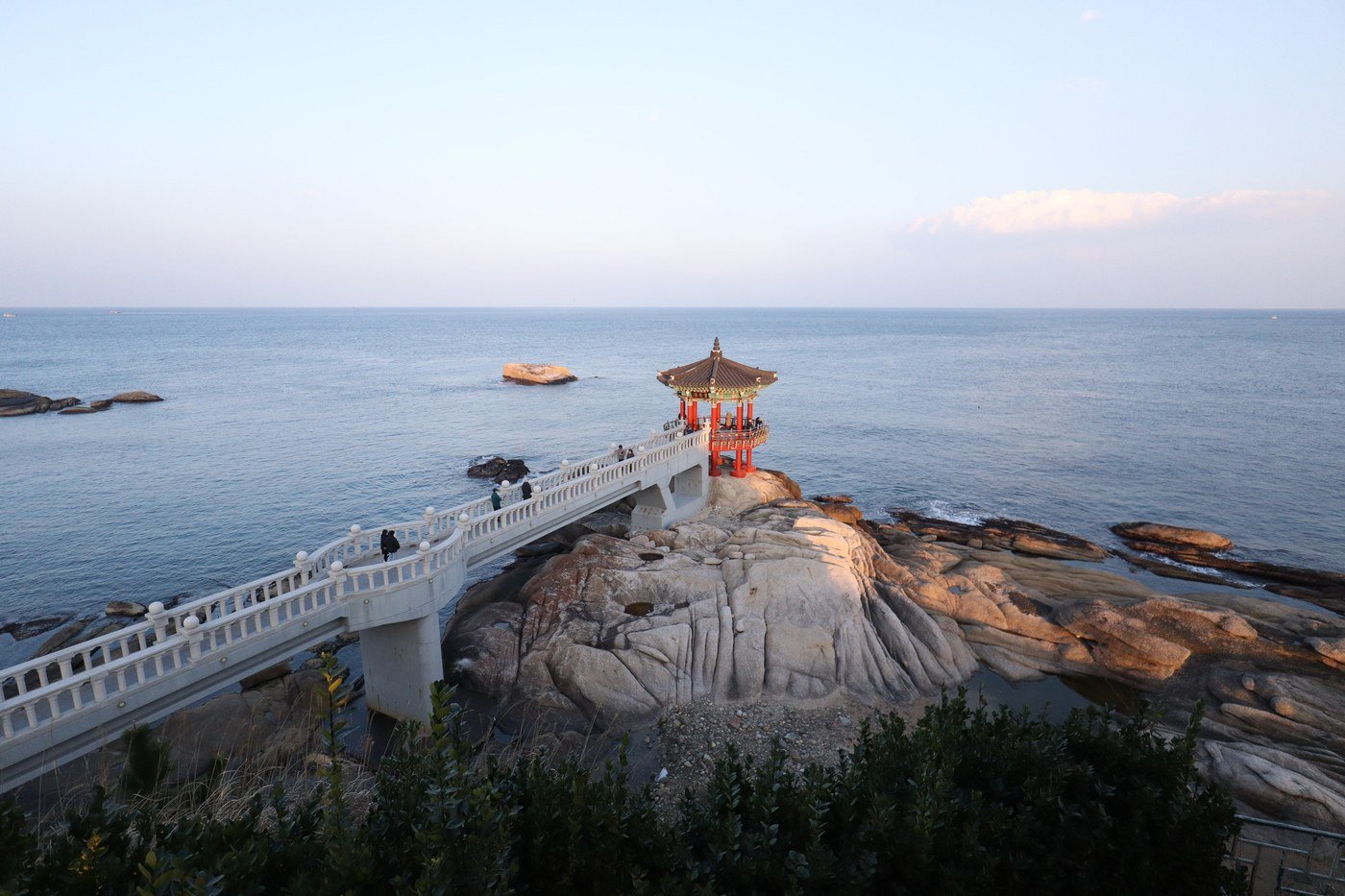
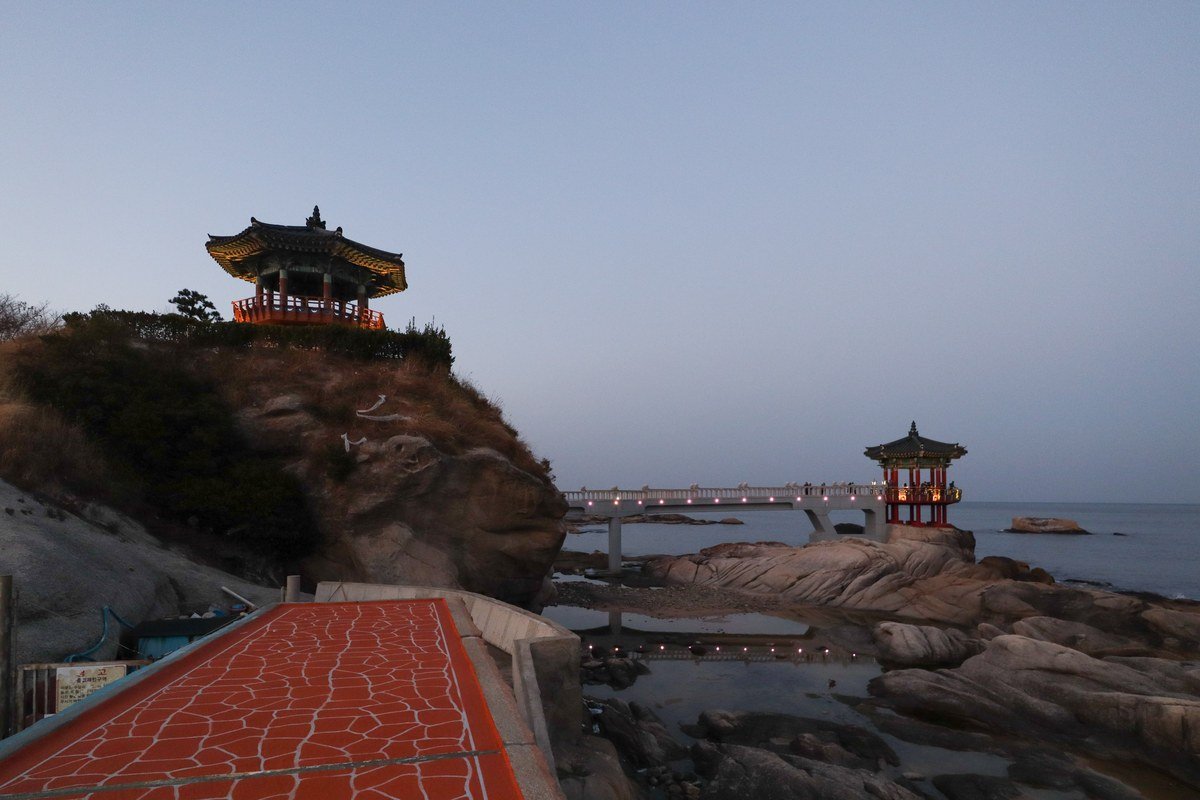
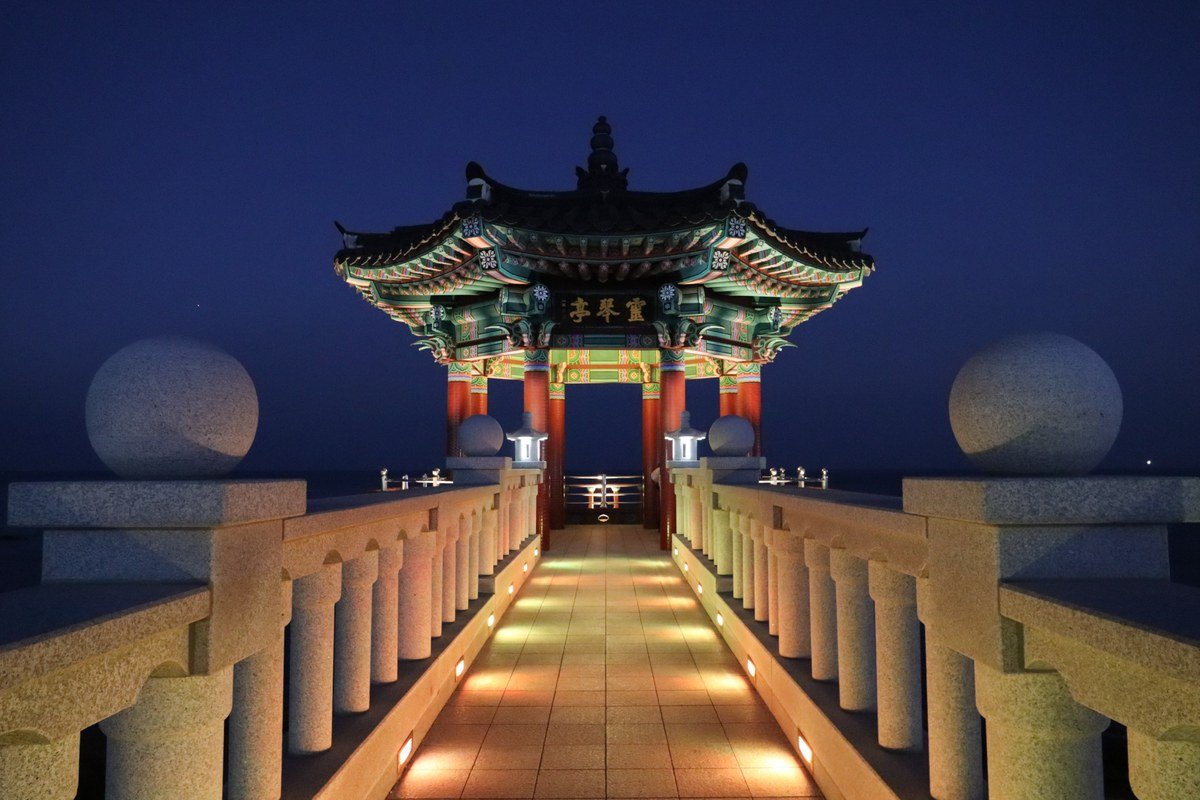
Yeonggeumjeong is a pair of seaside pavilions on the rocky shore below Sokcho Lighthouse, at 43 Yeonggeumjeong-ro in Sokcho, Gangwon Province. It is open 24 hours a day, every day of the year, and there is no admission fee. A bridge of about 50 m runs out over the rocks to the sea pavilion, usually called the sunrise pavilion, and a second pavilion stands on the low rock hill behind it.
It is also one of the easier coastal viewpoints in the region for wheelchair users and families with strollers: there are 5 accessible parking spaces at the nearby lot and an elevator that rises to the sunrise pavilion. You can review the accessibility details on the Korea Tourism Organization’s accessible travel page for Yeonggeumjeong.
What is Yeonggeumjeong, and where does the name come from?
The name means roughly “pavilion of the spirit zither.” Locals said that waves breaking on the rocks here sounded like a geomungo, a traditional six-string Korean zither, played by a spirit. Originally the name did not refer to a building at all but to the big rocks at the foot of the stone hill, and it has appeared in records since 1926. In the Joseon era, the area was known as Biseondae.
There is an important catch for anyone drawn by that story. Late in the Japanese colonial period, construction of Sokcho Port broke up much of the rock, leaving the wide, flat bedrock you see today. As a result, the zither-like sound that gave the place its name can no longer be heard. People come now for the open view of the East Sea, the drama of waves hitting the shelf of rock, and the experience of standing in a pavilion with water on almost every side.
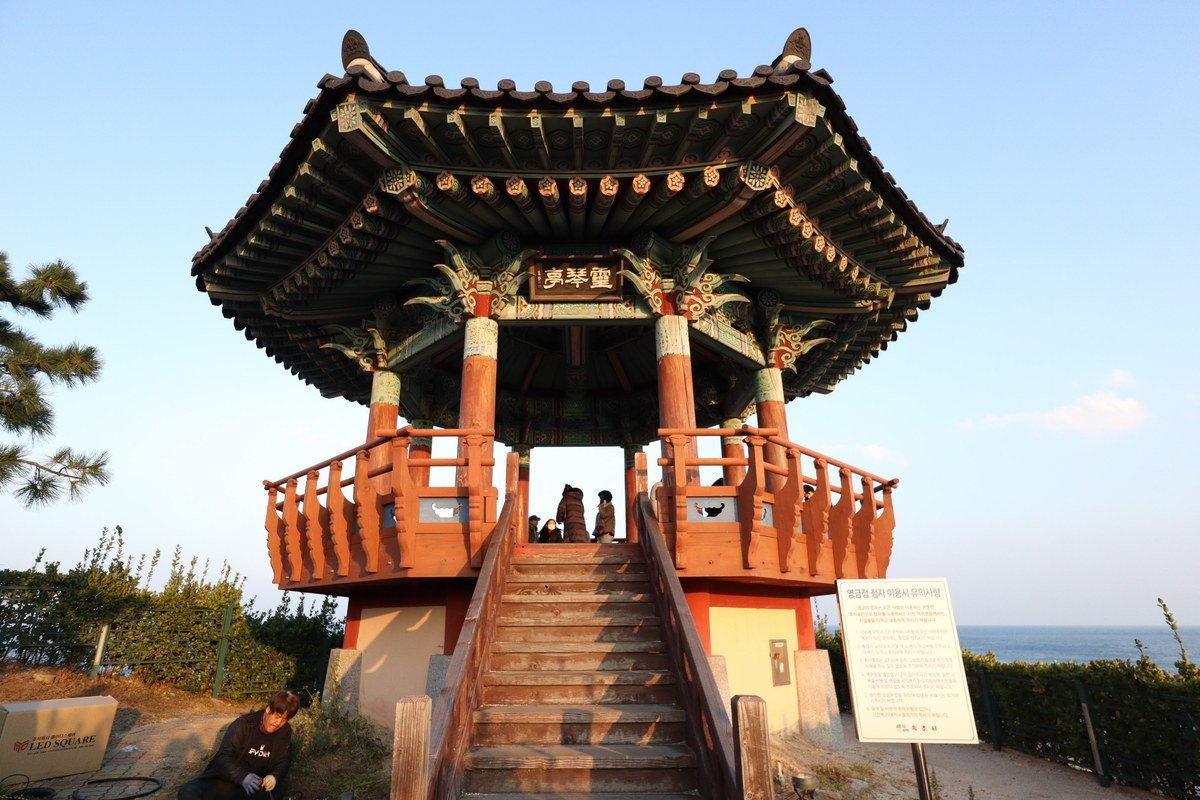
Two pavilions, one short walk
The first pavilion sits on top of the small rock hill and is reached by stairs. The second sits out over the sea at the end of the bridge; it is commonly called the sunrise pavilion, and its signboard carries the Chinese characters 靈琴亭. The sea pavilion is a concrete structure painted in traditional colors. A natural route is to walk the bridge to the sea pavilion first, come back to shore, then climb the stairs to the hilltop pavilion for a higher view back over the bridge.
The bridge, Dongmyeong Haegyo
The roughly 50 m bridge to the sea pavilion is called Dongmyeong Haegyo, and VisitKorea notes that it was built with donations from local residents. From the bridge you look straight down at the bedrock and the surf. On days with big swells, stay back from the railing and follow any instructions posted on site.
Is it really free, and when is it open?
Yes. Yeonggeumjeong is free, has no ticket office and does not require any booking, and it is open around the clock from 00:00 to 24:00 all year. That makes it a useful counterweight on a Sokcho trip where several other sights charge admission. VisitKorea lists the Sokcho Eye observation wheel, for example, as running Sunday to Friday from 10:00 to 20:00 and Saturday from 10:00 to 21:00, and a VisitKorea accessible-travel course from November 2021 gave the Expo Tower adult fee as 2,500 won. At Yeonggeumjeong you can simply walk in whenever it suits you.
Some practical details are not posted in the sources, including the parking fee, the hours of the evening lighting and the wave conditions under which the bridge is closed. For those, ask the Sokcho Intercity Bus Terminal tourist information center (+82-33-639-2830) or the Dongmyeong Port Yeonggeumjeong contact (+82-33-639-2690) before you go.
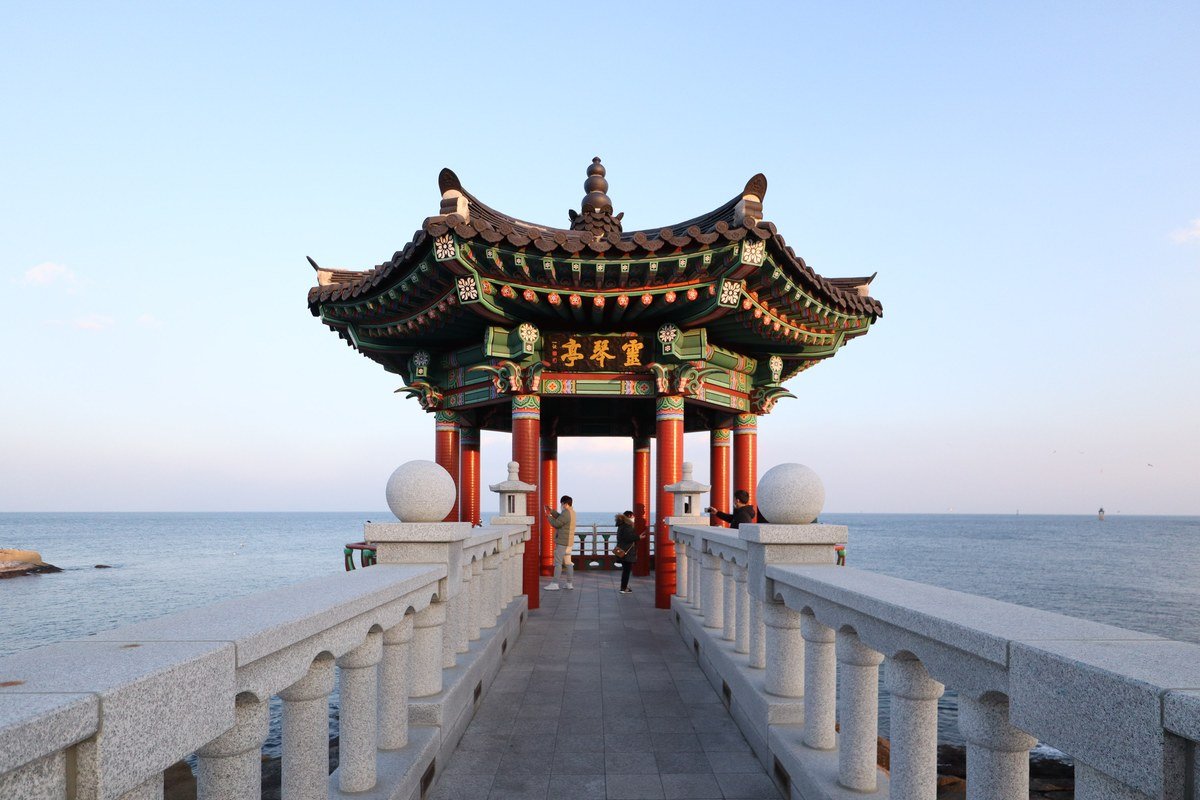
When to go
Sunrise over the East Sea is the signature view here, and VisitKorea also highlights the pavilions by day and under moonlight. Sunrise times change through the year, so look up the exact time for your date the evening before. Because the site never closes, an early start costs nothing but sleep. In daylight the water is at its clearest; around dusk the sky colors behind the pavilions; and after dark the bridge is lit.
Weather on this coast can change quickly. If the wind is strong or the waves are throwing spray onto the bridge, admire the view from the shore or the hilltop pavilion instead. Safety notices on site always take priority.
Can you visit with a wheelchair or stroller?
Yes, the sunrise pavilion is reachable without stairs. Park at the Dongmyeong Port Live Fish Market parking lot, where 5 accessible spaces sit near the entrance. Cross the road and, about 30 m ahead, an elevator goes up to the sunrise pavilion; you enter on one side and exit through the door on the opposite side at the top.
The path to the pavilion is a gentle uphill. VisitKorea’s accessibility notes say wheelchairs can travel between the pavilion and the Dongmyeong Hwaleo Center, but the area toward the breakwater has steps and is not wheelchair accessible. The approach to the entrance is a gentle ramp with no threshold at the main entrance.
| Checklist item | Details |
|---|---|
| Address (for GPS) | 강원 속초시 영금정로 43 (43 Yeonggeumjeong-ro, Sokcho) |
| Hours and fee | Open all year, 24 hours, free |
| Parking | Dongmyeong Port Live Fish Market lot; 5 accessible spaces near the entrance |
| Elevator | About 30 m across the road from the lot entrance, up to the sunrise pavilion |
| Wheelchair route | Pavilion to Dongmyeong Hwaleo Center: yes; breakwater side: steps |
| Restrooms and baby care | Accessible restrooms (men/women) opposite the lot entrance, with baby seat and changing table |
| Mobility taxi | Gangwon mobility support center, 1577-2014 |
| Bus from Express Bus Terminal | City bus 1, 7, 9 or rural bus 9, 94 to Yeonggeumjeong Ipgu, then 672 m on foot (per local info site) |
| Help | Tourist info +82-33-639-2830; KTO Travel Hotline 1330 |
Per the KTO accessible travel page and the KTO accessible Sokcho course; bus details per a local info site.
Travelling with small children
The accessible restrooms opposite the parking lot entrance are separated for men and women and include a baby seat and a diaper-changing table. Using the elevator, a stroller can reach the sunrise pavilion with no steps at all. Sea wind on the bridge can be strong, so keep small children’s hands held there.
Mobility support taxi
Visitors who need an accessible vehicle can call the Gangwon Province mobility support center at 1577-2014. In information dated November 2021, the base fare within Sokcho was 1,100 won for the first 4 km plus 100 won per additional kilometer. Fares may have changed, so confirm when you book, and be ready for the call to be in Korean; the 1330 Travel Hotline can help with interpretation.
How do you get there from Seoul and from Sokcho’s bus terminals?
Express buses are the simplest option. From Seoul Express Bus Terminal to Sokcho Express Bus Terminal there were 36 buses a day, from 06:30 to 23:30, taking about 2 hours 20 minutes. From Dong Seoul Bus Terminal there were 9 a day, from 07:00 to 19:50, taking about 2 hours 30 minutes. These are weekday figures from information written in November 2021, so check current timetables when you book.
Driving from Seoul or Gyeonggi takes about 2 hours 40 minutes over 203.9 km, via the Olympic-daero, the Seoul–Yangyang Expressway and the Donghae Expressway. Enter 강원 속초시 영금정로 43 in your navigation app. Sokcho Intercity Bus Terminal also serves 31 routes; for questions call 1688-3402.
From the terminals to the pavilion
According to a local info site run by residents, a taxi from Sokcho Intercity Bus Terminal takes about 4 minutes (around 3,800 won), or you can walk in about 17 minutes. From Sokcho Express Bus Terminal, take city bus 1, 7 or 9 or rural bus 9 or 94 for 16 stops to Yeonggeumjeong Ipgu (영금정입구), then walk 672 m, about 10 minutes. A taxi from the Express terminal is about 8 minutes (around 5,200 won). VisitKorea adds that the fisheries market area near the port is a 5-minute walk from the Intercity terminal and 15 minutes from the Express terminal.
What else is nearby?
KTO’s accessible course suggests a two-day loop starting here. Day one runs from Dongmyeong Port and Yeonggeumjeong to Abai Village, about 10 minutes and 4.3 km by car. Day two moves from Sokcho Beach to the Expo Tower and Cheongchoho Lake, then to the Sokcho Museum; the legs are about 7 minutes (2.5 km) from Abai Village to Sokcho Beach, 7 minutes (2.6 km) from the beach to the Expo Tower, and 12 minutes (5.5 km) from the Expo Tower to the museum.
If you turn left from the pavilion and head uphill, you reach Sokcho’s pojangmacha street of food tents. Around Dongmyeong Port there are live fish markets as well as Sokcho International Passenger Terminal, the domestic ferry terminal and the international cruise terminal. The gaetbae, a hand-pulled rope ferry across to Abai Village, cost 500 won one way for adults and 300 won for children and teens, cash only, in November 2021 information; its hours differ between sources and by season, so check on site.
Help in English
The Korea Tourism Organization’s 1330 Travel Hotline (+82-2-1330 from abroad) answers in Korean, English, Japanese and Chinese around the clock, with Russian, Vietnamese, Thai and Malay/Indonesian from 08:00 to 19:00, and can help with directions or calls to local offices. For on-site questions about Yeonggeumjeong, VisitKorea lists +82-33-639-2690. If you are continuing down the coast, our Naksansa Temple guide covers a seaside temple in neighboring Yangyang.
Frequently asked questions
Is there an entrance fee for Yeonggeumjeong?
No. It is free and open 24 hours a day, all year.
How long is the bridge to the sunrise pavilion?
About 50 m. The bridge, Dongmyeong Haegyo, leads from the shore to the sea pavilion.
Is there accessible parking and an elevator?
Yes. There are 5 accessible spaces at the Dongmyeong Port Live Fish Market lot and an elevator about 30 m across the road up to the sunrise pavilion.
How far is the walk from the bus stop?
From the Yeonggeumjeong Ipgu stop it is 672 m, about 10 minutes on foot, per a local info site.
Sources
- KTO accessible travel — Yeonggeumjeong
- KTO accessible course — Sokcho
- VisitKorea — Sokcho Tourism and Fisheries Market
- Terminal-to-pavilion transport: local info site run by residents (yeonggeumjeong.co.kr)
- Photos: Mobius6, CC BY-SA 4.0, Wikimedia Commons
Leave a Reply