
The War Memorial of Korea’s permanent galleries are free. Official hours are 09:30–17:40 with last admission at 17:00, and the museum closes every Monday. The address is 29 Itaewon-ro, Yongsan-gu, Seoul, a short walk from Samgakji Station on Lines 4 and 6. Figures were checked on 2026-09-21 from the official homepage and visitor guide.
The War Memorial of Korea in Yongsan is one of Seoul’s largest museums and one of the best-value stops in the city: the permanent galleries cost nothing, and the outdoor display of tanks and aircraft is a draw in its own right. What catches visitors out is timing — the Monday closure, the holiday exceptions and the 17:00 entry cut-off. This guide covers fees and hours, what to see and in what order, how to get there, and practical tips for international visitors and families.
Fees and hours
Permanent exhibition rooms are free; some rental or special shows may charge. Open 09:30–17:40; doors stop new entries at 17:00, and staff begin preparing to close around 17:40. Arrive by 16:00 at the latest if you want a full indoor loop without rushing.
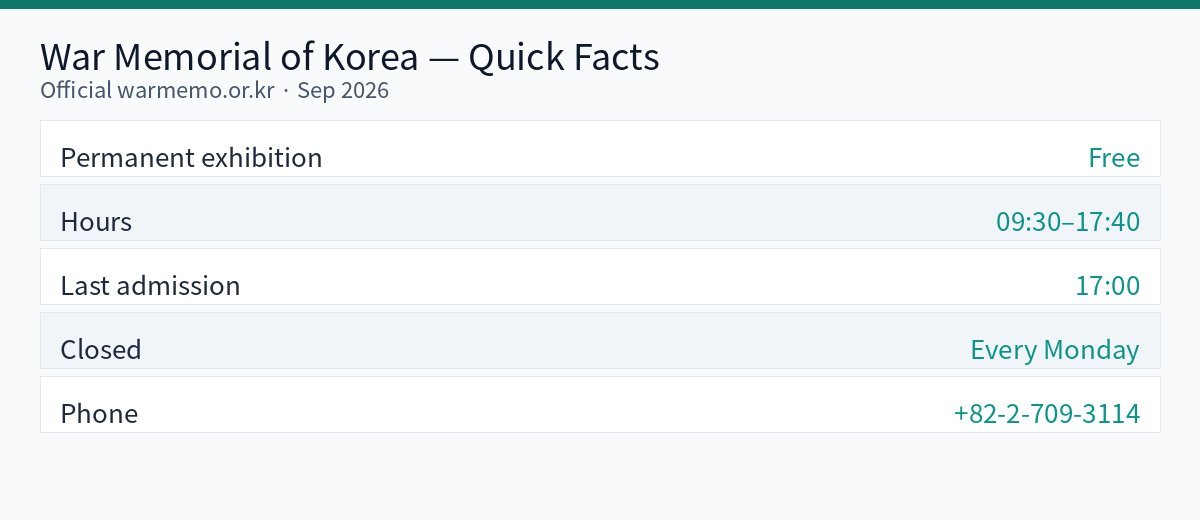
| Item | Detail |
|---|---|
| Permanent exhibition | Free (rental shows may differ) |
| Hours | 09:30–17:40 |
| Last admission | 17:00 |
| Regular closure | Every Monday |
| Extra closures | Jan 1, Seollal day, Chuseok day; if Monday falls in a holiday stretch, closed the day after |
When a Monday sits inside a holiday block, the “day after the holiday” rule applies—double-check notices before holiday trips.
House rules
No food indoors, no pets except guide dogs, no flash/tripod/selfie-stick or commercial shoots, no wheeled shoes in galleries, and no bikes/scooters/inline skates in outdoor exhibit areas. These rules come from the official visitor guide. The food ban covers packed lunches too, so if you bring your own food, follow the lobby and outdoor rules for where you can eat it.
What to see
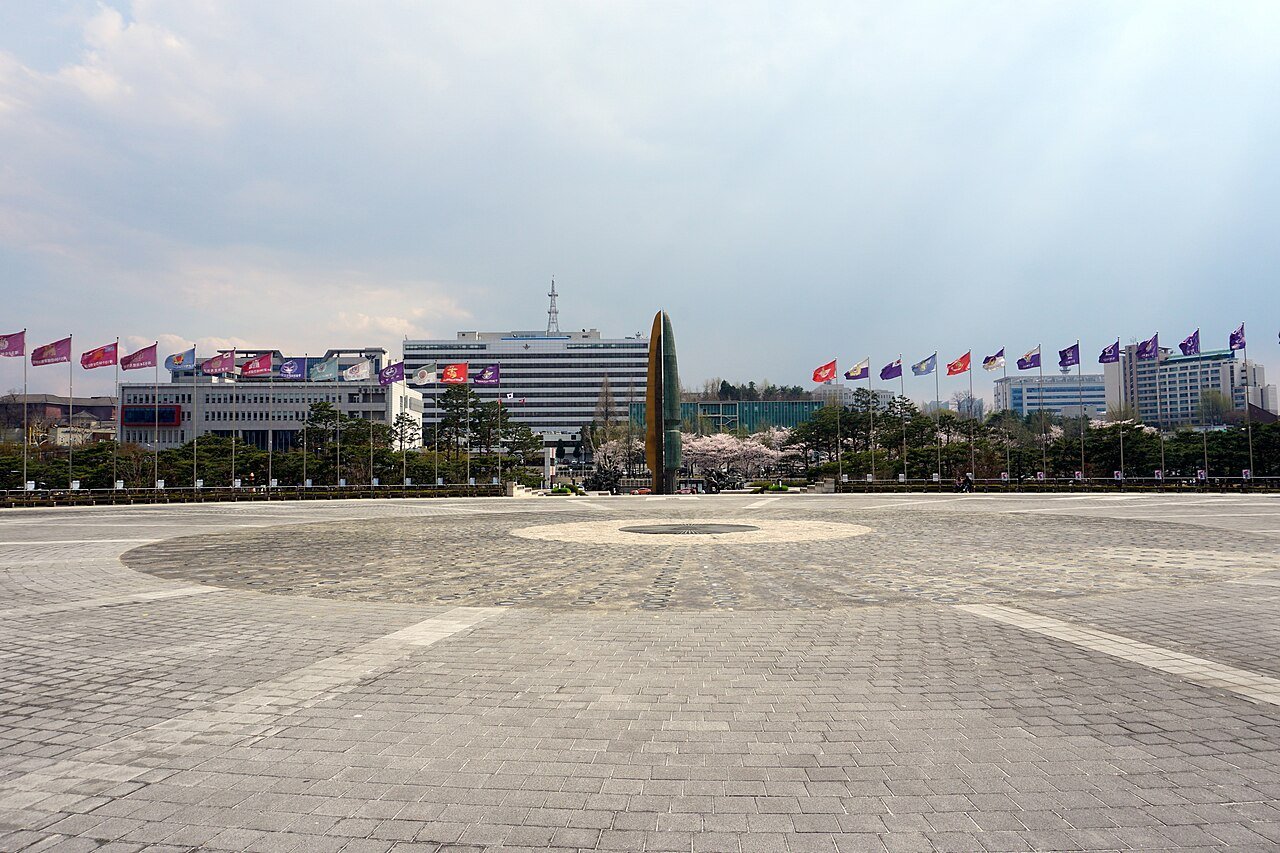
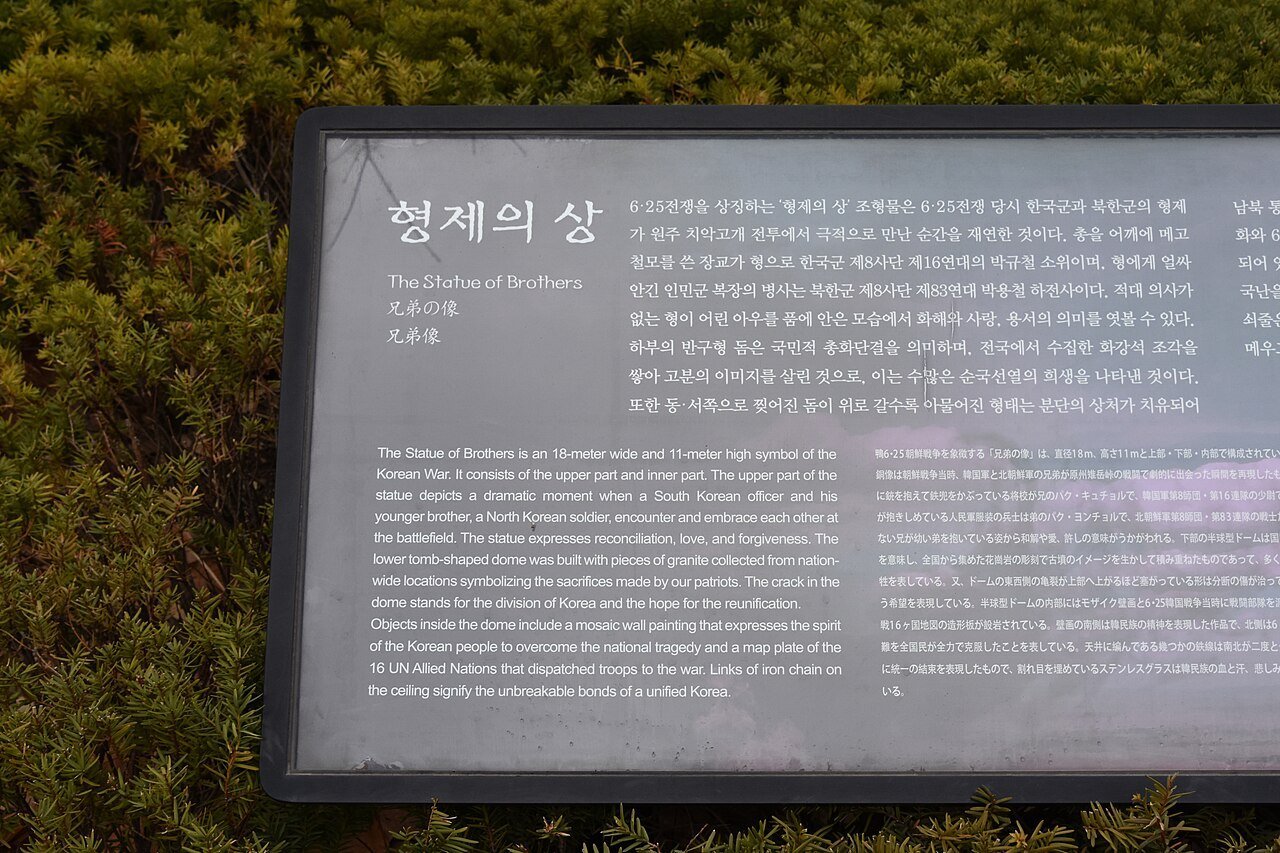
The permanent exhibition combines indoor galleries — covering Korea’s war history, the Korean War, overseas deployments and national heroes — with an outdoor display of military equipment. Indoor war-history and Korean War galleries plus outdoor armor and aircraft can easily fill 2–3 hours. Families often shoot outdoor photos first, then move inside, which helps young children keep their energy for the galleries. Special exhibitions may be ticketed—check the homepage banner.
How to pace the galleries
The indoor exhibition is divided by floor and theme, so trying to read everything in one go is tiring. Setting priorities works better — for example, the Korean War galleries first, then the outdoor equipment, then whichever special exhibition interests you. Photography is allowed in some sections and not in others; respect the no-flash and no-tripod rules and stick to quick phone snapshots where photos are permitted.
Who you are travelling with changes the best route. Younger primary-school children tend to respond more to models, videos and the outdoor equipment than to text panels. With teenagers or adult visitors from abroad, spending more time in the Korean War galleries and the spaces dedicated to the UN countries that sent troops usually leads to better conversation. On busy photo days, take your shots quickly and keep the walkways clear for other visitors.
Tours and education
Guided talks and education programs run often; schools usually need advance booking via the official site. Ask the information desk at the central entrance about English materials or app-based commentary.
Getting there
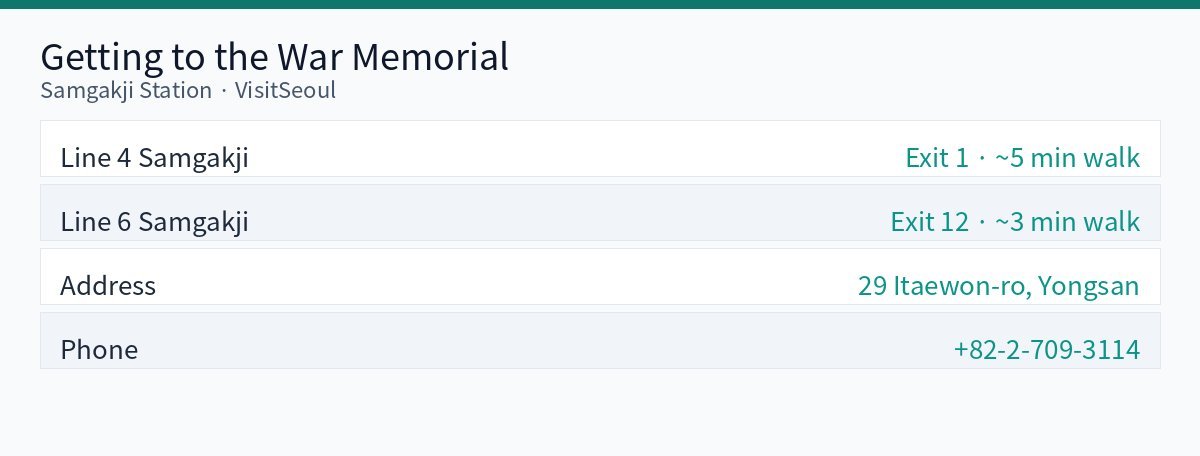
The subway is the simplest way in. Line 4 Samgakji Exit 1 (~5 min walk) or Line 6 Exit 12 (~3 min) are the usual tips, and Namyeong Station on Line 1 is also within walking distance. Address: 29 Itaewon-ro, Yongsan-gu, Seoul 04353. Phone: +82-2-709-3114.
Pair easily with the National Museum of Korea or Yongsan Family Park. Itaewon and Yongnidan-gil are also close, which makes it easy to plan a meal after your visit. Driving means paid parking and traffic—transit is simpler.
Tips for international visitors
Free permanent galleries mean low cash friction, but Monday closures and the 17:00 cutoff matter — put both in your calendar first. Leave large wheeled bags and wheeled shoes at the hotel, as they can be refused at the gallery entrance. VisitSeoul and the official site offer English, Japanese and Chinese pages, so you can check the route in your own language before you set out.
When there is construction or a partial closure, the central-entrance information desk and the homepage notices are updated first. In 2026, notices have been posted about improvement work around the memorial hall and the central entrance, so reading the latest notice before leaving can save a wasted trip. You can also call +82-2-709-3114 to check whether the museum is open and whether any areas are closed that day.
VisitSeoul notes accessible facilities such as wheelchair rental, accessible toilets and elevators. If someone in your group has limited mobility, ask about the step-free route in advance.
Budget, weather and crowds
Many visitors stop at the souvenir shop or café. Admission to the permanent galleries is free, but food and goods are not, so a genuinely zero-cost day takes a little planning. The outdoor exhibition area is pleasant in good weather, while on rainy, very hot or very cold days the indoor galleries take most of your time — an indoor-focused plan reduces weather risk. Weekends and public holidays bring more families and can mean queues for guided sessions; the first entry on a weekday morning is usually the quietest.
Combining with the National Museum of Korea
If you want to see the National Museum of Korea on the same day, visiting the War Memorial in the morning and the museum in the afternoon makes a natural route. Both are large, so aiming for one key exhibition at each is far less tiring than trying to see everything. If you plan to continue to Itaewon for dinner, keep in mind that evening demand for transport and taxis can be high.
FAQ
Is it really free?
Yes for permanent exhibition rooms. Some special/rental shows may charge, and food, drinks and souvenirs are paid.
Until when can I enter?
Hours 09:30–17:40; last admission 17:00.
Open on Mondays?
No—closed every Monday, with the holiday-stretch exception noted above.
Which subway exit?
Common guidance: Line 4 Exit 1 (~5 min) or Line 6 Exit 12 (~3 min).
Leave a Reply