
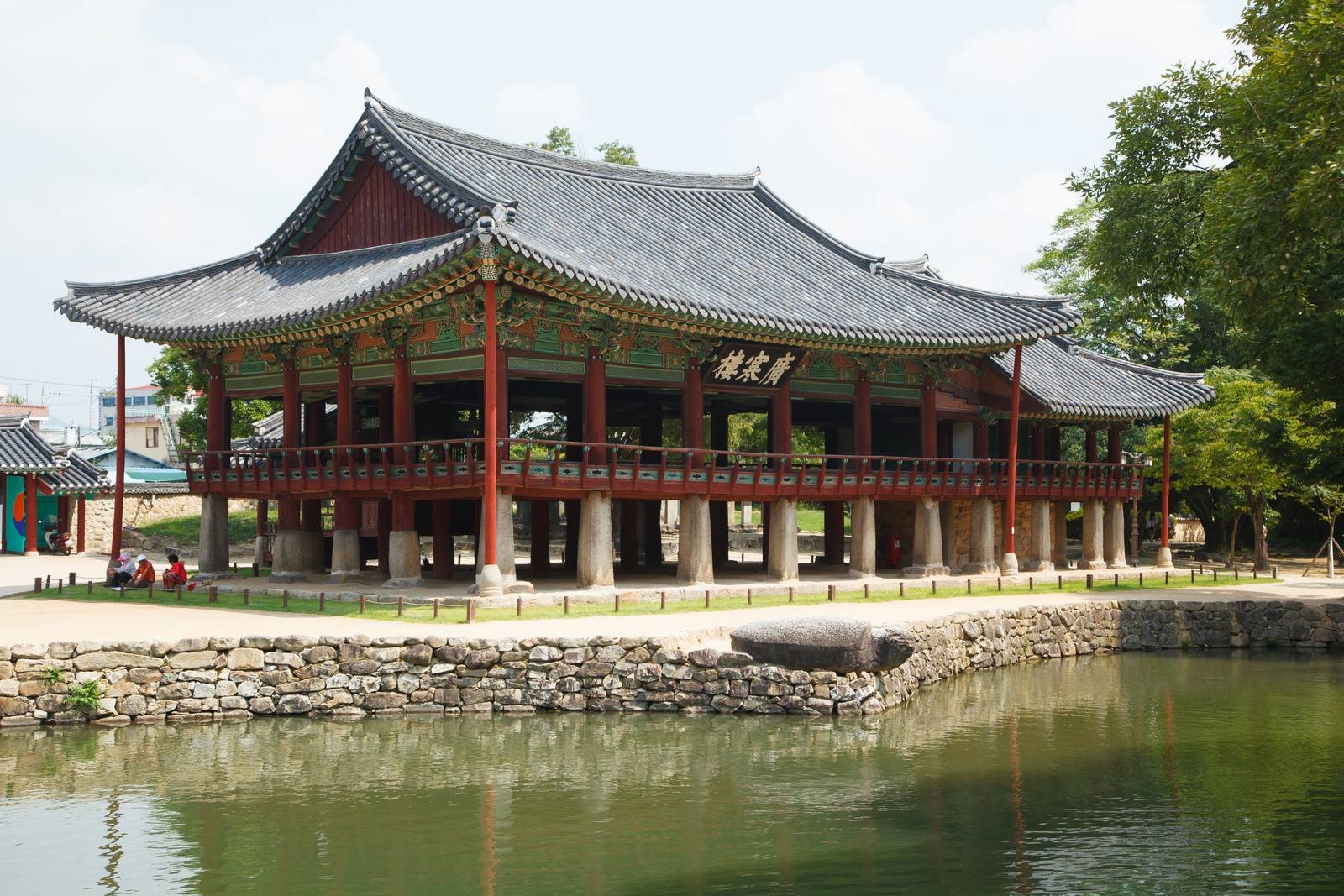
Gwanghalluwon sits at 1447 Yocheon-ro, Namwon, Jeonbuk State (Cheongeo-dong), and it is open every day. From April through October the grounds are open 08:00–21:00, and entry is free from 18:00 to 21:00. From November through February, the span all three guides agree on, hours are 08:00–20:00, with free entry from 18:00 to 20:00. An individual ticket is 4,000 won for an adult, 2,000 won for a youth or a soldier, and 1,500 won for a child. A group of 20 or more pays 2,500, 1,500, and 1,000 won for those same three. An adult ticket plus a car is 4,000 + 2,000 = 6,000 won, and that 6,000 won is addition, not a package. Hours are on VisitKorea’s Gwanghalluwon page and the Accessible VisitKorea page (modified 2026-09-10). The garden record is on the National Heritage digital page for Gwanghalluwon. The map point is latitude 35.403321, longitude 127.379445.
Hours, and when the ticket drops to zero
From April through October the gate opens at 8 in the morning and closes at 9 at night. From 6 to 9 in the evening you do not pay admission. November, December, January, and February open at 8 and close at 8 in the evening, and admission is free from 6 to 8. VisitKorea, Accessible VisitKorea (modified 2026-09-10), and Tour Jeonbuk all print those two spans the same way. Both tourism pages also say there is no regular closing day.
March is the month the pages do not describe the same way. VisitKorea and Accessible VisitKorea label winter as November through March and set the close at 20:00. Tour Jeonbuk labels winter as November through February and does not mention March. The two pages do not give March one closing time. If you are going in March, call one of the two numbers below and ask that day’s close.
Free entry after 18:00 does not cancel parking
Nothing in the fee text says the 2,000 won parking charge disappears after 18:00. In April–October the free window is the ticket only, 18:00–21:00. In November–February it is the ticket only, 18:00–20:00. If you drove, parking is still a separate charge in those hours.
Individual tickets and groups of 20
VisitKorea’s fee text splits individual prices from group prices. The group rate starts at 20 people. Tour Jeonbuk’s individual prices match VisitKorea: 4,000, 2,000, and 1,500 won. Group prices are on VisitKorea and are not on the Tour Jeonbuk table.
| Who | Adult | Youth or soldier | Child |
|---|---|---|---|
| Individual | 4,000 won | 2,000 won | 1,500 won |
| Group of 20 or more | 2,500 won | 1,500 won | 1,000 won |
VisitKorea’s free list names preschool children, people 65 and older, national meritorious persons, Namwon citizens, and people with disabilities, then adds “and others.” Because of that last phrase, the five names are not the whole list. VisitKorea says to check the homepage or call.
Tour Jeonbuk alone prints age bands and a sentence about a local gift certificate. VisitKorea’s fee text has neither. Those ages and that certificate are not on VisitKorea’s fee text.
Parking
VisitKorea says parking is available. A car is 2,000 won, a small bus of 15 seats or fewer is 2,000 won, and a medium or large bus of 16 seats or more is 4,000 won. Stall counts and a free first hour are not in that fee text. One adult plus one car is 6,000 won only because 4,000 and 2,000 add up. It is not a published package. Pets are not allowed.
What the scenic-site page actually lists
The National Heritage page for the garden shows the category as a scenic site, the designation date as 2008-01-08, and the area as 78,166 square meters. Namwon manages it, and the owner line reads Namwon plus others. The page lists the category, the date, and the area. It does not list a serial number.
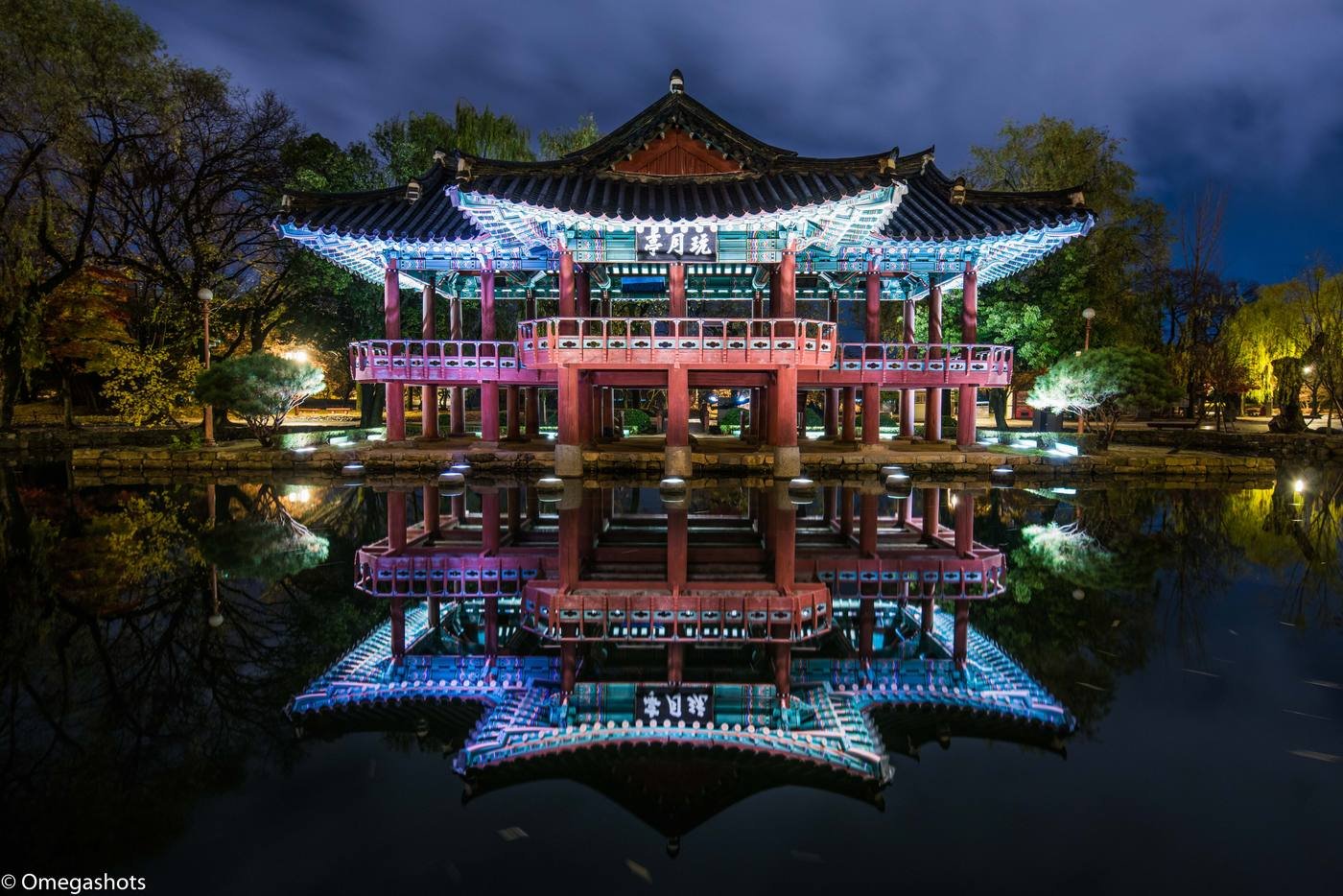
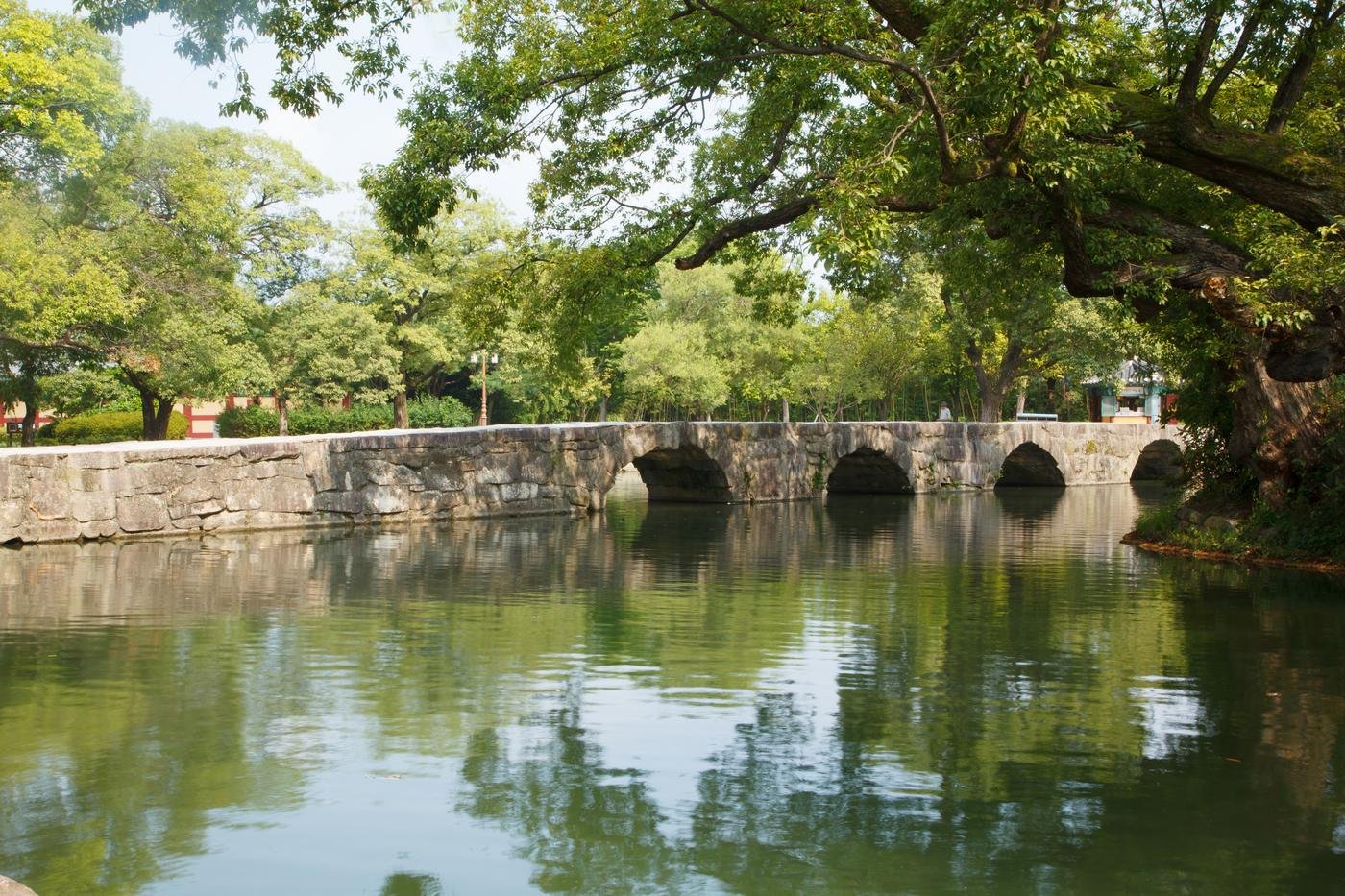
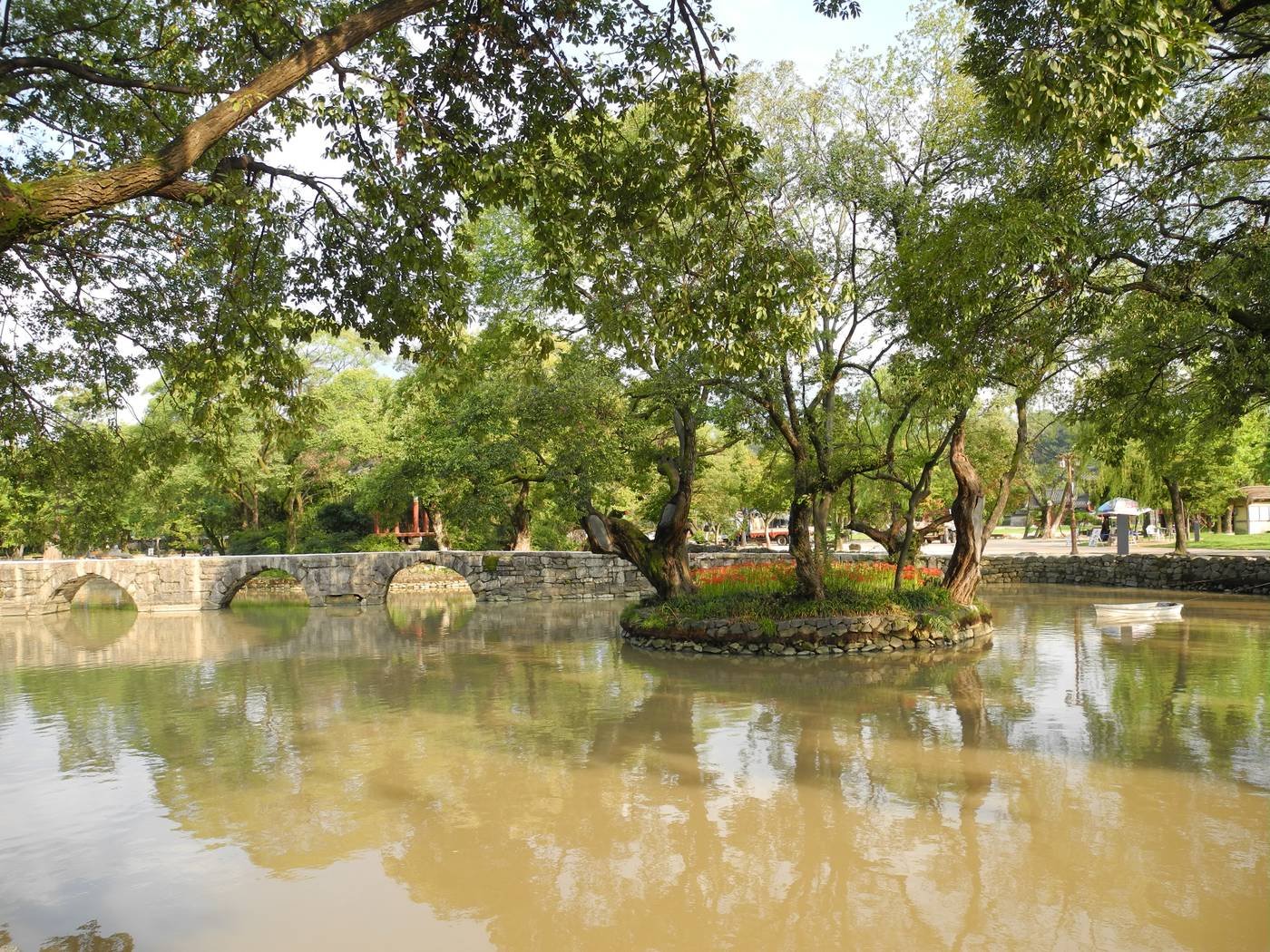
Ojakgyo, the stone bridge, has four rainbow openings. Both the VisitKorea overview and the heritage garden text say so. Named places in the VisitKorea overview are Gwanghallu, Ojakgyo, Wanwoljeong, Yeongjugak, Chunhyanggwan, the Chunhyang shrine, and Wolmae’s house. The heritage text names three isles, Bongnae, Bangjang, and Yeongju, puts Yeongjugak on Yeongju, and dates Bangjangjeong to 1964. The same text dates a restoration of Yeongjugak to 1794.
No official table gives a walking time inside the garden. The pages only give an order of names: the pond, Ojakgyo with its four openings, Gwanghallu, then Wanwoljeong, Yeongjugak, the Chunhyang shrine, and Wolmae’s house. VisitKorea and the heritage text each have one line that the Chunhyang festival is held on lunar May 5, Dano. That line is the whole festival note.
The official pages do not list a city-bus route number, a fare, a headway, or a ride time. Check Namwon’s bus guide. The address is 1447 Yocheon-ro.
Wheelchairs, and the floor of the hall
Accessible VisitKorea (modified 2026-09-10) says there is disabled parking, no step at the main entrance, wheelchair and stroller rental, and an accessible toilet. Its mobility note says you cannot go up onto Gwanghallu. That line is the mobility note. The fee pages do not say the hall is closed to every visitor.
VisitKorea lists the counts: 5 wheelchairs at the main gate, 4 at the west gate, 3 strollers at each of those gates, and 3 disabled parking bays. The accessible page says rental is available and does not list how many.
Where the official pages disagree
The pages do not share one phone number. VisitKorea’s information center lists the Tourism Facilities Division at 063-625-4861. Accessible VisitKorea (modified 2026-09-10) and Tour Jeonbuk list 063-620-8907. Call whichever one answers before you go.
The hall’s grade is also on two screens. Yonhap on 2026-07-01 reported that the Korea Heritage Service announced a new designation for Namwon Gwanghallu that day, about 63 years after the 1963 Treasure listing. The heritage record for the hall displays “Treasure No. 281.” The news article has no serial number for the new designation. Building size in the Yonhap piece is five bays by four, a hip-and-gable roof, and three stacked beams. Those bay counts are in the article, not on the heritage register page.
There is also no single rebuild year. The same Yonhap article says the hall burned in 1597 and was rebuilt at today’s scale in 1626. The heritage garden text says the present hall was restored in 1639 by magistrate Shin Gam.
Questions people ask first
What does one adult with a car pay?
In daytime hours, 4,000 won for the adult ticket plus 2,000 won for the car is 6,000 won. In a group of 20 or more the adult ticket is 2,500 won, and car parking stays 2,000 won. The free evening window does not come with a sentence that waives parking.
What time does it close in March?
VisitKorea and Accessible VisitKorea print a 20:00 close for November through March. Tour Jeonbuk prints November through February only. March does not have one closing time on these pages. Call 063-625-4861 or 063-620-8907.
How many openings does Ojakgyo have?
Both guides say four. The garden area on the heritage page is 78,166 square meters, designated on 2008-01-08. That page shows the category, the date, and the area, and no serial number.
Can I bring a dog, or borrow a wheelchair?
Pets are not allowed. VisitKorea lists 5 wheelchairs at the main gate and 4 at the west gate, and no step at the main entrance. The line about not going up onto Gwanghallu is in the mobility note.
Leave a Reply