
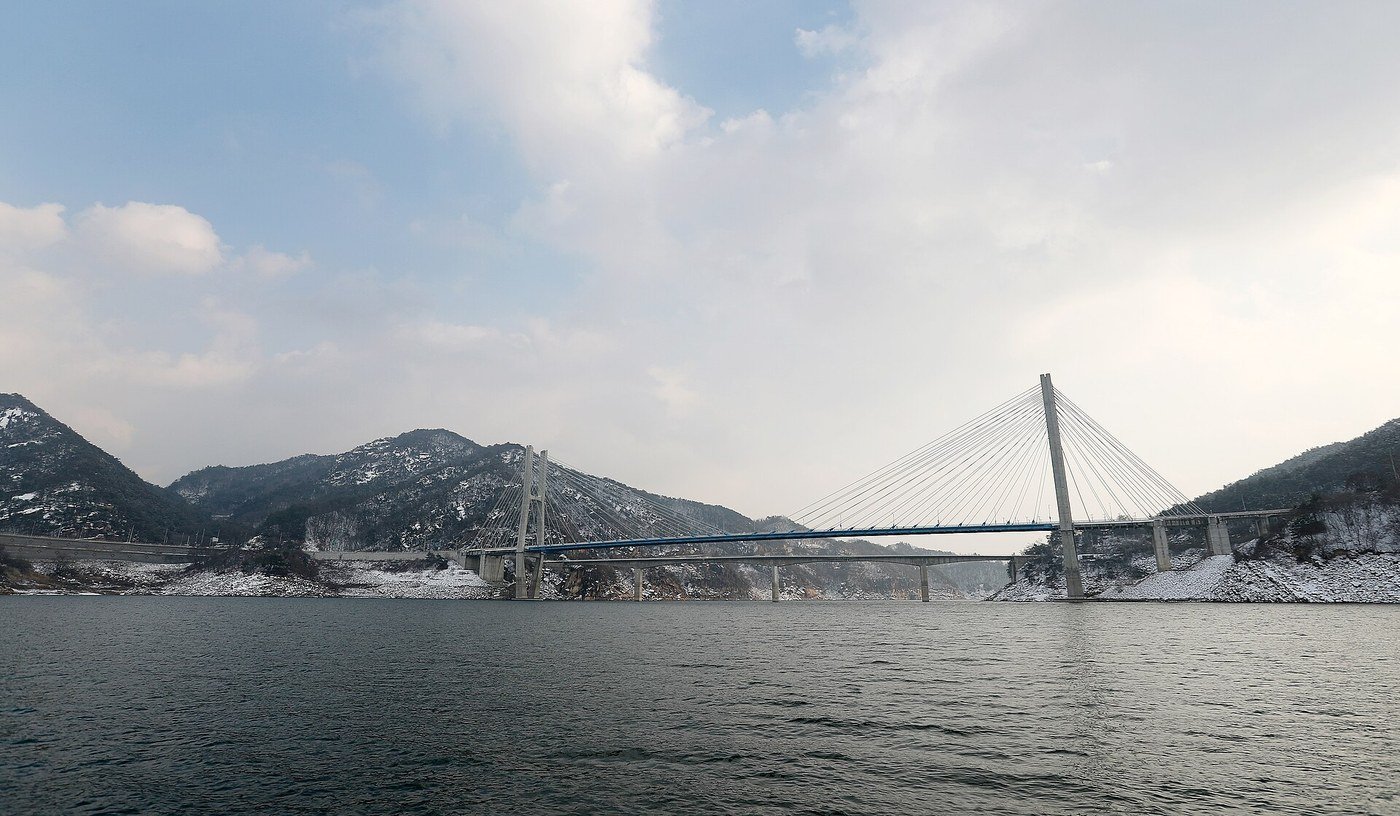
Cheongpung Lake in Jecheon, North Chungcheong Province, makes an easy day trip from Seoul if you combine two things: a cable car ride to the top of Bibongsan Mountain in the middle of the lake, and a slow walk through the Cheongpung Cultural Heritage Complex on the shore. A standard-cabin round trip on the cable car costs ₩18,000 for adults and ₩14,000 for children, and the 2.3 km ride from Multae-ri Station up to Bibongsan Station (531 m) takes about 9 minutes each way.
The heritage complex costs ₩3,000 for adults. It is open every day of the year, from 09:00 to 18:00 between March and October and from 09:00 to 17:00 between November and February, with last entry one hour before closing. The cable car runs in the rain, but there are no refunds for rain or poor visibility, so pick a clear, calm day, ride first in the morning, and save the heritage complex for the afternoon.
Is a day trip to Cheongpung Lake worth it from Seoul?
Yes, as long as you plan around the train, the local buses and the weather. The fast train gets you from Seoul to Jecheon in a little over an hour, and the two main sights sit close together in Multae-ri, Cheongpung-myeon. Between them you get a bird’s-eye view of a huge mountain lake and a close look at buildings that were rescued from villages now underwater.
Why the lake exists
Cheongpung Lake is a reservoir, not a natural lake. It was created by the Chungju Dam, which began construction in 1978 and was filled in 1985. According to the city of Jecheon, the rising water displaced around 40,000 people from 101 villages, and about half of the flooded area lies in Jecheon. Locals like to call the lake “the Inland Sea” because of its size, and the city promotes Jecheon as a “natural healing city.” Knowing this history makes the heritage complex far more interesting, because almost everything you see there was moved up from the valley floor before the flooding.
A simple plan for the day
Take an early train so you can be on the cable car by late morning. The cable car depends on wind and lightning, so it makes sense to ride while conditions are good rather than leave it for the end of the day. After coming back down, have lunch near the lower station and then move to the heritage complex for an unhurried hour or two. From November to February the complex closes at 17:00 and stops admitting visitors at 16:00, so from November onward you will want to move the afternoon forward. If you still have time, the city’s suggested course adds a lake ferry from Cheongpung Naru, the hillside temple Jeongbangsa and the Geumwolbong rock formation, but check those separately because they are not part of either ticket.
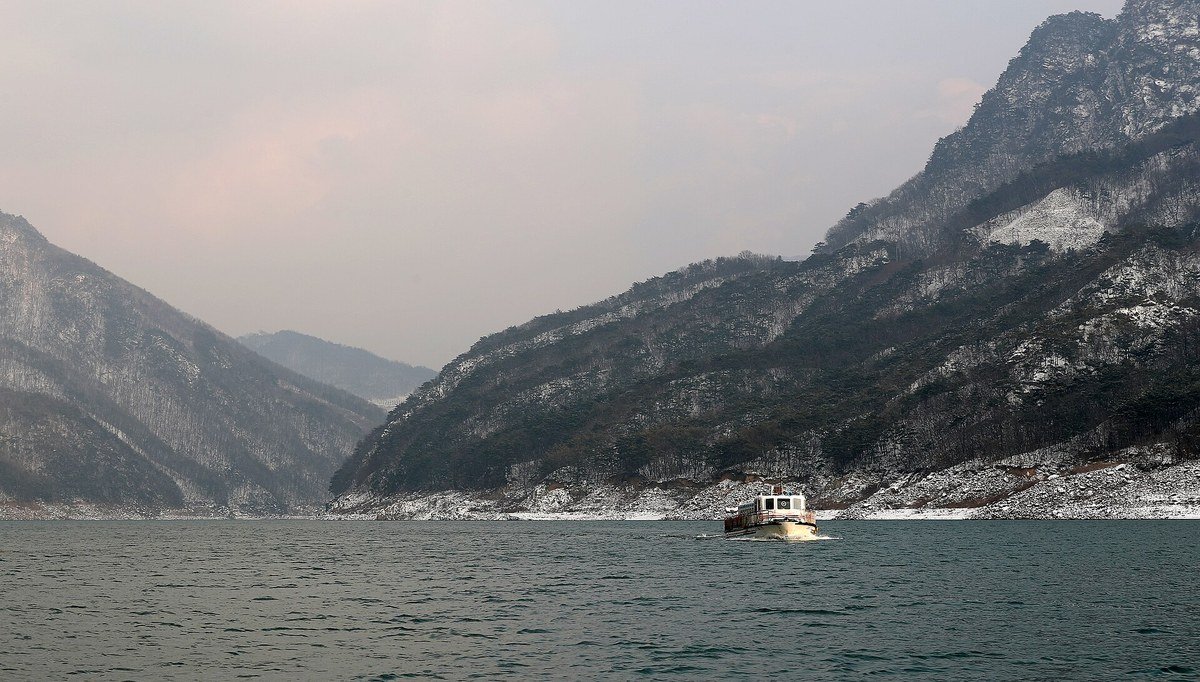
A boat crossing the lake beneath rocky peaks. Photo: Republic of Korea, CC BY-SA 2.0, via Wikimedia Commons
How much is the Cheongpung Cable Car, and how long is the ride?
A round trip in a standard cabin costs ₩18,000 for adults and ₩14,000 for children, and groups of 20 or more get ₩1,000 off per person. The glass-floored Crystal cabins cost ₩23,000 for adults and ₩18,000 for children according to VisitKorea. The ride takes about 9 minutes one way, or about 18 minutes for the round trip.
According to Jecheon City’s cable car page, the line starts at Multae-ri Station, 166 Munhwajae-gil, and climbs 2.3 km to Bibongsan Station on the 531 m summit of Bibongsan, a peak that rises from the center of the lake. The system was built by the Austrian company Doppelmayr and uses 10-person cabins. Of the 46 cabins, 13 are Crystal cabins with a see-through floor and 33 are standard. If you are nervous about heights, the standard cabin gives you the same view for less money; if you want the thrill of looking straight down at the water, the Crystal cabin is the one to choose.
| Ticket | Adult | Child | Notes |
|---|---|---|---|
| Cable car, standard cabin (round trip) | ₩18,000 | ₩14,000 | Groups of 20+: ₩1,000 off |
| Cable car, Crystal cabin (round trip) | ₩23,000 | ₩18,000 | Per VisitKorea |
| Cheongpung Cultural Heritage Complex | ₩3,000 | ₩1,000 | Teens and soldiers ₩2,000; 50% off on the Wednesday of the last week of each month |
Hours, tickets and booking
VisitKorea lists the cable car hours as 09:30–17:30 but notes that they can change with the season and the weather. Before you set off, look at the official Cheongpung Cable Car website or call +82-43-643-7301 to confirm that it is running that day. You do not need a timed reservation: you simply buy a ticket at the counter and ride. If you buy online in advance, you get a full refund when you cancel at least one day before your visit, but you cannot cancel on the day of your visit. Keep your ticket safe until you board, because lost tickets are not reissued.
What you will find at each station
The lower Multae-ri Station has the ticket office, CINEMA360, the Fantasy Museum, a tourist information desk and a restaurant on the first floor, the boarding area plus a café with a foot bath on the second floor, and a rooftop garden on the fourth. CINEMA360 costs ₩10,000 (₩5,000 discounted) and the Fantasy Museum ₩7,000 (₩4,000 discounted), both charged separately. At the top, Bibongsan Station has an observatory on the third floor, a café and outdoor viewing deck on the second, and a convenience store and herb forest trail on the first. There is also a monorail platform at the top, but the official website currently shows the monorail as being on regular closure, so check its status before counting on it. Pets are allowed in carriers, the cable car is wheelchair accessible, and Wi-Fi is available.
What happens if it rains or the wind picks up?
The cable car keeps running in the rain. It stops temporarily, or closes for the day, when the wind reaches 15 m/s or more or when there is lightning. Refunds are not given just because rain or fog spoils the view.
The cable car’s terms of carriage separate two situations. If the operator cannot run at all because of severe weather or a natural disaster, you can get a refund for an unused ticket. If the cars are running but the summit is wrapped in cloud, that is not a reason for a refund, and you will have paid ₩18,000 for a view of grey mist. Because Bibongsan stands in the middle of the lake, low cloud can hide the water completely.
The practical answer is to check the forecast the evening before and again on the morning of your trip. On a windy day, operations can stop at short notice even after you arrive. If that happens, swap the order: visit the heritage complex first, then go back to the lower station later and see whether the cars are moving again.
What can you see at the Cheongpung Cultural Heritage Complex?
The complex gathers historic buildings and objects that were moved here from villages flooded by the dam, including two Treasures and nine provincial cultural properties. Admission is ₩3,000 for adults, ₩2,000 for teenagers and soldiers and ₩1,000 for children. It is open all year, 09:00–18:00 from March to October and 09:00–17:00 from November to February, with free parking.
According to Jecheon City’s heritage complex page, the address is 2048 Cheongpungho-ro. The site was recently renamed in Korean, so you may still see the older name on some signs and bus stops. Groups of 30 or more pay ₩2,500, ₩1,500 and ₩800. Entry is free for preschool children, people aged 65 and over, people with disabilities of grades 1–3 (plus one companion) and national merit recipients. On “Culture Day,” the Wednesday of the last week of every month, tickets are half price. Pets are not allowed and there is no Wi-Fi. Wheelchairs can be borrowed, but the grounds have slopes, so plan to go with a companion. The city’s information line is +82-43-641-5542.
The buildings worth your time
The two Treasures are Hanbyeongnu Pavilion and the Stone Standing Buddha of Multae-ri. The provincial cultural properties are Paryeongnu, Geumnamnu, Geumbyeongheon, Eungcheonggak, the Cheongpung Hyanggyo Confucian school and four old houses. On top of these there are 42 dolmens, stone figures and steles, plus around 2,000 everyday household artifacts. The site covers about 280,991 m², so it is bigger than it looks from the entrance; wear comfortable shoes.
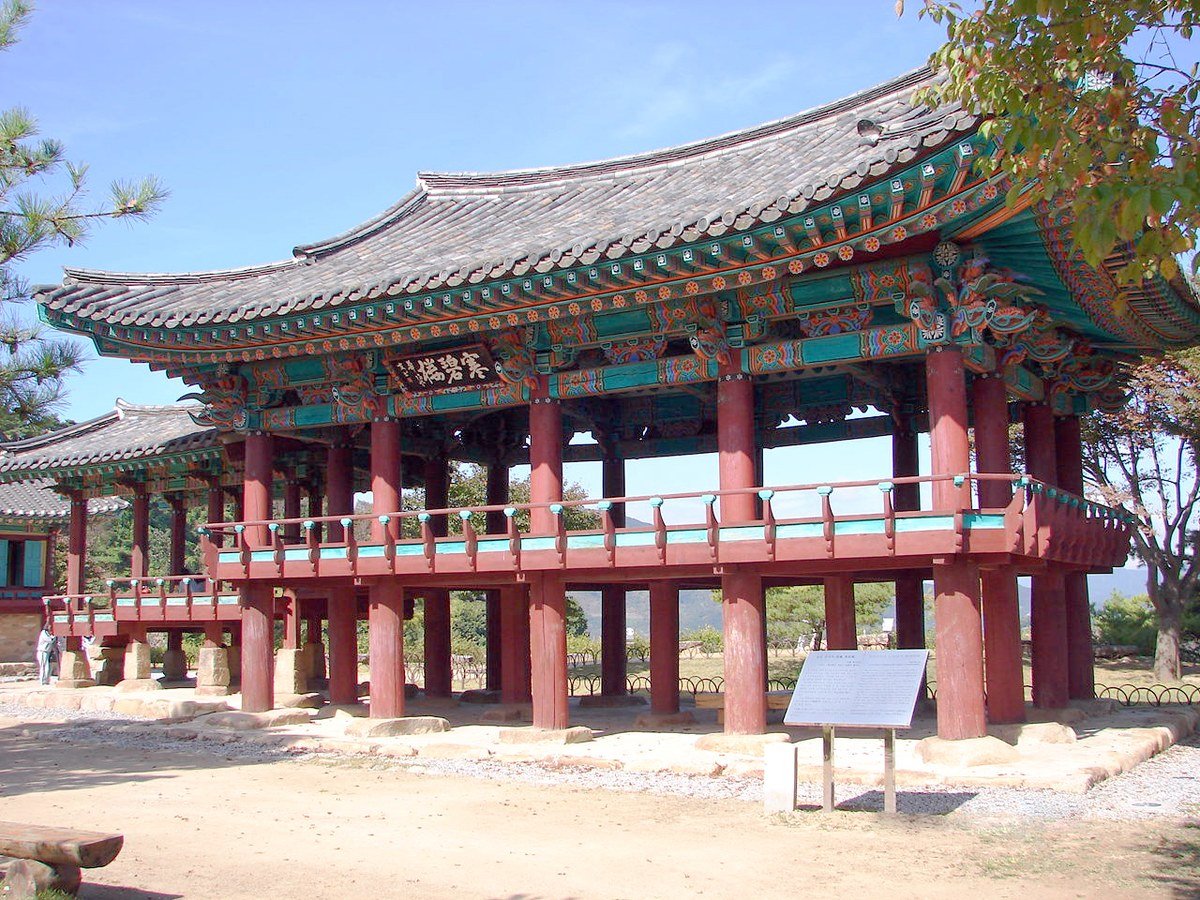
Hanbyeongnu Pavilion, a Treasure, at the heritage complex. Photo: Steve46814, CC BY-SA 3.0, via Wikimedia Commons
Hanbyeongnu is a two-story pavilion with red pillars and painted eaves, and it is one of the two Treasures here, so make it your first stop. Eungcheonggak is a smaller tiled-roof hall, and it is one of the nine provincial cultural properties, so it fits naturally into the same loop.
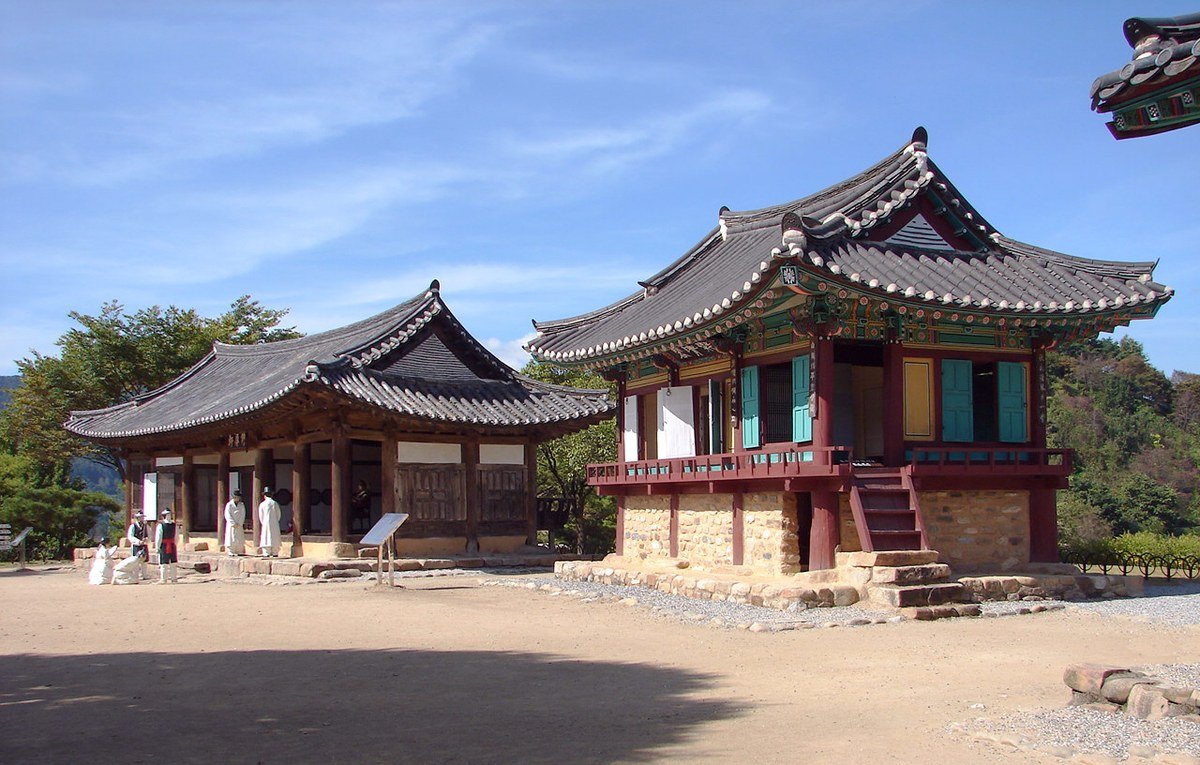
Eungcheonggak Pavilion and a neighboring hall. Photo: Steve46814, CC BY-SA 3.0, via Wikimedia Commons
The four old houses, a mix of thatched and tiled homes, show how ordinary families in Cheongpung lived. Pair them with the household artifacts on display and you get a picture of daily life in the valley before 1985.
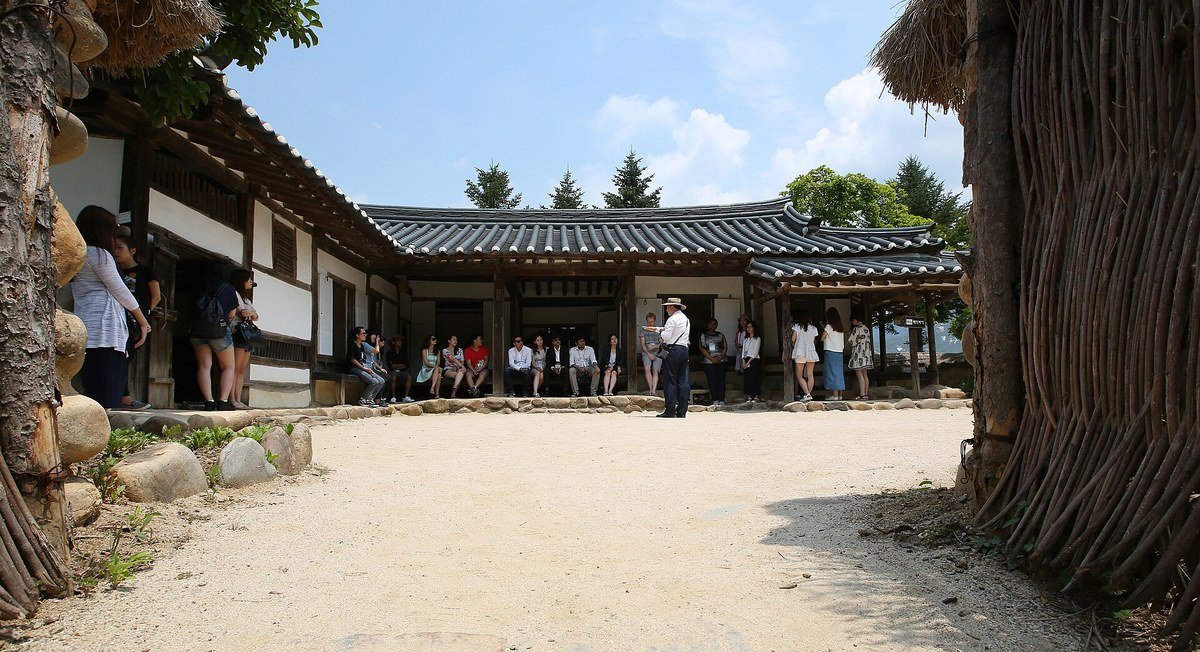
Visitors at the relocated old houses. Photo: Republic of Korea, CC BY-SA 2.0, via Wikimedia Commons
Help in English and other languages
Jecheon City’s English tourism page says the tourist information center has interpretation guides in English, Chinese and Japanese, with guided tours every 30 minutes. Ask at the information desk when you arrive, since schedules can change. For anything else, from bus questions to translation help on the phone, the Korea Travel Hotline at +82-2-1330 answers in Korean, English, Japanese and Chinese, as noted on VisitKorea’s heritage complex page.
How do you get to Cheongpung Lake from Seoul by train and bus?
Take the KTX-Eum on the Jungang Line from Cheongnyangni Station in Seoul to Jecheon Station, which takes a little over 1 hour 10 minutes, with 28 trains a day in 2026. From Jecheon Station, local buses such as 950 and 952 reach the heritage complex in about 55 minutes. For the cable car, ride bus 950, change to bus 951 at the Cheongpung Nonghyup stop, and get off at the Cheongpung-myeon community center.
Step by step from Jecheon Station
- Leave Jecheon Station and walk about 7 minutes to the bus stop called “Namdang Elementary School / Jecheon Station.”
- Board any of these buses: 950, 952, 953, 960, 961, 970, 971, 980 or 982.
- Stay on for 37 stops, about 55 minutes.
- Get off at the “Cheongpung Cultural Heritage Complex” stop. The stop sign may still carry the complex’s older name, so keep an eye on the screen or ask the driver.
- Walk about 4 minutes to the entrance.
For the cable car instead, take bus 950, get off at Cheongpung Nonghyup, transfer to bus 951, and get off at the Cheongpung-myeon community center stop.
Coming by express bus or car
If you prefer the bus, express buses run from Seoul Express Bus Terminal to Jecheon Bus Terminal. From there, walk about 5 minutes to the “Intercity Bus Terminal / Woori Bank” stop and board the same bus numbers. That route is 42 stops and takes about 1 hour 2 minutes, again ending with a 4-minute walk. Drivers can follow the Gyeongbu, Yeongdong and Jungang expressways, exit at Namjecheon IC and follow Cheongpungho-ro to the lake.
Timing tips
Rural buses in this area do not run often, so ask at a tourist information center for that day’s timetable as soon as you arrive in Jecheon, and decide on your return bus before you head out to the lake. Missing the last useful bus back to Jecheon is the easiest way to spoil the day. Check train times and fares on the Korail website or the Korail Talk app for your travel date, and if you plan several rail trips in Korea, our Korail Pass guide explains when a pass makes sense. If you enjoy inland North Chungcheong, the Danyang Dodamsambong guide covers another river landscape in the same province.
FAQ
Q. How much is a round trip on the Cheongpung Cable Car?
A. A standard cabin is ₩18,000 for adults and ₩14,000 for children. Crystal cabins are ₩23,000 and ₩18,000 according to VisitKorea, and groups of 20 or more get ₩1,000 off.
Q. Does the cable car run when it rains?
A. Yes. It stops for wind of 15 m/s or more or for lightning, and there are no refunds for rain or poor visibility.
Q. What time is last entry at the Cheongpung Cultural Heritage Complex?
A. Last entry is 17:00 from March to October (closing 18:00) and 16:00 from November to February (closing 17:00). Adult admission is ₩3,000.
Q. Which bus goes from Jecheon Station to the cable car?
A. Take bus 950, transfer to bus 951 at Cheongpung Nonghyup, and get off at the Cheongpung-myeon community center. Buses such as 950 and 952 reach the heritage complex in about 55 minutes.
Sources
- Jecheon City Tourism — Cheongpung Cable Car (distance, cabins, fares, weather suspensions, bus route)
- Jecheon City Tourism — Cheongpung Cultural Heritage Complex (hours, admission, directions)
- VisitKorea — Cheongpung Cable Car (hours, Crystal cabin fares)
- VisitKorea — Cheongpung Cultural Heritage Complex (1330 hotline)
- Cheongpung Cable Car official website — on-site tickets, monorail status
- Jecheon City (English) — Tourist Information Center, language guides
- Newspim (2026-04-04) — Cheongnyangni–Jecheon KTX-Eum travel time
- Featured photo: Cheongpung Lake and winter mountains, Republic of Korea, CC BY-SA 2.0, via Wikimedia Commons
Leave a Reply