
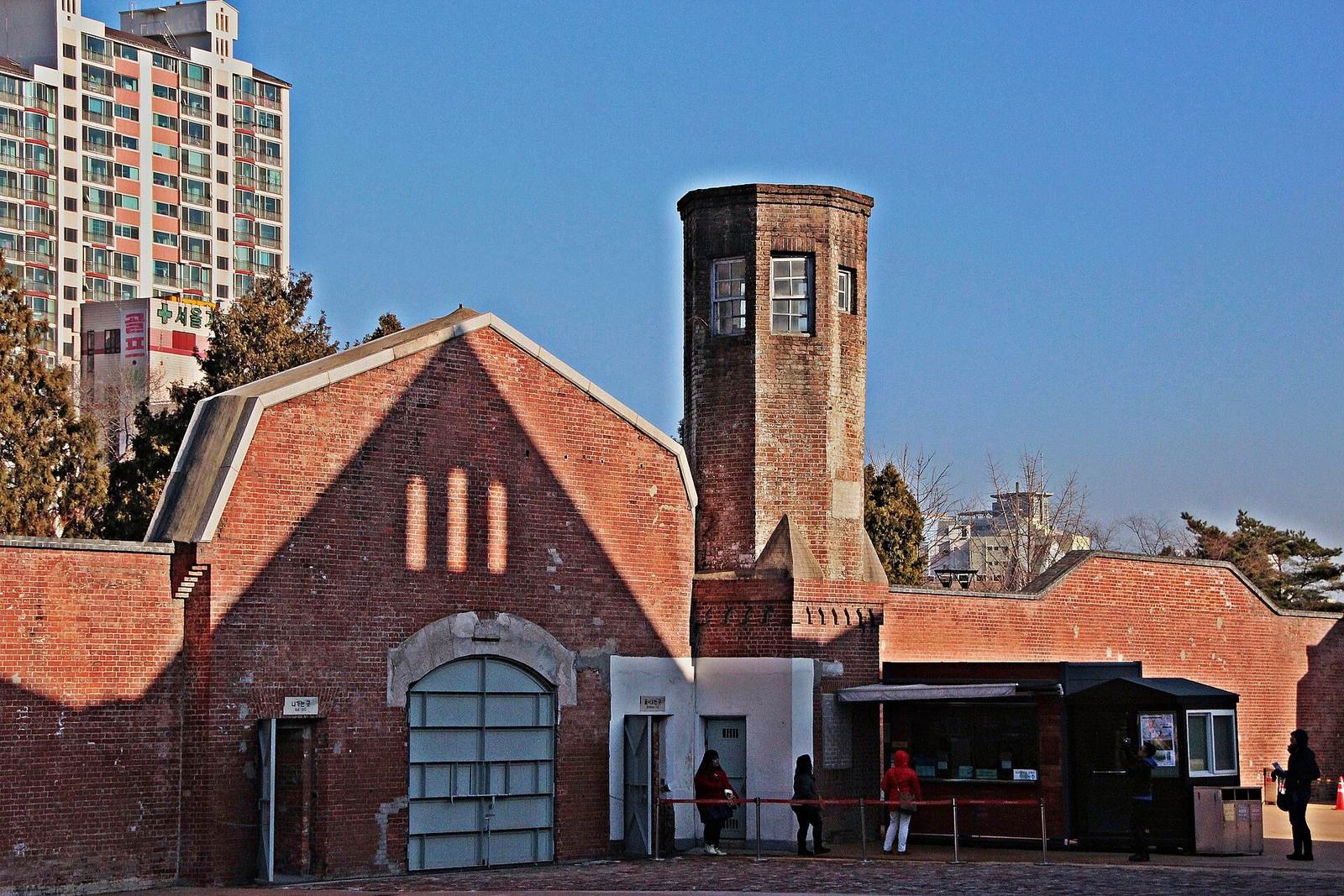
Seodaemun Prison History Museum is open from 09:30 to 18:00 until the end of October, and from 1 November it switches to winter hours of 09:30 to 17:00. Last entry is 30 minutes before closing, so you need to be inside by 17:30 now and by 16:30 from November. The museum closes every Monday, and when a Monday is a public holiday it closes on the following Tuesday instead.
Admission is 3,000 won for adults, 1,500 won for teenagers and 1,000 won for children. The entrance is within about 50 meters of Exit 5 at Dongnimmun Station on Seoul Subway Line 3, which makes it one of the easiest historic sites in the city to reach without a car. The hours and fees below follow the museum’s Korean-language official visitor information page.
What is Seodaemun Prison History Museum, and why does it matter?
It is a museum built inside a real former prison at 251 Tongil-ro, Seodaemun-gu, Seoul. The prison opened on 21 October 1908 as Gyeongseong Prison under Japanese colonial rule and was renamed Seodaemun Prison on 3 September 1912. It stayed in use until 1987, when it was serving as the Seoul Detention Center, and it opened as a museum in 1998.
For many Koreans this is one of the most important places connected to the independence movement. Activists who resisted colonial rule were imprisoned here, and in later decades so were people arrested during the pro-democracy movement. The museum tells the whole story from 1908 to 1987 in one place, so it works as a compact history lesson as well as a sightseeing stop.
On 15 August 1992 the surrounding area became Seodaemun Independence Park. Seven buildings are preserved, and three of the prison blocks together with the execution site are a designated Historic Site. Because the red-brick walls and watchtowers are still standing, the mood changes as soon as you walk up to the main gate. Visitors should know that the basement of the exhibition hall covers interrogation and torture, with recorded testimony from survivors, so parents may want to talk to children about the visit beforehand. For questions, call +82-2-360-8590 (02-360-8590 inside Korea).
What are the opening hours, closures and ticket prices?
From March to October the museum is open 09:30–18:00, and from November to February it is open 09:30–17:00. Last entry is always 30 minutes before closing. It is closed on Mondays (Tuesday if Monday is a public holiday), on 1 January, and on the days of Seollal and Chuseok.
Why the November switch catches people out
If you visit in the last week of October you can still walk in at 17:20, but from 1 November the door effectively closes at 16:30. The sun also sets earlier, and a large part of the site is outdoors, so in winter it makes sense to arrive in the morning or early afternoon. Keep an eye on long weekends too: when a public holiday lands on a Monday, the museum opens that Monday and closes on Tuesday, which surprises visitors planning a trip at the end of a holiday break.
Ticket prices and free admission
The Korean-language page is the reference for prices, because the English page lists some outdated figures. Groups of 20 or more get a reduced rate.
| Category | Individual | Group (20+) | Who qualifies |
|---|---|---|---|
| Adults | 3,000 won | 2,400 won | Ages 19–64 |
| Teenagers | 1,500 won | 1,200 won | Ages 13–18 |
| Children | 1,000 won | 800 won | Ages 7–12 |
| Seniors | Free | Free | Ages 65 and over |
| Preschoolers | Free | Free | Ages 6 and under |
| Visitors with disabilities | Free | Free | Severe disability: one companion also free |
Seodaemun-gu residents get 50% off, and anyone holding a ticket from the Seodaemun Museum of Natural History gets 20% off. Free and discounted tickets are only issued at the staffed ticket office on site, not at the kiosk, so bring ID that proves you qualify. For guided programs or group bookings, the museum’s main phone number is the most reliable place to ask.
What should you see inside, and in what order?
The easiest plan is to start at the exhibition hall by the entrance, then walk through the prison blocks, the outdoor sites and finally the women’s prison. A route introduced by the Seoul Metropolitan Government’s media hub runs from the exhibition hall to the Central Building, Blocks 12 and 11, the workshop, the remembrance monument, the execution site and tunnel, the exercise yard, the women’s prison and the walls. There is no fixed official route, so treat it as one sensible example.
The exhibition hall and the prison blocks
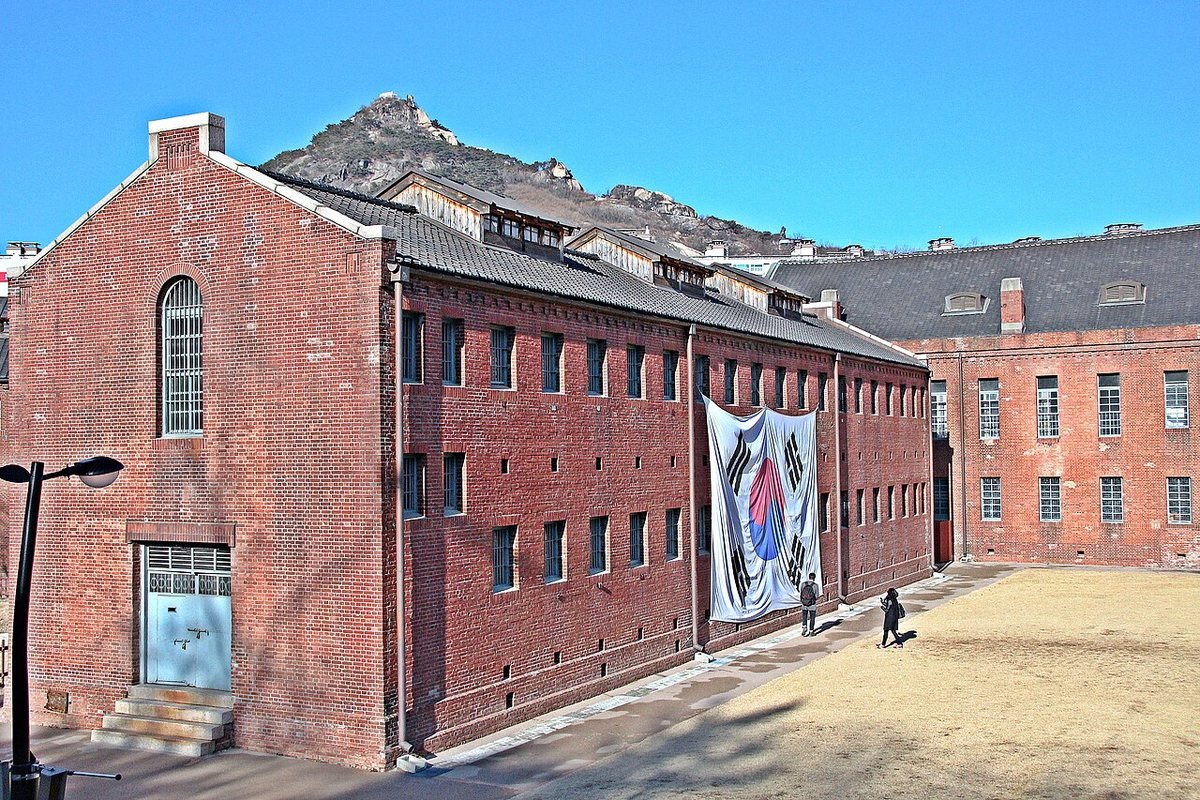
The exhibition hall is the former Security Division building, put up in 1923 with two floors and a basement. Wings were added on both sides in 1959 and covered in white tiles, which were removed in 2010 during restoration, and the grey cement marks on the outer walls are what those tiles left behind. Inside are the Prison History room and the National Resistance rooms, where about 4,800 inmate record cards are on display. The basement holds the interrogation room and survivors’ recorded testimony.
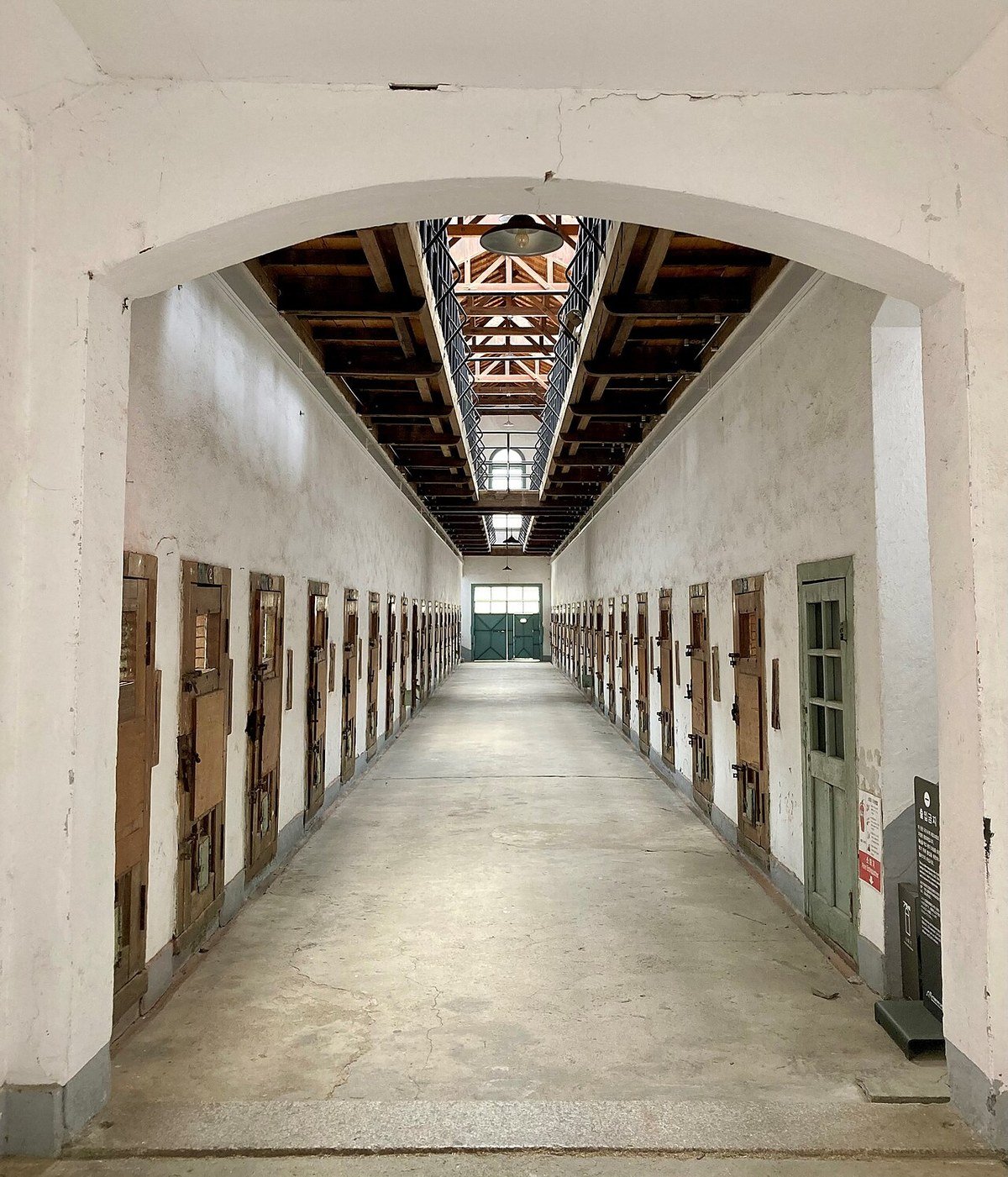
The Central Building explains how the prison was organized, the tools used for surveillance and the daily routine of inmates. Blocks 11 and 12 held independence activists and later pro-democracy activists, and here you can step inside a tiny prison room and see how prisoners tapped on walls to pass messages. Block 9, built in the 1920s with two floors, is the only block that was not connected to the central guard post, and it held so-called thought criminals under special watch. Bullet marks from the Korean War remain on its outer wall.
Outdoor sites and the women’s prison
The workshop was a factory for forced labor, and from the late 1930s it produced military supplies. The execution site, believed to date from around 1916, is a Japanese-style wooden building surrounded by a 5-meter wall. Nearby is the tunnel used to carry bodies out of the prison; 40 meters of it were excavated and restored in 1992, and it is said to have originally run for about 200 meters.
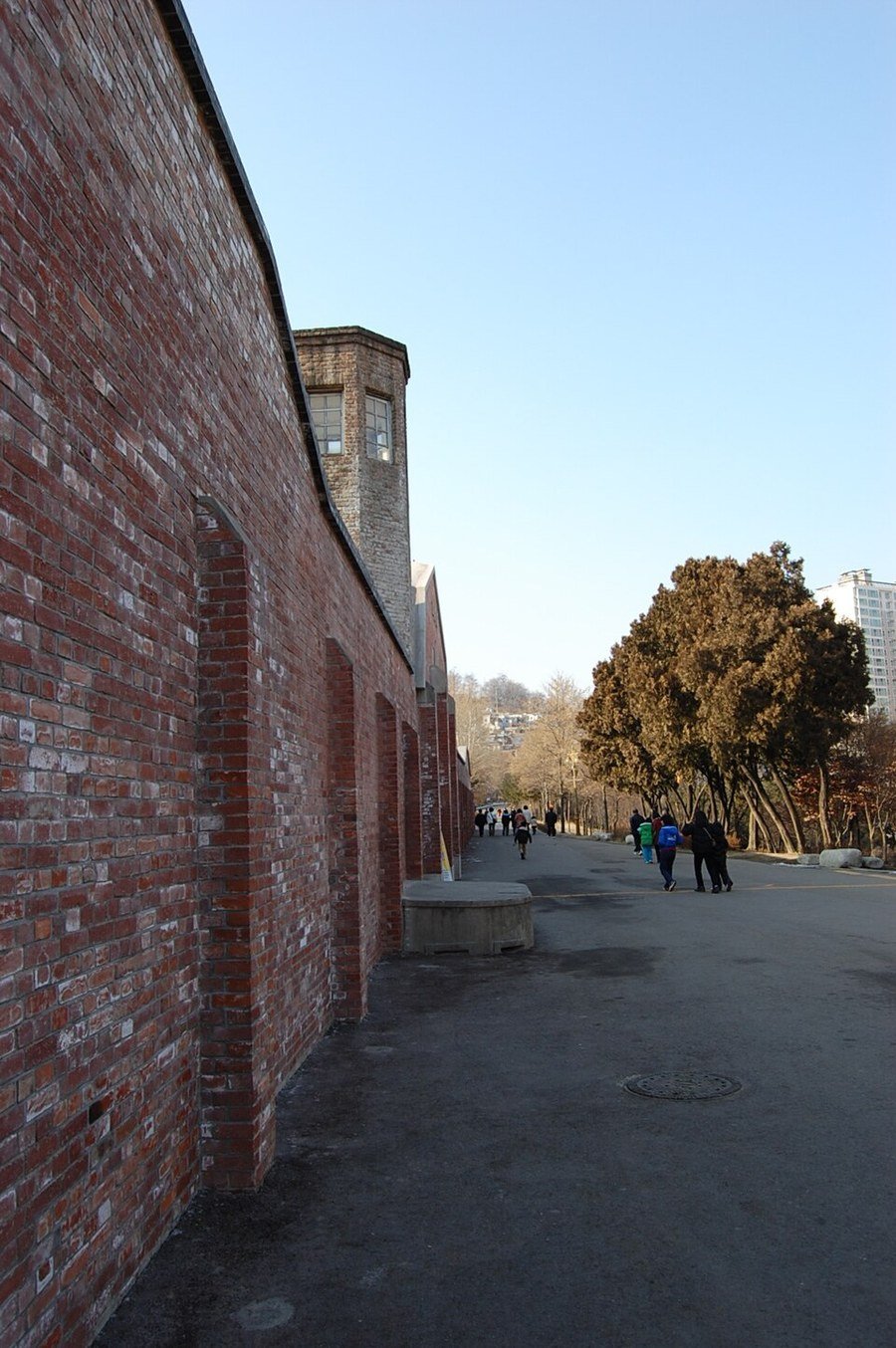
The exercise yard from the 1920s has a fan-shaped layout with a watch platform in the middle, and it was rebuilt in 2011 about 20 meters from its original spot. The women’s prison held female detainees awaiting trial from around 1916; it was demolished in 1979 and restored in 2011. Room 8 is where women held an independence protest inside the prison on 1 March 1920. The watchtowers are 10 meters tall, and two of the original six survive, at the main gate (1923) and at the back (1930). Of the original 1,161 meters of 4-meter brick wall built in 1923, 80 meters at the front and 200 meters at the back remain.
Visitor etiquette and photography
Smoking and alcohol are banned everywhere on the site, food cannot be brought in, and pets are not allowed except guide dogs. Switch your phone to vibrate before entering the exhibition hall, keep your voice down and do not run. Wheeled shoes, bicycles, kick scooters, inline skates and skateboards are not allowed. The English page says photography without flash is permitted on a limited basis, while flash, tripods and commercial shooting are not allowed. Slippers and very casual outfits are discouraged.
How do you get there, and can you park?
Take Line 3 to Dongnimmun Station and use Exit 5; the entrance is within about 50 meters. From Line 1 or Line 5, change to Line 3 at Jongno 3-ga, from Line 2 at Euljiro 3-ga, and from Line 4 at Chungmuro. Parking is limited and card-only, so the museum itself recommends public transport.
Buses stop at the median-lane stop “Dongnimmun Station·Hansung Science High School”. Blue buses 701, 702A, 702B, 703 to 709, 720, 741 and 752 stop there, along with green buses 7019, 7021 and 7025, red buses 9709 and 9710, village bus Seodaemun 11, and airport bus 6005.
If you do drive, the on-street Independence Park lot charges 300 won per 10 minutes for cars, free if you leave within 5 minutes, and 900 won per 10 minutes for buses and vehicles with 15 or more seats. The underground Dongnimmun Culture Park lot charges 200 won per 5 minutes for cars and has a 2.3-meter height limit. Cash is not accepted. Full details are on the museum’s directions and parking page.
Independence Gate, built by the Independence Club and modeled on the Arc de Triomphe in Paris, stands in the same park and takes only a few minutes to add to your visit. If you want to keep walking through old Seoul afterwards, our Seoul City Wall trail guide pairs well with this stop for a full day.
Frequently asked questions
What time is last entry in November?
From 1 November to the end of February the museum is open 09:30–17:00, so last entry is 16:30. Through October it closes at 18:00 with last entry at 17:30.
Is the museum open on a Monday public holiday?
Yes, it opens on a Monday that is a public holiday and closes on the following Tuesday instead. It is also closed on 1 January and on the days of Seollal and Chuseok.
How much are tickets?
Adults pay 3,000 won, teenagers 1,500 won and children 1,000 won. Groups of 20 or more pay 2,400, 1,200 and 800 won, and visitors aged 65 and over or 6 and under enter free.
Which subway exit should I use?
Use Exit 5 of Dongnimmun Station on Line 3; the entrance is within about 50 meters. Parking is card-only and limited, so the subway is easier.
Sources
- Seodaemun Prison History Museum — visitor information (Korean)
- Seodaemun Prison History Museum — directions and parking (Korean)
- Seodaemun Prison History Museum — outdoor exhibits (Korean)
- Featured photo: main gate and watchtower (February 2013), Noh Mun Duek / Wikimedia Commons, CC BY-SA 4.0
- Body photos: Noh Mun Duek / Wikimedia Commons, CC BY-SA 4.0 · Dudva / Wikimedia Commons, CC0 · WaffenSS / Wikimedia Commons, CC BY-SA 3.0
Leave a Reply