
Ojukheon in Gangneung admits visitors every day from 09:00 to 17:00, and once you are inside you can stay until 18:00. It is open all year round, but on 1 January and on the days of Seollal and Chuseok only the historic house itself is open, while the indoor exhibition halls are closed. No one is admitted after 17:00, so plan a late-afternoon visit carefully.
Tickets cost 3,000 won for adults, 2,000 won for teenagers and soldiers, and 1,000 won for children. Visitors aged 65 and over and Gangneung residents enter free with ID, and on the last Wednesday of every month, Korea’s “Culture Day”, admission is 50% off. Everything below follows Gangneung City’s official Ojukheon and City Museum visitor page.
What is Ojukheon, and why is it famous?
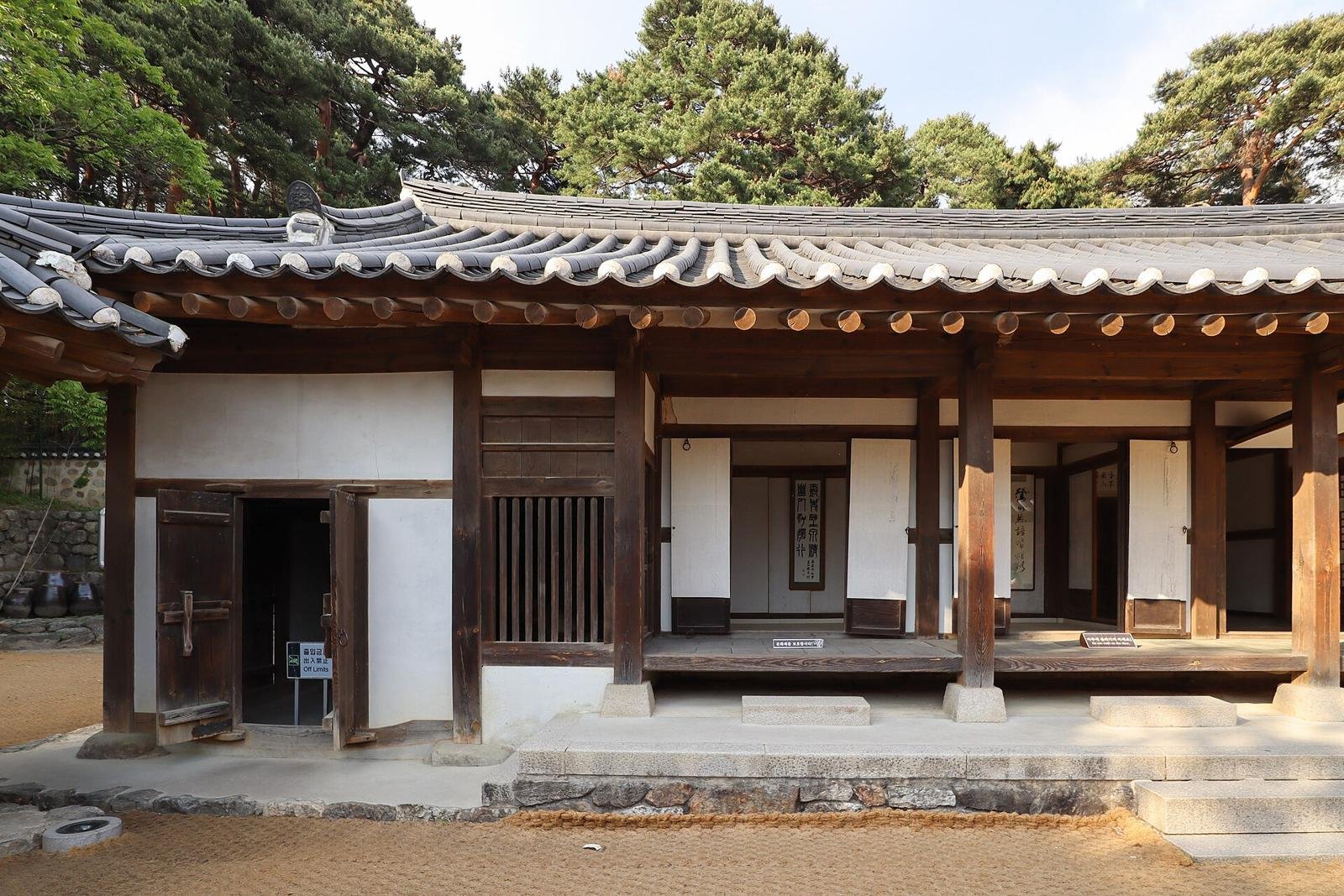
Ojukheon is the house where Shin Saimdang and her son, the Joseon scholar Yulgok Yi I, were born. It sits at 24 Yulgok-ro 3139beon-gil, Jukheon-dong, Gangneung, in Gangwon Province, and it was designated a Treasure on 21 January 1963. Today the same grounds also hold the Yulgok Ginyeomgwan (Yulgok Hall), the Gangneung City Museum and the Gangneung Money Museum.
Some background helps the visit make sense. According to Wikipedia, a secondary source, the house was built in the late 15th century by Choi Eung-hyeon and then passed to his son-in-law Yi Sa-on, and later to another son-in-law, Shin Myeong-hwa, who was Saimdang’s father. That chain of sons-in-law is part of why the house is linked to Saimdang’s family rather than to its builder’s surname. The same source notes that the house appears in the background on the back of the 5,000 won banknote, so many Korean visitors arrive already knowing its outline.
The site has grown over the decades. A restoration project in 1975 added the Munseongsa shrine and a hall honoring Yulgok, and the old house at the back was restored in 1995. The Yulgok Hall opened in 1965, the Gangneung City Museum in 1992 and the Gangneung Money Museum in 2023. In other words, this is not a single old house you see in ten minutes; it is a walled complex with several halls, and you will walk more than you might expect.
For questions, the official contact listed on the Gangneung City page is the Ojukheon City Museum at +82-33-660-3304 (033-660-3304 inside Korea). If you need help in English, Korea’s 1330 Travel Hotline is another option.
What is the best walking route through the grounds?
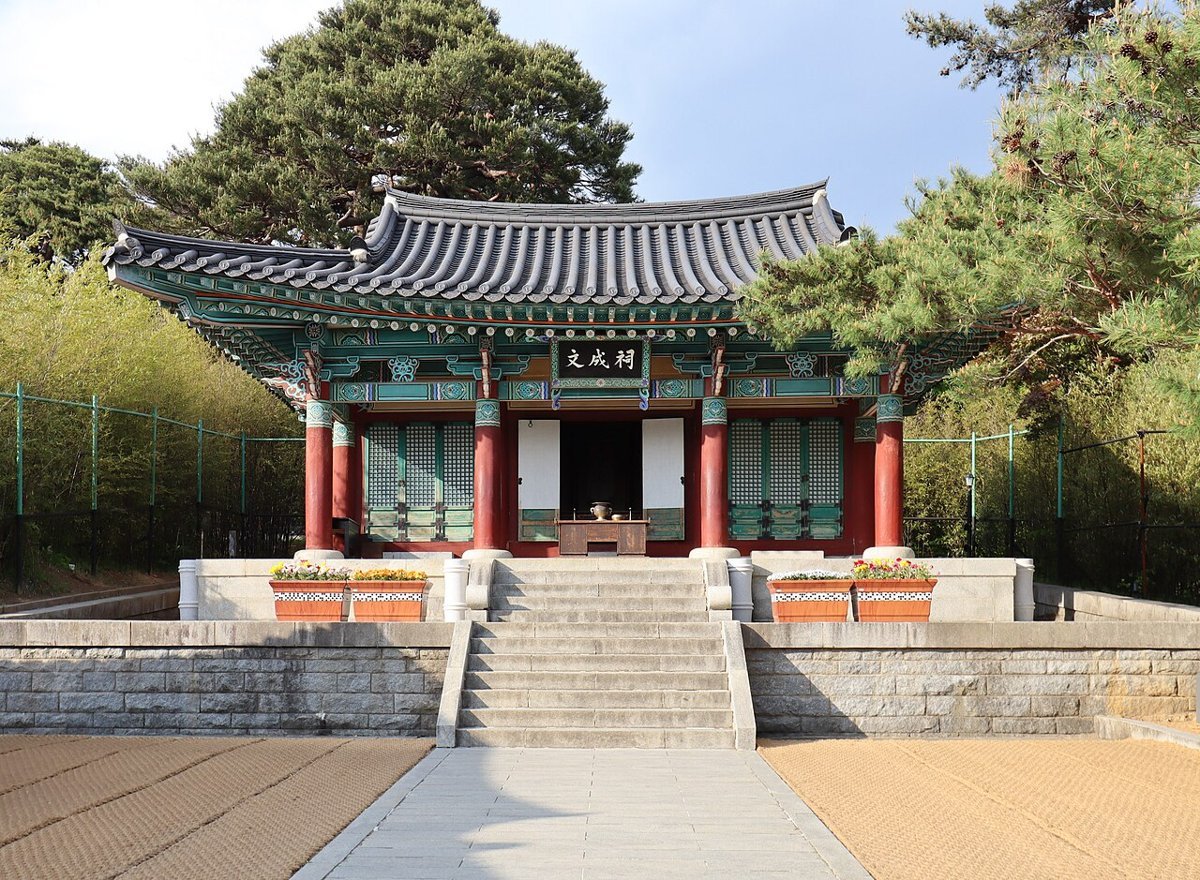
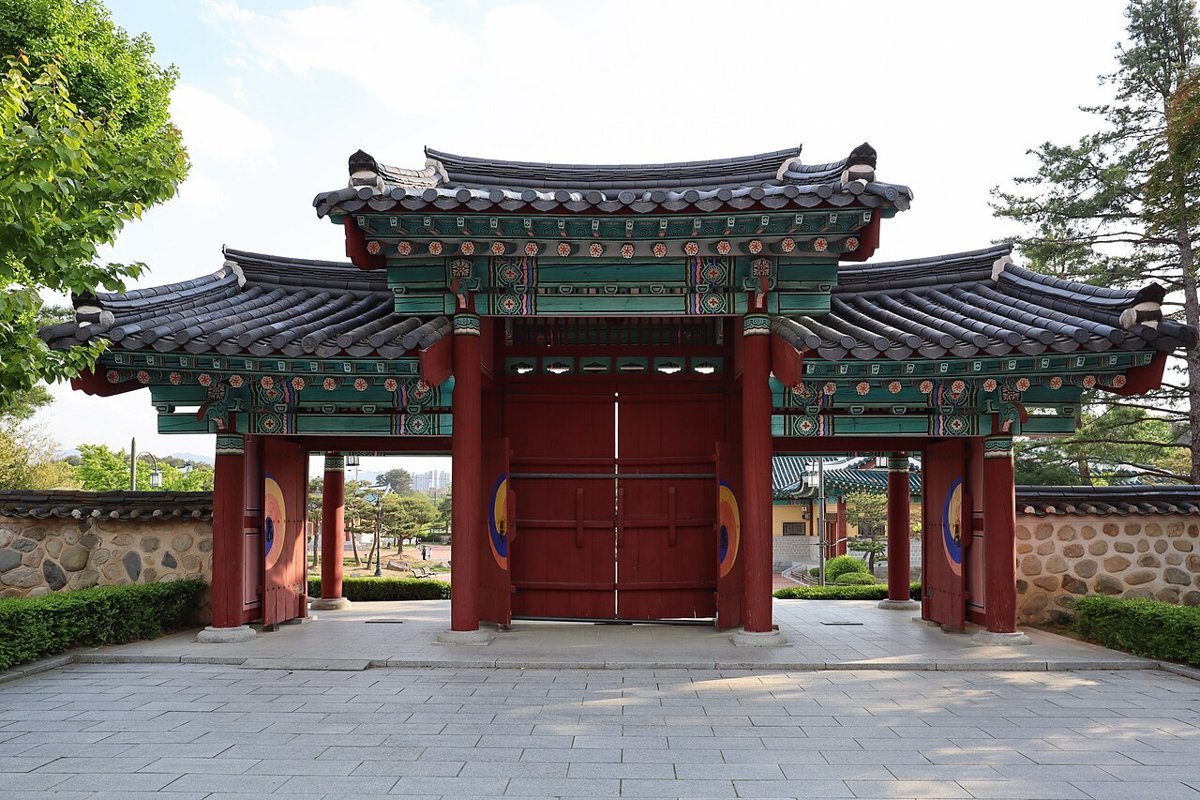
The simplest approach is to follow the numbered points on Gangneung City’s official site map. You start at the ticket office, pass the Yulgok statue and the Jagyeongmun gate, visit the Munseongsa shrine, the house itself and the inner quarters, then continue to Yulgok Hall, the Money Museum and the City Museum. The route ends at the Yulgok character education center and gift shop.
The official map order, point by point
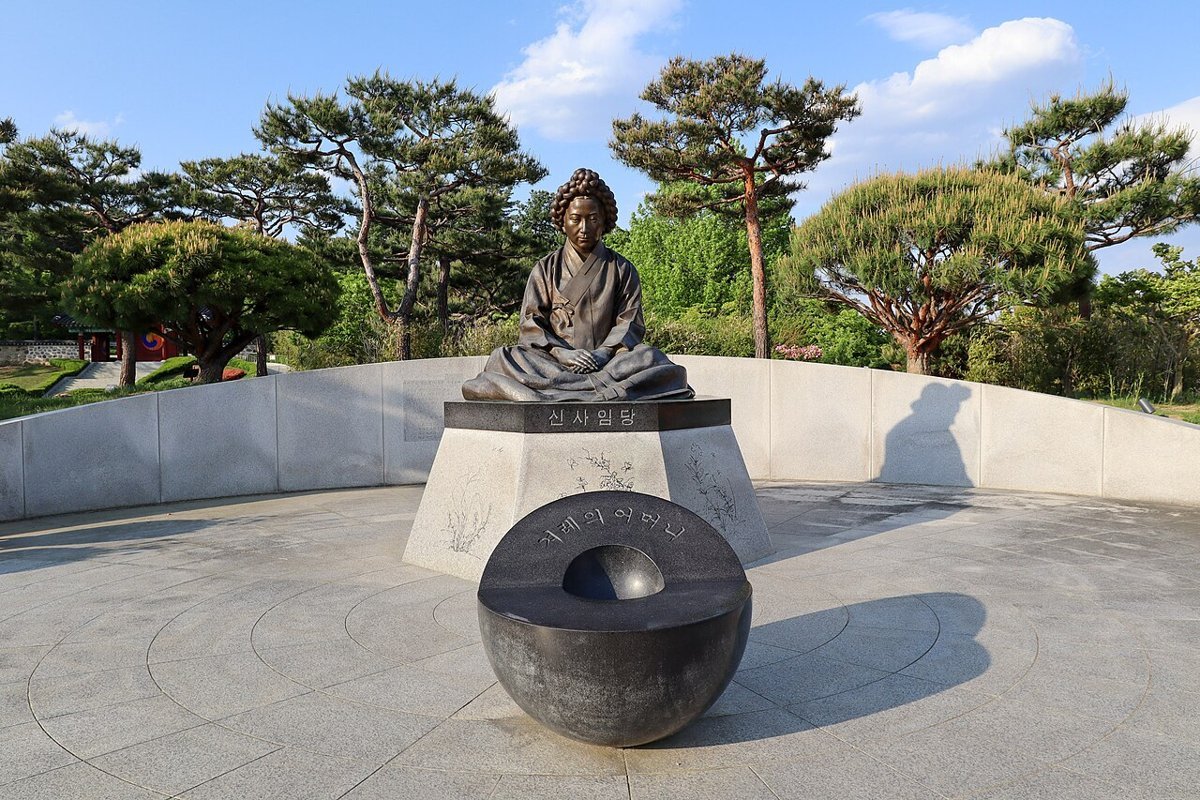
On the map, the points run in this order: ticket office, management office, Yi I statue, Chochungdo flower bed, Jagyeongmun gate, monument to the site restoration, Munseongsa shrine, Ojukheon house, outer quarters, inner quarters, Eojegak, Yulgok Hall, Ipjimun gate, Gangneung Money Museum, Shin Saimdang statue, ancient tombs of the Gangneung area, Gangneung City Museum, and finally the Yulgok character education center and Sol-hyang gift shop. A useful way to think about it is that the first half is the historic house and shrine, and the second half is the museums and outdoor relics.
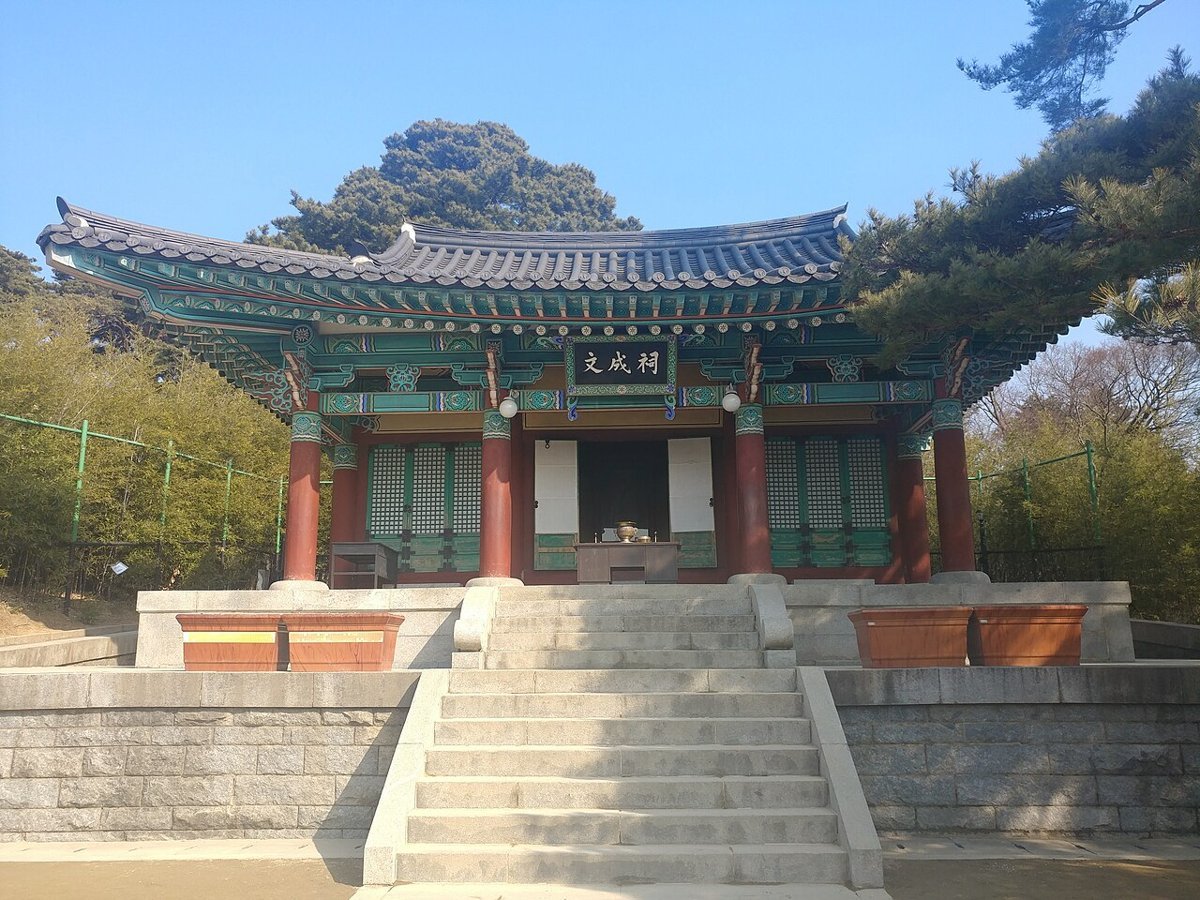
Munseongsa is the shrine that holds Yulgok’s portrait. It was built in 1975, and “Munseong” is the posthumous title given to him by King Injo. Eojegak stores Yulgok’s book Gyeongmongyogyeol and an inkstone. These details come from Wikipedia, so treat them as background and read the signboards on site for the full explanation.
What can you see on a holiday?
On 1 January and on the days of Seollal and Chuseok, Ojukheon itself stays open, so you can still walk around the old house and the courtyards. The indoor exhibition halls, including Yulgok Hall and the City Museum, are closed on those days. If the exhibitions are the main reason for your trip, avoid the holiday dates themselves.
How much are tickets, and is the package pass worth it?
Adults pay 3,000 won, teenagers and soldiers 2,000 won, and children 1,000 won, with lower prices for groups of 30 or more. Gangneung residents, children aged 6 and under, and seniors aged 65 and over enter free if they bring ID. The package pass is sold only at Ojukheon, requires a same-day Ojukheon ticket, and can save a good amount if you plan to visit other attractions in Gangneung that day.
| Category | Individual | Group (30+) |
|---|---|---|
| Adults | 3,000 won | 2,000 won |
| Teenagers and soldiers | 2,000 won | 1,500 won |
| Children | 1,000 won | 500 won |
| Ages 65 and over | Free | Free |
National merit recipients and their spouses, bereaved family members of merit recipients, war veterans and their spouses, and members of designated military-service families also enter free with ID. Visitors with a severe disability enter free along with one companion, and visitors with a less severe disability enter free themselves. The 50% Culture Day discount on the last Wednesday of each month cannot be combined with group or other discounts.
How the package pass works
The package pass is sold only at Ojukheon, you must show a same-day Ojukheon ticket to buy it, and it is valid only on that day, with no refunds the next day. At adult rates, the Daegwallyeong Museum (normally 1,000 won) is free with your Ojukheon ticket, Gyeongpo Aquarium drops from 20,000 to 14,000 won, Haslla Art World from 17,000 to 10,000 won, and the Coffee Cupper coffee museum from 5,000 to 4,000 won.
The city also lists distances from Ojukheon: Gyeongpo Aquarium is 3.2 km or about 7 minutes by car, the Coffee Cupper museum 5 km or 10 minutes, and Haslla Art World 18 km or 33 minutes. It works in the other direction too: if you hold a ticket for Running Man & Muse Gangneung or the Balwangsan cable car, the adult Ojukheon fee drops from 3,000 to 2,000 won. The full list is on the city’s package ticket page.
How do you get there by bus, and is parking free?
City buses 202 and 202-1 stop at Ojukheon. Bus 202 runs clockwise from across Gangneung Station via the intercity and express bus terminal to Ojukheon, then on to Seongyojang and Gyeongpo, while 202-1 runs the opposite way. Parking is free, and when the lot is full the city asks drivers to use the lot in front of the Gangneung Nongak Training Center nearby.
First and last departures on route 202 differ by bus operator, so check the timetable on Gangneung’s bus information system before you set out rather than relying on a fixed time. Because route 202 carries on past Ojukheon to Seongyojang and Gyeongpo Beach, it is easy to build a day that starts at the house and finishes by the sea on the same line.
Pets are not allowed on the grounds except guide dogs for visually impaired visitors, and wheeled shoes, kick scooters (including electric ones) and bicycles cannot be brought in. If you are traveling with kids, leave the scooter in the car or at your accommodation. When you arrive, pick up the site map near the ticket office or photograph the large map board, since the numbered points make the route above much easier to follow.
Frequently asked questions
What time is last entry at Ojukheon?
Entry runs from 09:00 to 17:00, and no one is admitted after 17:00. Once inside, you can look around until 18:00.
Is Ojukheon open on holidays?
Yes, it is open all year, including 1 January, Seollal and Chuseok. On those days, however, the indoor exhibition halls are closed.
How much is admission?
Adults pay 3,000 won, teenagers and soldiers 2,000 won, and children 1,000 won. It is 50% off on the last Wednesday of each month, and seniors aged 65 and over and Gangneung residents enter free with ID.
Is parking free?
Yes, parking is free. When the lot is full, use the lot in front of the Gangneung Nongak Training Center nearby.
Sources
- Gangneung City — Ojukheon and City Museum visitor information (Korean)
- Gangneung City — package ticket (Korean)
- Historical background: Wikipedia, “Ojukheon” (secondary source)
- Photos: Mobius6 / Wikimedia Commons, CC BY-SA 4.0 (featured, body 1, 3, 4); Altostratus / Wikimedia Commons, CC BY-SA 4.0 (body 2)
Leave a Reply