
You can only enter the southern DMZ control area on an approved tour or shuttle. You cannot drive in on your own. Paju’s DMZ Peace Tourism guide checks original ID before tickets; copies, screenshots, and expired passports are rejected. Civilian Panmunjom (JSA) tours for foreigners are not operating on the official booking site.
The Demilitarized Zone is one of the most requested day trips from Seoul, and also one of the easiest to get wrong. It is an active military area, so the rules are stricter than at a normal tourist attraction: entry depends on a passenger list submitted in advance, your passport is checked against it, and plans can change on the day for security or weather reasons. This guide explains the difference between a standard DMZ tour and Panmunjom, what to bring, how booking works, and what a typical day looks like.
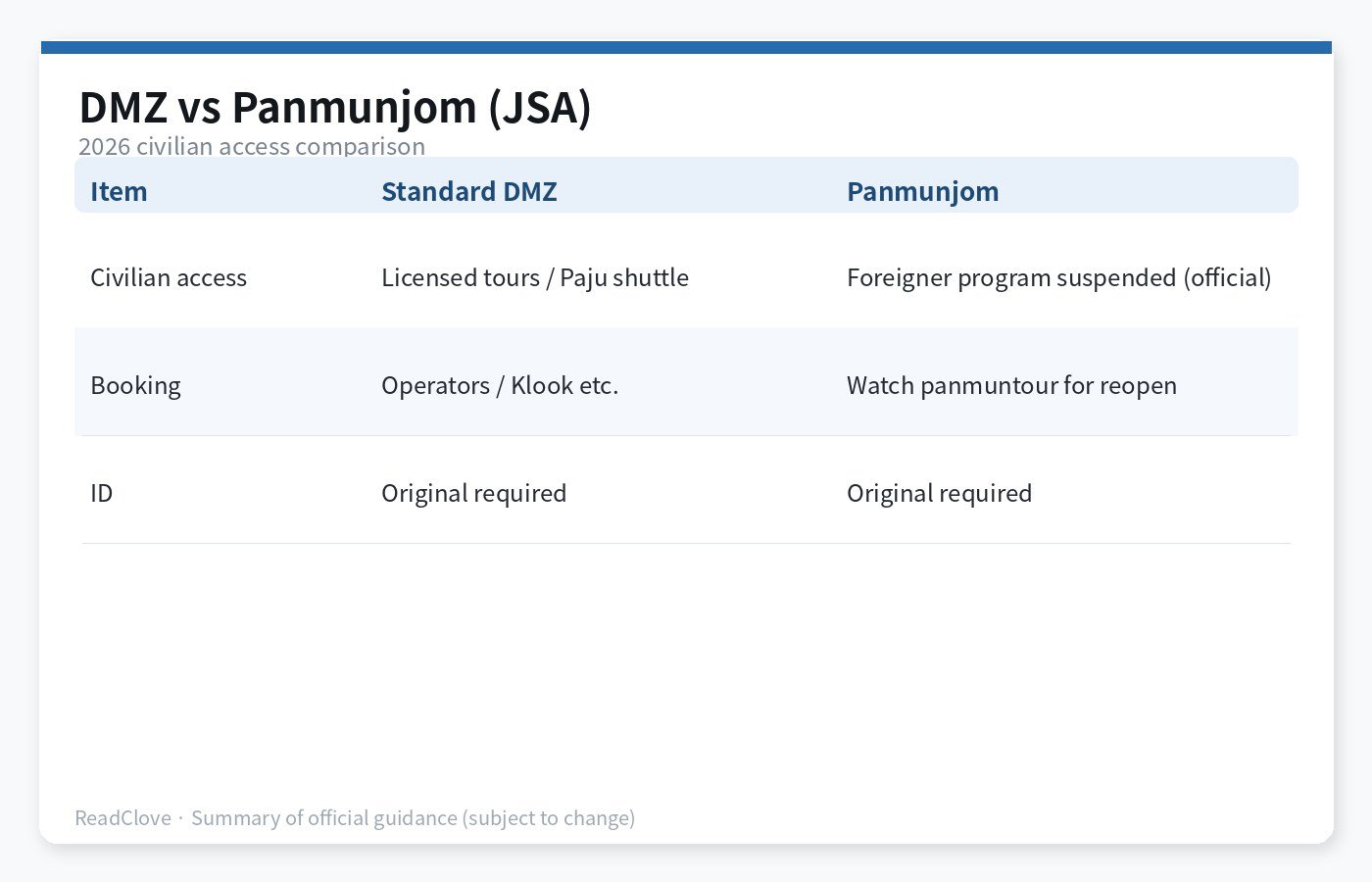
Standard DMZ vs Panmunjom
| Standard DMZ (Imjingak, tunnel, observatory) | Panmunjom (JSA) | |
|---|---|---|
| Civilian access | Licensed tours / Paju shuttle | Foreigner program suspended (official) |
| Booking | Operators / dmz.paju.go.kr | Watch panmuntour.go.kr |
| ID | Original required | Original required if restarted |
The Panmunjom tour support centre explains that civilian visits have been suspended since 2023 and that any restart will be announced after consultation between the relevant authorities. If a listing says “DMZ” but hints at JSA, ask what is actually included before you pay. The blue conference buildings are not part of a standard DMZ tour.
Passport / ID (Paju guidance)
- Foreigners: passport, alien registration card, or US military ID as listed.
- Koreans: resident ID, driver’s license, or passport.
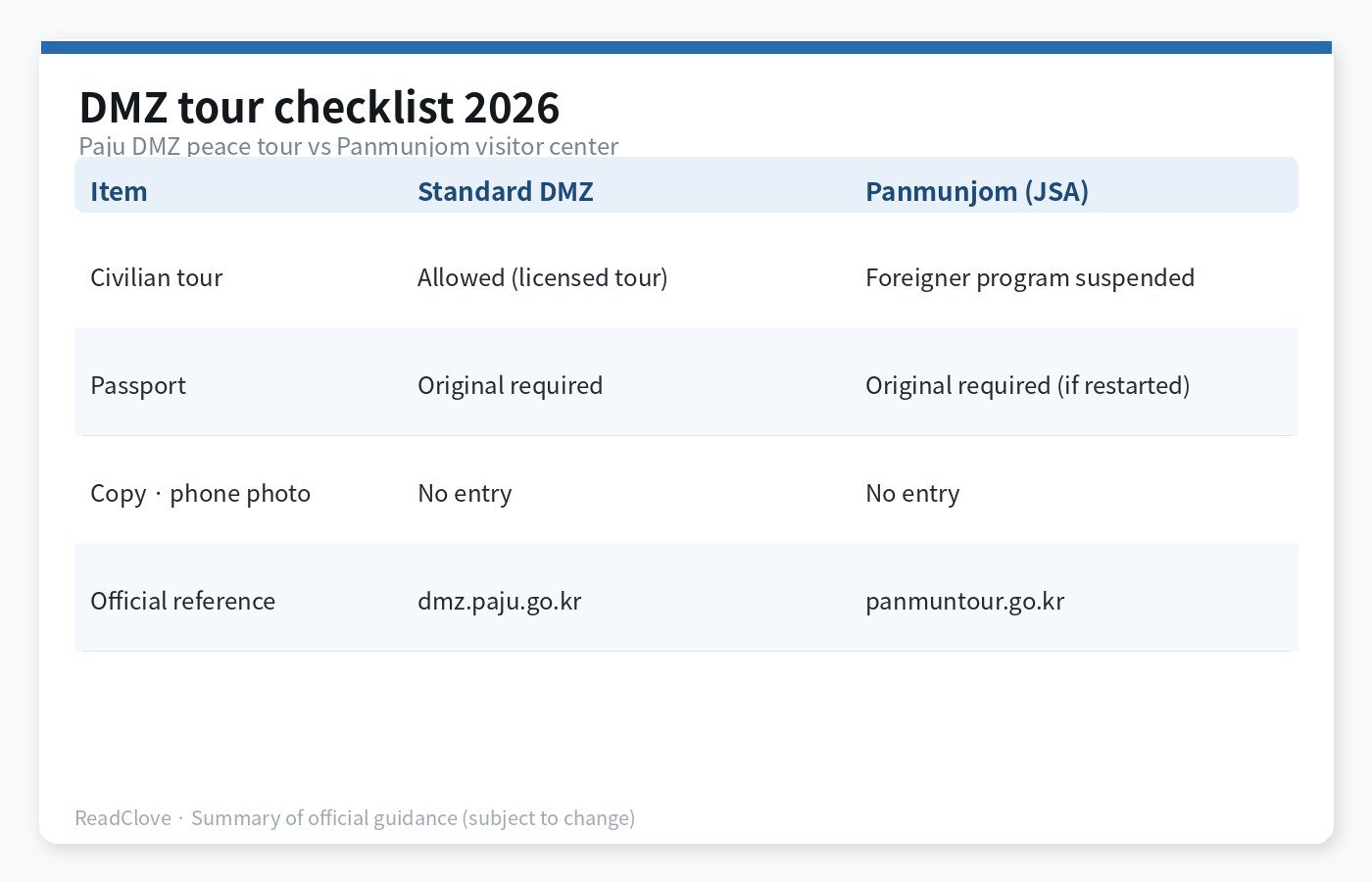
- No copies or phone photos.
- Minors need a responsible adult.
- Tickets at Imjingak are issued when the whole group is present; sales windows are often morning to mid-afternoon (roughly 09:00 to around 14:30) and can sell out.
Getting there and typical prices
Day tours often pick up near Hongdae or Myeongdong. Packages with transport and an English guide commonly fall around ₩65,000–₩90,000 per person in 2026 travel guides; lunch is usually extra. Always trust the live booking price, because it moves with the season and options. Book 2–3 weeks ahead for weekends and peak seasons such as spring and autumn. Tours can cancel for security or weather.
The alternative is Paju’s official shuttle and peace-tourism course, where you buy tickets at Imjingak and then travel into the controlled area on the designated transport. Either way, you cannot simply drive into the tunnel or observatory area yourself.
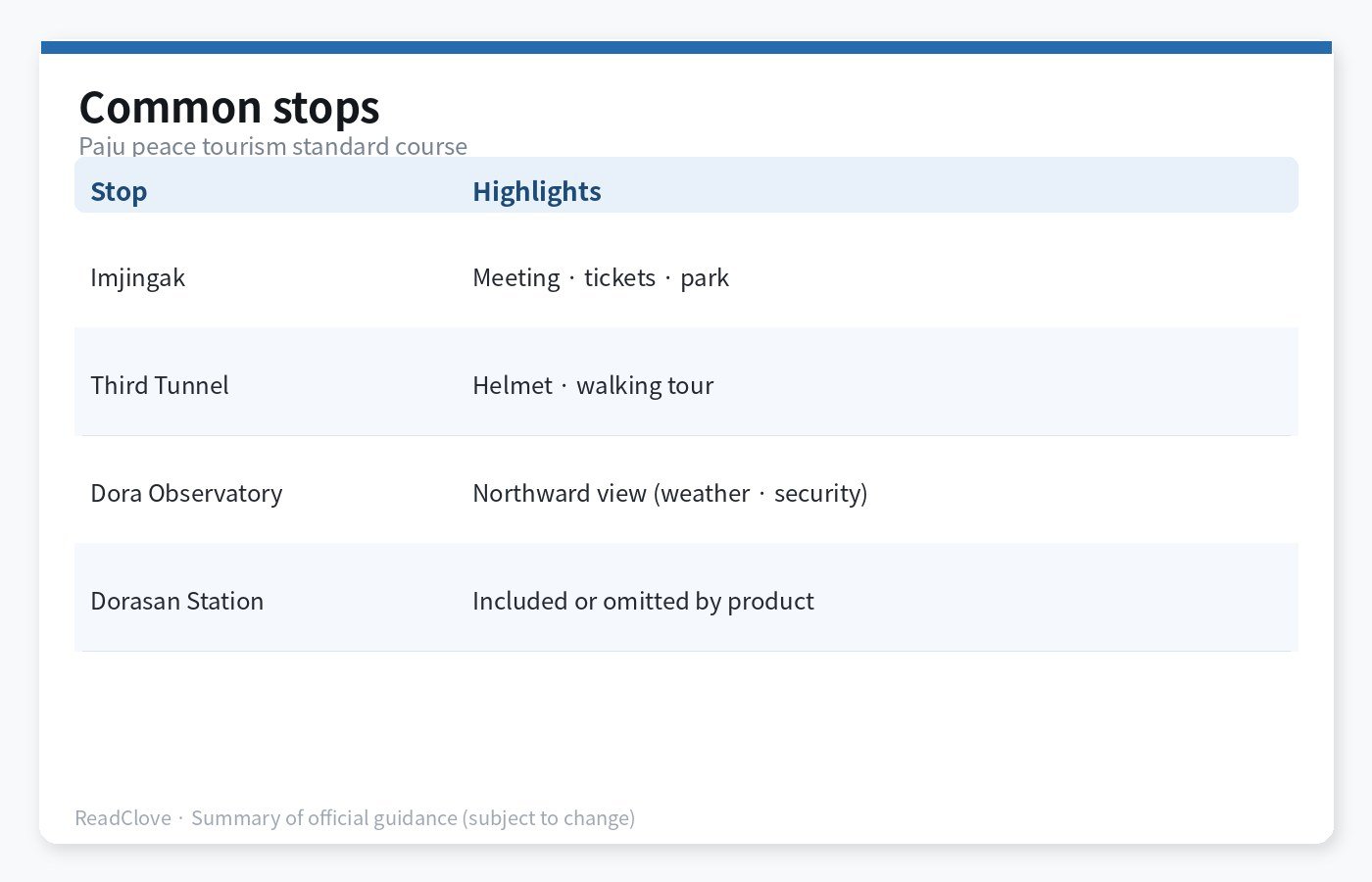
Common stops
- Imjingak — meeting point, tickets, park and bridge area.
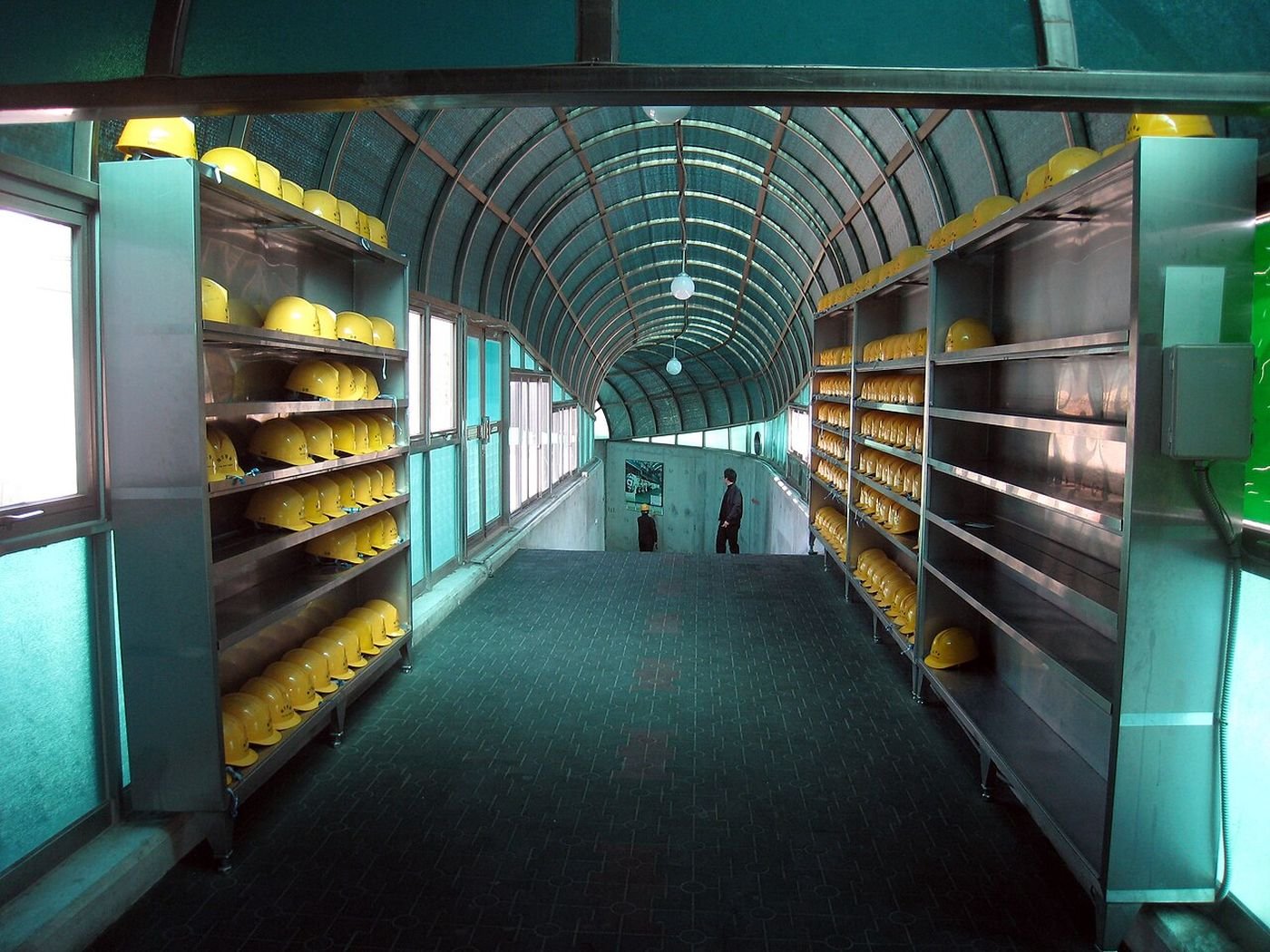
- Third Tunnel — helmet and walk.
- Dora Observatory — northward view; weather/security limits apply.
- Dorasan Station — optional by product.
Itineraries vary between operators, so check the product description for whether the Third Tunnel is included. Some budget tickets stop at the Imjingak park and never enter the controlled area, which is easy to miss if you only compare prices.
Checklist and etiquette
Bring the physical passport, confirm pickup time, and verify the itinerary excludes JSA if that matters to you. Pickups are often early in the morning. Follow dress guidance (no military-look costumes, follow operator rules); some operators turn away very short skirts, slippers or clothing that resembles a uniform. Photography bans in marked zones are enforced. Guides and military staff instructions come first.
Leaving your passport at the hotel is a common reason for no entry and no refund. Names on the booking must match the passport. If official tourism channels such as VisitSeoul post a closure or restriction notice, postpone rather than trying to force a same-day walk-up.
Sample day timeline
Early city pickup (often around 07:00) → Imjingak ID check → control line → tunnel/observatory → late afternoon return. Many tours eat lunch near Imjingak or at a restaurant chosen by the operator. Security checks and bus waits can stretch the schedule, so do not plan anything tight for the evening.
Fog can wipe out the view from the observatory, and on rainy days there may be almost nothing to see to the north. Sections can also be closed at short notice, which changes the route. Same-day walk-ups are unreliable because passenger lists are filed in advance; adding an extra person on the morning of the tour is almost never possible. Text messages from your operator and your guide’s instructions are the most up-to-date information you will get.
Cancellations and refunds
If a tour is cancelled for military or weather reasons, the operator’s terms decide the refund. If you are refused entry because you forgot your passport, that is usually treated as the traveller’s fault and not refunded.
Koreans visiting Imjingak park on their own and mixed groups entering the controlled area follow different rules. If anyone in your party is a foreign national, plan around a tour product that covers the whole group. Driving a rental car as far as the Imjingak park is one thing; entering the tunnel and observatory area is another.
Safety, behaviour and photography
Inside the controlled area, guides and soldiers have the final say. Taking photos in prohibited areas, throwing objects over fences, shouting political slogans or wandering away from the group can be stopped immediately and may affect the whole tour’s schedule. Never send signals, lights or messages toward the North. If you are travelling with children, explain beforehand that the tunnel walk is on a slope and that helmets are mandatory.
Weather matters for comfort as well as views. Winter winds at the observatory can be strong, and in summer you may wait outdoors for a while. Ask your guide what water and snacks are allowed.
The language of your guide also makes a big difference. Local buses with Korean-only commentary and English-guided tours offer very different levels of explanation. If you want the historical context, choose a tour in a language you follow comfortably. In an emergency such as an alert or a firing drill, routes can be shortened or the whole tour cancelled, so leave some slack in your travel plans and consider travel insurance.
FAQ
Q. Is a passport photo enough? A. No. Originals only per Paju guidance; copies and screenshots are refused.
Q. Will I enter the blue JSA buildings? A. Not on a standard DMZ tour. Foreigner Panmunjom programs remain suspended on the official site.
Q. Can ARC holders skip the passport? A. Some operators and the Paju guide accept the alien registration card — confirm with your tour before booking.
Q. Mondays? A. Some facilities and courses close on certain days; check the booking calendar.
For enquiries and ticket information, Paju’s DMZ Peace Tourism desk lists phone numbers such as 031-954-0303. See also Paju’s English Visitor Guide.
Leave a Reply