
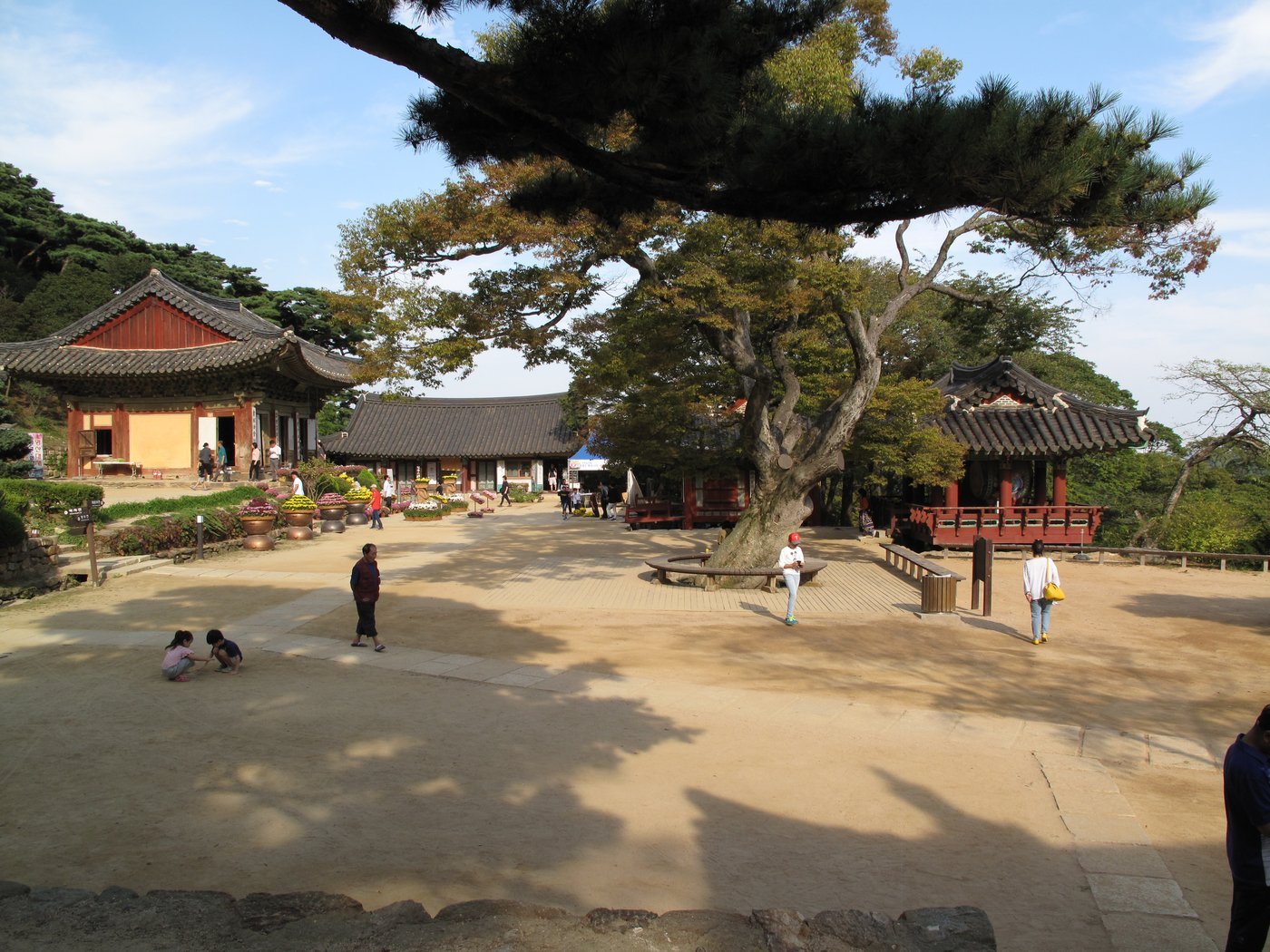
A Ganghwa Island day trip works best as three stops: Jeondeungsa Temple, the Ganghwa dolmens, and the Ganghwa Peace Observatory. Jeondeungsa is free to enter, and you only pay for parking (₩3,000 for a small car, ₩8,000 for a large vehicle). The dolmens are free and open 24 hours, while the Peace Observatory charges adults ₩2,500 and requires valid ID.
Without a car, the standard way in from Seoul is bus 3000, which runs between Sinchon and Ganghwa Bus Terminal. From Ganghwa Terminal, the first bus leaves at 04:20 and the last at 22:00. Since the observatory stops selling tickets at 17:00 from March to November, it makes sense to fix that stop first and build the rest of the day around it.
Which bus goes from Seoul to Ganghwa Island?
The main direct route is bus 3000, a city express bus between Ganghwa Bus Terminal and Sinchon. It leaves from platform 1 at Ganghwa Terminal 45 times a day. The first departure from Ganghwa is 04:20 and the last is 22:00.
According to Ganghwa County’s intercity bus page, bus 3000 runs via Sau, Pungmu, Gochon and Songjeong stations in Gimpo, then Hapjeong Station, Hongik University Station and Sinchon Station on Line 2. If you are staying around Hongdae or Mapo, you can board the same bus at Hapjeong or Hongik University Station.
Incheon City announced that from July 18, 2025 it would add 12 buses to route 3000 and cut rush-hour intervals from 20 to 15 minutes. For the fare and departure times from Sinchon on the day, a live bus app or the 1330 Travel Hotline (+82-2-1330, with English service) will give you the current answer.
Bus 88 from the Gimpo side
Bus 88 links Ganghwa Terminal with Songjeong Station via Gimpo University, Masong, Sau Station, Gochon Station and Gaehwa Station, with 40 runs a day. It is handy if you are starting near Gimpo Airport or western Seoul.
Buses from Ganghwa Terminal to Jeondeungsa
Several routes pass Jeondeungsa: bus 60-5, bus 70, and county loop buses 03 and 04. Bus 60-5 runs 17 times a day between Ganghwa Terminal and Gimpo Airport via Onsu-ri and Jeondeungsa, and bus 70 makes 30 runs via Onsu-ri and Jeondeungsa toward Gurae Station. Loop 03 runs 9 times and loop 04 runs 8 times a day, so check your return bus before you set off.
How do the three stops compare on fees and hours?
Jeondeungsa and the dolmens charge no admission, so the Peace Observatory is the only paid stop. The dolmens have the loosest schedule at 24 hours, while the observatory has a ticket cut-off and is the tightest. All three are open every day of the year.
| Place | Hours | Admission | Parking | Phone |
|---|---|---|---|---|
| Jeondeungsa Temple | Ganghwa County lists 09:00–18:00, VISITKOREA lists 09:00–17:30 (parking lot 09:00–17:30) | Free | Small car ₩3,000 / large vehicle ₩8,000 | +82-32-937-0125 |
| Dolmen in Bugeun-ri | 24 hours | Free | Available | +82-32-933-3624 |
| Ganghwa Peace Observatory | Mar–Nov 09:00–18:00 (tickets until 17:00), Dec–Feb 09:00–17:00 (tickets until 16:00) | Adults ₩2,500 / teens and soldiers ₩1,700 / children ₩1,000 | Free, 54 spaces | +82-32-930-7062 |
How to order the day
The observatory sets the pace. In October it closes at 18:00 and stops selling tickets at 17:00, and the Jeondeungsa parking lot shuts at 17:30, so a late-afternoon arrival at either leaves little room.
The dolmens, on the other hand, never close. Fitting Jeondeungsa and the observatory in before their cut-offs and slotting the dolmens in between or at the end keeps the day relaxed. Keep in mind that Jeondeungsa is in Gilsang-myeon in the south, the dolmens in Hajeom-myeon, and the observatory in Yangsa-myeon in the north, so you will cross the island from south to north.
What is there to see at Jeondeungsa, and how much is parking?
Jeondeungsa Temple has been free to enter since May 4, 2023. If you drive, the East Gate and South Gate lots charge ₩3,000 for a small car and ₩8,000 for a large vehicle. The lots run from 09:00 to 17:30 and take both cash and card.
The temple’s visitor information page states that parking is charged separately from the waived admission. Free entry does not mean free parking, so have ₩3,000 ready if you come by car.
Opening hours differ slightly between sources. Ganghwa County gives 09:00–18:00 and VISITKOREA gives 09:00–17:30, so arriving before 17:30 works under both. The county suggests allowing about 60 minutes for a visit and lists 50 parking spaces. The address is 37-41 Jeondeungsa-ro, Gilsang-myeon, Ganghwa-gun, Incheon.
The main hall and the temple bell
Tradition says the monk Ado founded Jeondeungsa in 381, the 11th year of King Sosurim of Goguryeo, and the temple stands inside the Samnangseong fortress walls. Its main hall, Daeungbojeon, and its temple bell are both designated Treasures of Korea. The site of the Jeongjoksan archive is in the same grounds.
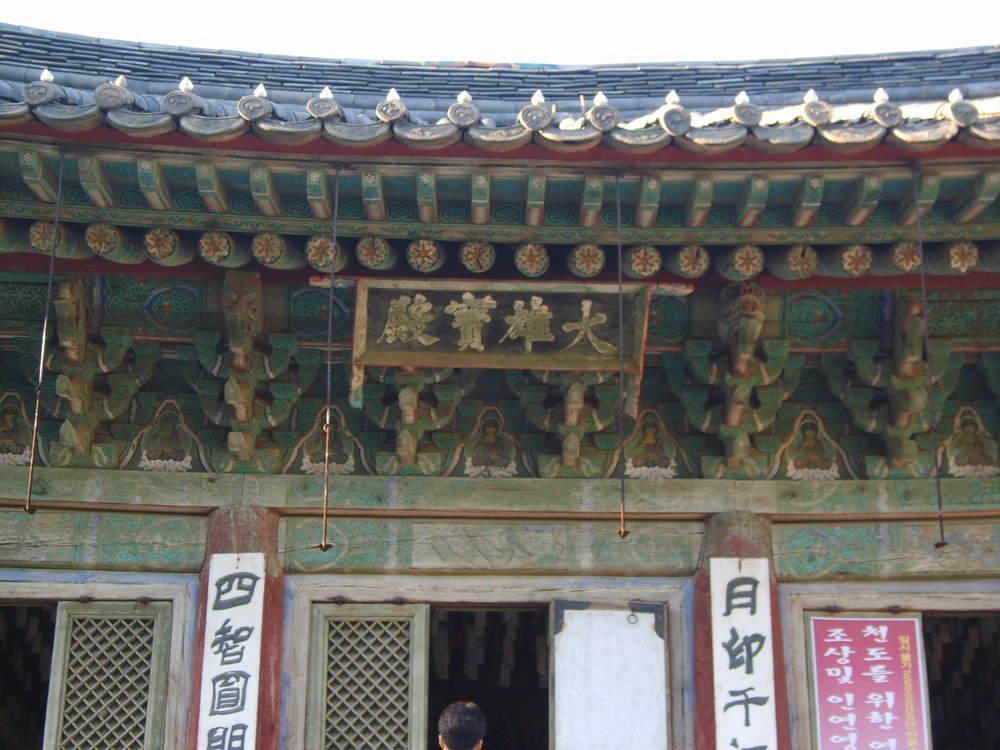
The front of Jeondeungsa’s main hall, Daeungbojeon, with its name board. 2008, Dalgial, CC BY-SA 3.0. Original on Wikimedia Commons.
The bell was not made in Korea. It was cast in China in 1097, during the Northern Song dynasty. After looking around the main hall, walk over to the red wooden enclosure where it hangs.
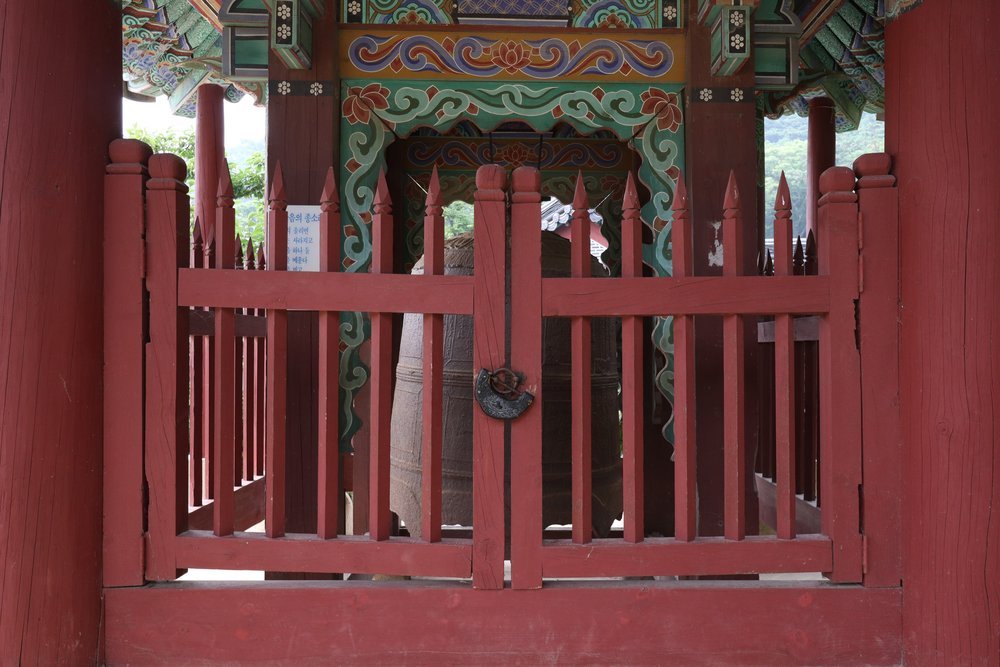
Jeondeungsa’s temple bell behind a red wooden fence. 2020, Mobius6, CC BY-SA 4.0. Original on Wikimedia Commons.
Can you visit the Ganghwa dolmens at any time?
Yes. The Dolmen in Bugeun-ri is open 24 hours a day, all year, with no admission fee. There is parking and a restroom, so it is an easy stop by car. The Ganghwa dolmens were listed as a UNESCO World Heritage Site in 2000 together with the dolmens of Gochang and Hwasun.
The Bugeun-ri capstone is 710 cm long, 550 cm wide and 260 cm high. It rests on two upright stones, and up close the thickness of the slab is striking. The address is Bugeun-ri 317, Hajeom-myeon, Ganghwa-gun, Incheon, and the phone number is +82-32-933-3624.
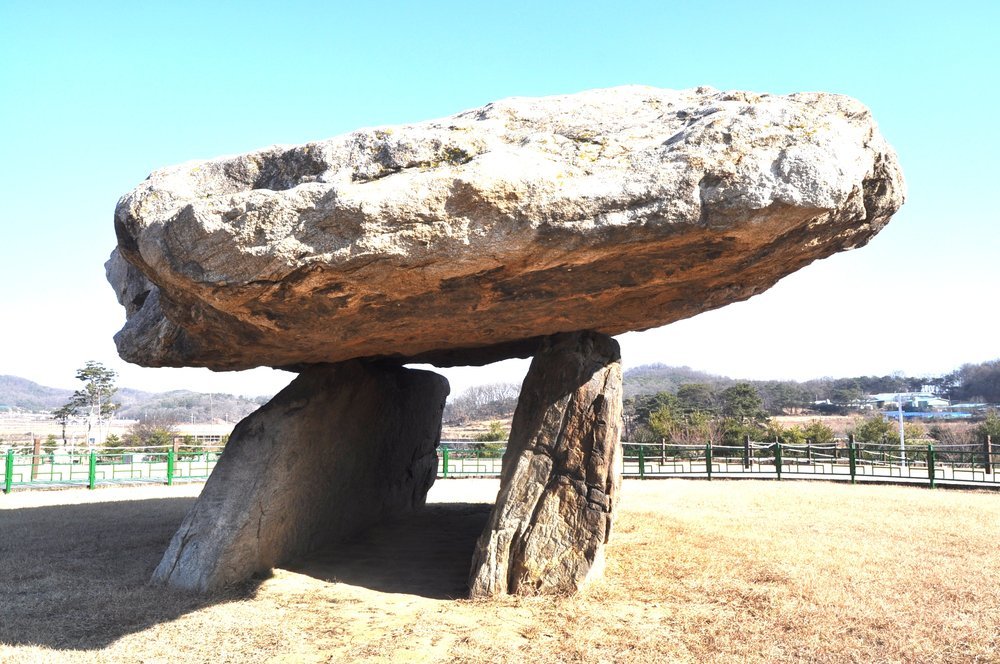
The Bugeun-ri dolmen on a clear day. 2014, 김영창1, CC BY-SA 4.0. Original on Wikimedia Commons.
A flexible stop when time runs short
Because the dolmens never close, they are the easiest stop to keep even if the day runs late. You can head to the observatory first to beat the ticket cut-off and see the dolmens on the way back. With parking and a restroom on site, it also makes a good place for a short break.
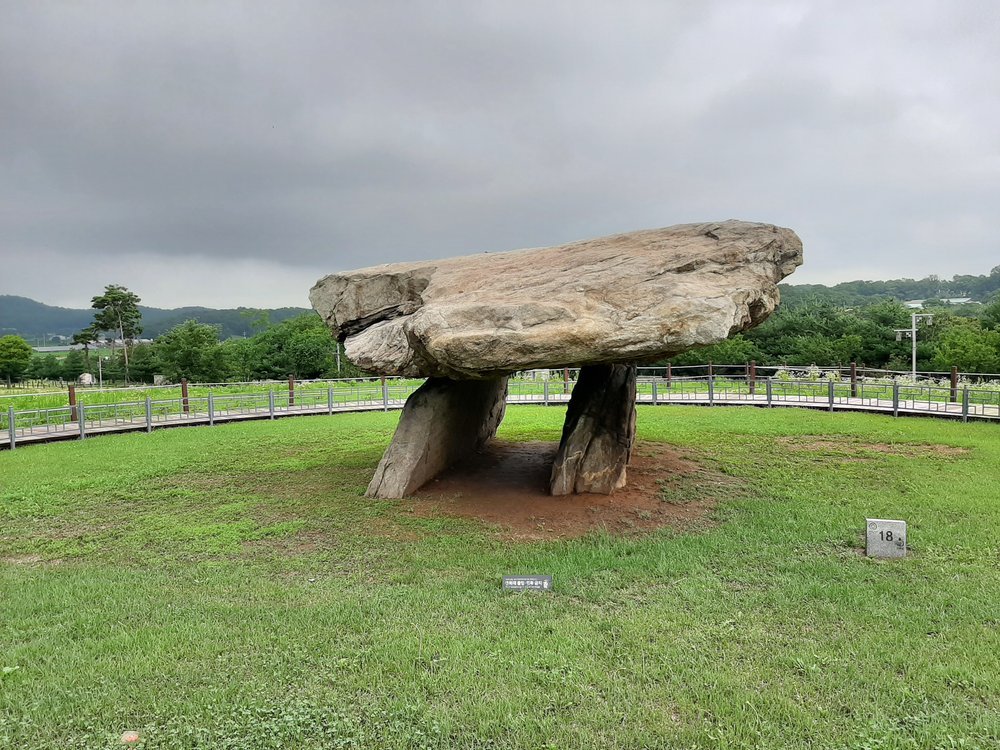
A Ganghwa dolmen on a lawn on a cloudy day. 2019, Taewangkorea, CC BY-SA 4.0. Original on Wikimedia Commons.
What do you need to bring to the Peace Observatory?
Bring ID. Every visitor goes through a security inspection with valid ID before entering the Ganghwa Peace Observatory, so foreign visitors should carry a passport or alien registration card. Admission is ₩2,500 for adults, ₩1,700 for teens and soldiers and ₩1,000 for children, and the 54-space car park is free.
According to Ganghwa County’s Peace Observatory page, it opens 09:00–18:00 from March to November and 09:00–17:00 from December to February, every day of the year. Ticket sales end at 17:00 in March–November and at 16:00 in December–February. The car park has 10 spaces for large vehicles and 44 for small cars.
The observatory opened on September 5, 2008. From here you look north across about 2.3 km of water toward the Yeseong River and the Kaesong Industrial Complex. Telescopes cost ₩500 for two minutes, and guided commentary runs seven times a day between 10:00–12:00 and 13:00–17:00. An observatory video is available in English, Japanese or Chinese on request, and the exhibition has a QR code guide. The official English name is Ganghwado Jejeokbong Peace Observatory, at 797 Jeonmangdae-ro, Yangsa-myeon, Ganghwa-gun, Incheon.
Who gets in free
Children aged 6 and under and seniors aged 65 and over enter free. Ganghwa County residents showing ID, national merit, independence and war veterans with their spouses and bereaved families, and people with disabilities plus one companion also go free.
What is on each floor
The first floor has the office, a shop, a restaurant and restrooms. The second floor holds the exhibition hall and an outdoor deck, and the third floor has the North Korea viewing room and another outdoor deck. The basement and fourth floor are for military use only and are closed to visitors.
If you are also weighing a DMZ tour on the Paju side, see our DMZ tour from Seoul guide.
FAQ
Q. How much are admission and parking at Jeondeungsa Temple?
A. Admission is free. Parking is ₩3,000 for a small car and ₩8,000 for a large vehicle, and the lot is open 09:00–17:30.
Q. How much is the Ganghwa Peace Observatory, and do I need ID?
A. Adults pay ₩2,500, teens and soldiers ₩1,700 and children ₩1,000. Yes, you need valid ID, because every visitor passes a security inspection before entry.
Q. What time does bus 3000 run between Seoul and Ganghwa?
A. From Ganghwa Bus Terminal, the first bus leaves at 04:20 and the last at 22:00, with 45 runs a day. It stops at Sinchon, Hongik University and Hapjeong stations.
Q. Can I see the Ganghwa dolmens at night?
A. Yes. The Dolmen in Bugeun-ri is open 24 hours, all year, with free admission, parking and a restroom.
Sources
- Ganghwa County — Peace Observatory hours, fees and parking
- Jeondeungsa Temple — visitor information and parking fees
- Ganghwa County — intercity buses (3000, 88, 60-5, 70)
- VISITKOREA — Ganghwa Jeondeungsa Temple
- VISITKOREA — Dolmen in Bugeun-ri
- VISITKOREA — Ganghwado Jejeokbong Peace Observatory
- Incheon Metropolitan City — Peace Observatory (English)
- Incheon Metropolitan City press release (July 16, 2025) — bus 3000 expansion
- Featured photo: courtyard of Jeondeungsa Temple with the Daejoru pavilion, G41rn8 (2016), CC BY-SA 4.0, Wikimedia Commons
Leave a Reply