
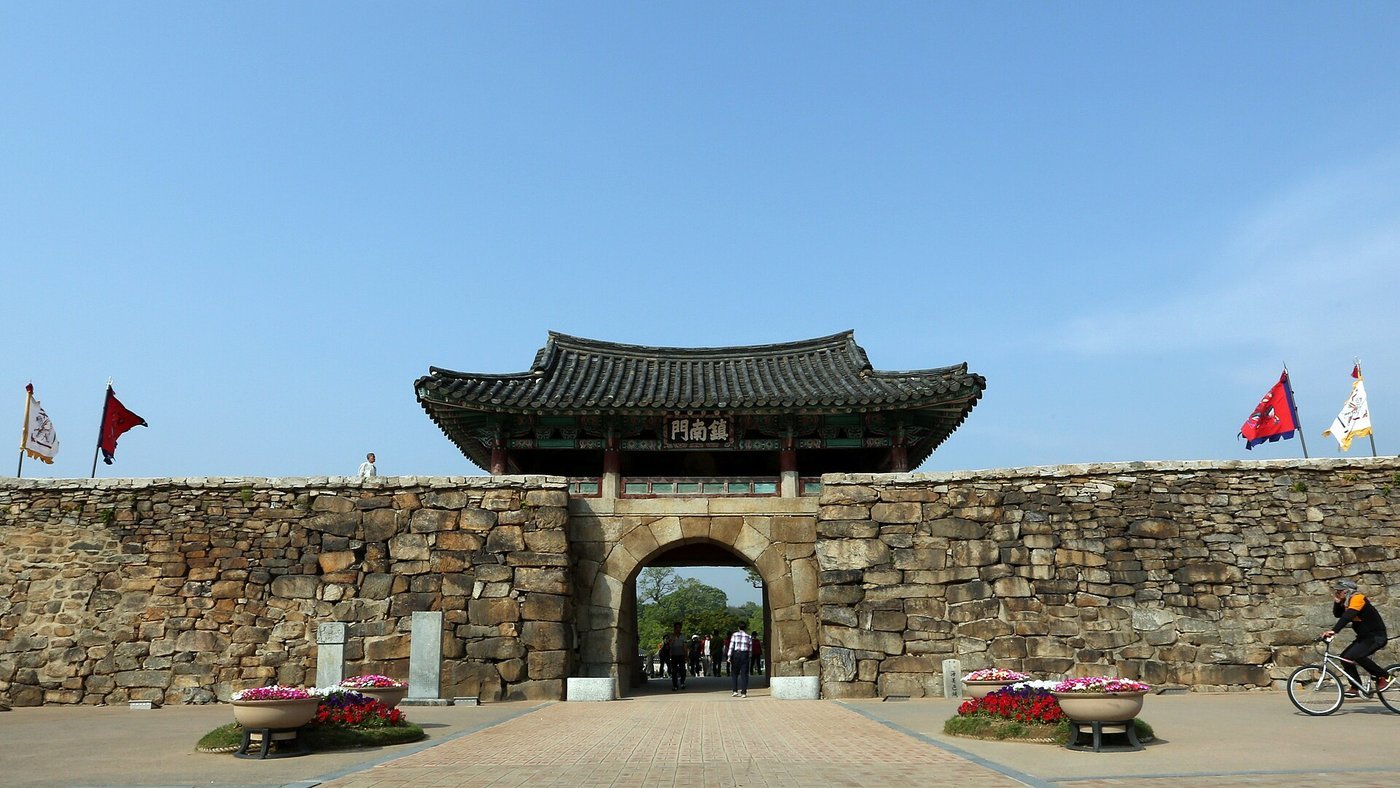
Haemieupseong Walled Town in Seosan, South Chungcheong Province, costs nothing to visit. There is no admission fee, parking is free, and the gates open every day of the year. From March to October the town is open 05:00–21:00, and from November to February 06:00–19:00. Entry stops 30 minutes before the gates close, and most people spend about an hour and a half inside.
From Seoul, take an intercity bus from Central City Terminal or Seoul Nambu Terminal to Seosan, which takes about 1 hour 50 minutes, then a local bus to Haemi. Buses from Seosan Bus Terminal to Haemi run every 10–15 minutes and the ride is 15–20 minutes. Drivers should leave the Seohaean Expressway at Haemi IC.
| Item | Details |
|---|---|
| Address | 143 Nammun 2-ro, Haemi-myeon, Seosan-si, Chungcheongnam-do (Historic Site) |
| Admission and parking | Free |
| Hours | Mar–Oct 05:00–21:00 / Nov–Feb 06:00–19:00, open all year |
| Last entry | 30 minutes before the gates close |
| Typical visit | About 1 hour 30 minutes |
| Walls | 1,800 m around, 5 m high, built 1417–1421 |
| Traditional performances | Apr–Oct, every Saturday 13:00–14:30, free (called off in rain) |
| Phone | 041-661-8005 (+82-41-661-8005 from abroad) |
Is Haemieupseong free, and what are the opening hours?
Yes, it is completely free. The Korea Tourism Organization lists admission as free, and parking costs nothing either. The gates are open 05:00–21:00 from March to October and 06:00–19:00 from November to February, every day of the year, and you cannot enter during the last 30 minutes before closing.
That seasonal switch matters if you are planning around a late arrival. A mid-October visit still falls under the summer schedule, so you need to be through the gate by 20:30. From 1 November the winter schedule applies and last entry moves to 18:30, which is easy to miss if you are coming after a day somewhere else. The early opening works in your favour too: the gates open at 05:00 in the warmer months, so you can walk the grounds at sunrise before tour groups and families arrive.
Because there is no ticket desk, there is no queue and nothing to book in advance. You simply walk in through Jinnammun, the main south gate, and start exploring. The site suits all ages, and the Korea Tourism Organization notes that restrooms are available on site. For questions about the fortress, the official number is 041-661-8005.
What is an eupseong, and why is Haemi called the “trifoliate-orange fortress”?
An eupseong is a walled town built on flat ground to enclose a county seat, rather than a mountain fortress perched on a ridge. Haemieupseong was built between 1417 and 1421, early in the Joseon dynasty, to defend the coast against Japanese pirates, and it was heavily rebuilt in 1491. Seosan City counts it among Korea’s three representative walled towns, alongside Gochang and Naganeupseong. Its nickname, Taengja-seong, comes from the thorny trifoliate-orange hedges planted around the walls to slow down attackers.
Those hedges are not just a story: restored trifoliate-orange plants still line parts of the walls, so you can see why the nickname stuck. The town was also a military headquarters, home to the army commander of Chungcheong Province, which explains why it feels more like a compact garrison town than a palace. The site was designated a national Historic Site on 21 January 1963.
Look for the county names carved into the stones
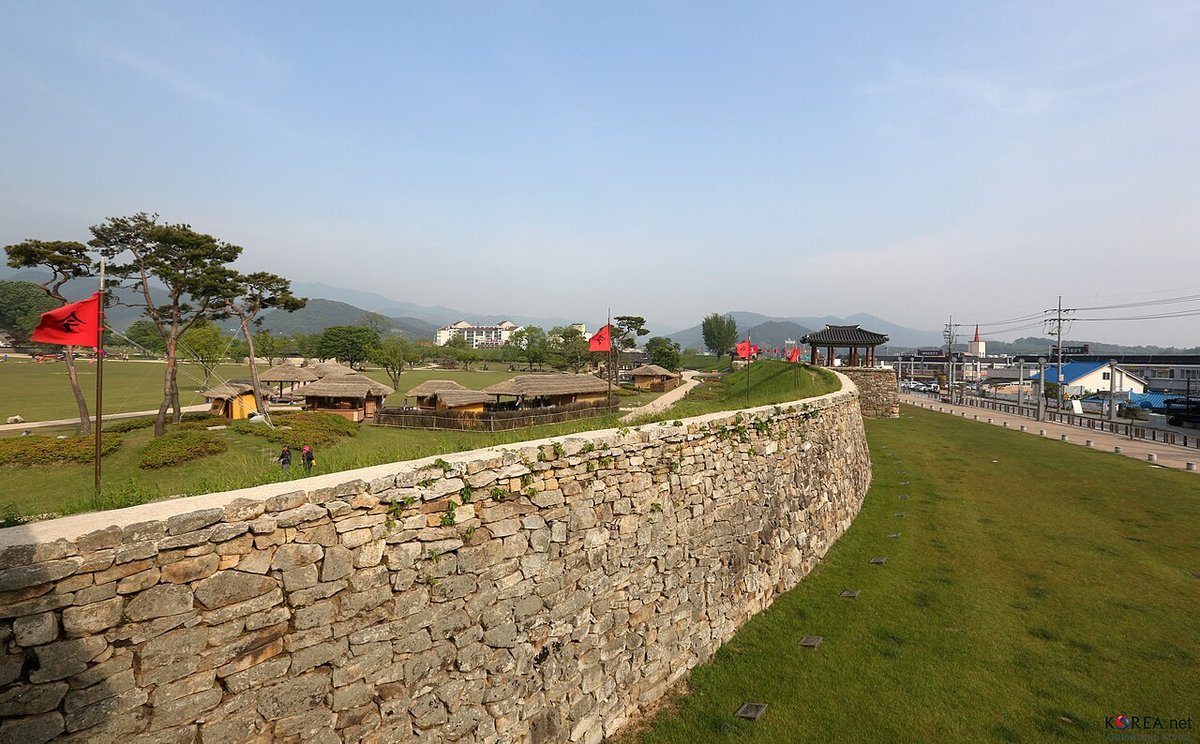
The wall runs 1,800 metres around and stands about 5 metres high, with one gate each on the east, west and south sides. Walk along it and look closely at the stones: some are carved with the names of counties such as Cheongju and Gongju. Each county was responsible for building its own section, and the carved name meant everyone knew who would be held liable if that stretch ever collapsed. Spotting these names turns a simple loop of the wall into a small treasure hunt, which children usually enjoy.
Yi Sun-sin and the Catholic martyrs
Two very different stories are tied to this place. In 1579, the young Yi Sun-sin, who later became Korea’s most celebrated naval commander, served here as a military officer for 10 months. Nearly three centuries later, during the persecution of 1866, about 1,000 Catholics were tortured and executed at Haemi. A reconstructed prison stands inside the walls, next to an old hoehwa tree, locally called the “hoya” tree, which still bears marks said to come from the wires used to hang prisoners. Pope Francis visited Haemi in 2014, which brought the site international attention as a place of pilgrimage.
What should you see and do inside the walls?
A natural route starts at Jinnammun, passes the prison and the old tree, continues to the Dongheon (the magistrate’s office) and the Gaeksa (the government guesthouse), then winds past the thatched houses up to Cheongheojeong pavilion on the hill. From April to October, free traditional performances take place every Saturday from 13:00 to 14:30, though they are called off in rain. On any day you can watch craft demonstrations and try traditional games.
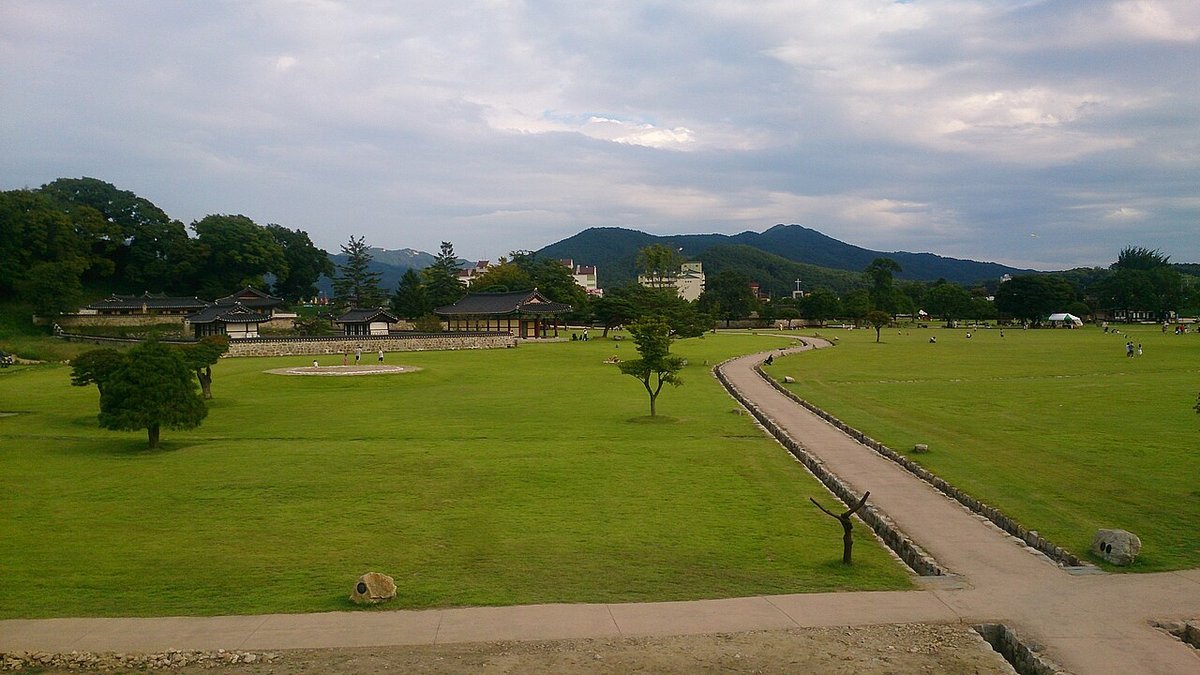
The Dongheon was where the local magistrate handled official business, and the Gaeksa hosted visiting officials. Cheongheojeong, set on a small rise, gives you a view back over the whole compound and is a good place to pause. In the middle of the town there is a broad lawn, so bring a mat if you want a picnic; children have plenty of room to run around.
The Saturday programme features big drums, samul nori percussion, pan-gut folk performance, traditional martial arts and tightrope walking. Daily activities include demonstrations of fabric beating, straw and sedge crafts and hemp weaving, plus folk games such as tuho (arrow throwing), yut, jegi kicking and hoop rolling. You can also try kite flying, Korean archery, a flower-carriage ride and traditional costume. Prices for these hands-on activities are set on site, so ask at each booth before you join in.
Can you combine the fortress with Haemi Martyrs’ Shrine?
Yes, and the two make a meaningful pair. Haemi Martyrs’ Shrine, also known as Yeosutgol, is at 13 Seongji 1-ro, Haemi-myeon, and Mass is held every day, Monday to Sunday, at 11:00. Seeing the prison and the old tree inside the fortress first gives you the background, and the shrine then completes the story.
The shrine stands near the Haemicheon stream, where many believers lost their lives during the persecution. If you are travelling with a parish or a pilgrim group and want to arrange a special Mass, contact the shrine office in advance on 041-688-3183 or 010-9655-3183; staff answer enquiries on weekdays from 09:00 to 17:00. Check a map app for the best way to get from the fortress to the shrine before you set off.
Some pilgrims also visit Hantigogae, a hill pass in Daegok-ri that is known as the route along which martyrs were taken. Cars can drive about 1 km up from the start of the trail. If you plan to attend the 11:00 Mass, an easy rhythm is to arrive at the fortress when it opens, explore for an hour and a half, and then head over to the shrine.
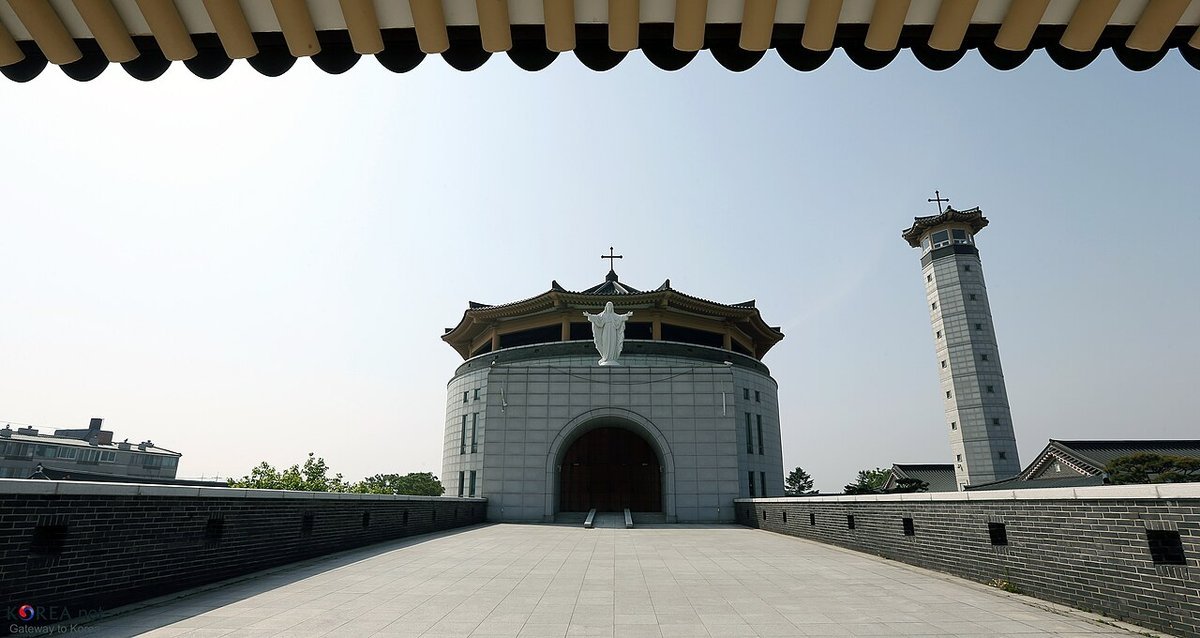
How do you get to Haemieupseong from Seoul?
The most reliable option is a bus from Seoul to Seosan, then a short local bus to Haemi. Buses from Central City Terminal and Seoul Nambu Terminal reach Seosan in about 1 hour 50 minutes. From Seosan Bus Terminal, city and intercity buses to Haemi run every 10–15 minutes and take 15–20 minutes. If you drive, leave the Seohaean Expressway at Haemi IC.
Bus routes step by step
From Central City Terminal, the first bus to Seosan leaves at 06:00 and departures follow every 20–30 minutes. From Seoul Nambu Terminal, the first Seosan bus leaves at 06:30, and the trip takes roughly 1 hour 50 minutes to 2 hours 10 minutes. Nambu Terminal also has a few direct buses to Haemi itself, but there are only a handful of runs a day, so check the timetable before you go. If the direct times do not suit you, riding to Seosan and changing there is usually easier, because the connection to Haemi is so frequent. Check fares at the terminal or in a bus booking app.
Driving and coming from Cheonan
By car, Haemi IC on the Seohaean Expressway puts you close to the fortress, and parking is free. If you are coming from the Cheonan direction, Seosan City suggests two driving routes: one through Asan, Sapgyocheon, Dangjin and Unsan, and another through Yesan and Deoksan. For public transport from Cheonan, check the official terminal timetables before you travel. On Saturdays between April and October, when the performances draw crowds, arriving a little early makes parking and walking more relaxed.
How does it compare with Suwon Hwaseong? Hwaseong is a large fortress wrapped around a whole city, with steep sections over hills, while Haemi is a compact walled town on flat ground that you can walk round comfortably. If you enjoy Korean fortresses, see our Suwon Hwaseong day trip guide and our Gongju Gongsanseong guide as well.
FAQ
Is there an entrance fee or parking charge at Haemieupseong?
No. Admission and parking are both free, and there is no ticket desk; you walk straight in through Jinnammun.
What time does Haemieupseong open and close?
It is open 05:00–21:00 from March to October and 06:00–19:00 from November to February, every day of the year. Entry stops 30 minutes before closing.
How long does the bus from Seoul take?
About 1 hour 50 minutes from Central City Terminal or Seoul Nambu Terminal to Seosan, plus 15–20 minutes by local bus from Seosan Bus Terminal to Haemi.
When are the free traditional performances?
Every Saturday from April to October, 13:00–14:30. They are called off in rain.
Sources
- VisitKorea — Haemieupseong Walled Town
- Seosan City Tourism — Haemieupseong (Korean)
- Haemi Martyrs’ Shrine — Mass information (Korean)
- Featured photo: Jinnammun gate and walls (May 2014), Korea.net/Jeon Han, CC BY-SA 2.0, Wikimedia Commons
- Original body photos: lawn inside the walls, wall and thatched houses, cosmos path, martyrs’ shrine (Wikimedia Commons)
Leave a Reply